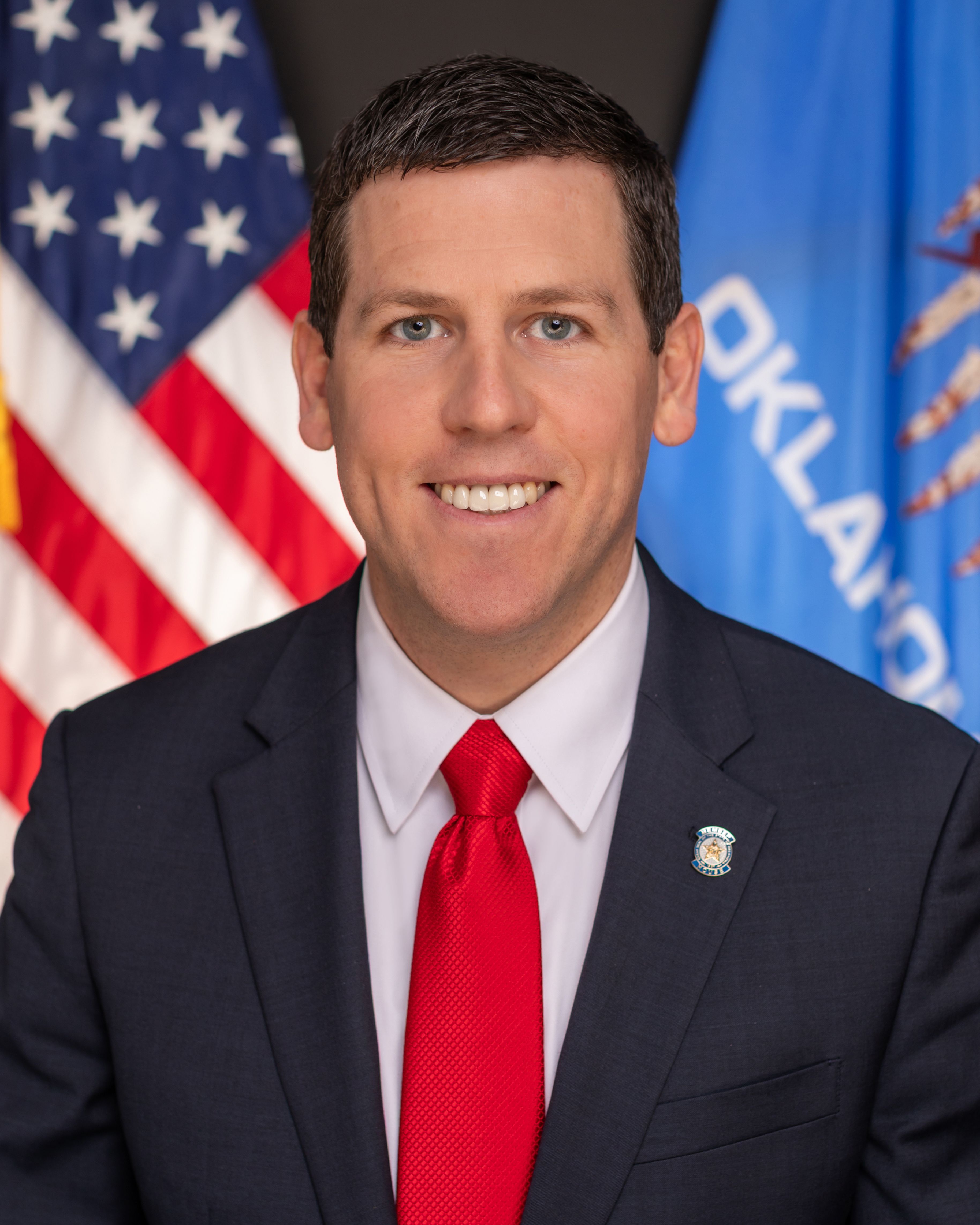
Photo of Rob Hall
R Oklahoma House · District 67 On the 2026 ballot

Rep. Rob Hall

Compare
Total votes
4,258
all sessions
Attendance
95%
188 missed
Near the chamber average
With party
93%
of cast votes
Near the chamber average
Bipartisan score
5%
crosses aisle rarely
Near the chamber average
Sponsored
150
bills & resolutions
Higher than 97% of chamber peers
Committees
3
assignments
150 bills and resolutions

Sponsored bills

Total
150
Primary
150
Co-sponsor
0
This page
150
matching current filters
Primary HB 3979
Signed into law · Oklahoma House · Lead sponsor
Public finance; Oklahoma Economic Development Pooled Finance Act; Infrastructure Pool; Economic Development Pool; caps; effective date; emergency.

Maddy summaryHB 3979 increases the funding cap for Oklahoma's Infrastructure Pool and Economic Development Pool from $100 million to $125 million each. It requires 65% of funds from both pools to support smaller municipalities (under 300,000 residents) and 35% to serve all eligible local governments regardless of size. The bill applies directly to Oklahoma cities and counties seeking infrastructure or economic development financing through these pools. The changes take effect November 1, 2026.

Signed into law May 12, 2026 0 co-sponsors
Primary HB 3941
Signed into law · Oklahoma House · Lead sponsor
Courts; secretary-bailiffs; salary; effective date; emergency.

Maddy summaryHB 3941, titled the "Oklahoma Secretary-Bailiff Compensation Reform Act of 2026," establishes a framework for future changes to compensation for Oklahoma secretary-bailiffs (court staff positions). The bill creates a noncodified legal provision (meaning it won't be included in Oklahoma’s official statutes) and sets an effective date of November 1, 2026. It directly affects secretary-bailiffs working in Oklahoma courts by initiating a process for reforming their pay structure, though the bill itself does not specify new compensation rates or mechanisms. The legislation is procedural, focusing on naming the reform effort and its implementation timeline.

Signed into law May 12, 2026 0 co-sponsors
Primary HB 3970
Signed into law · Oklahoma House · Lead sponsor
Court reporters; duties and salaries; remote availability; transcripts; certifications; continuing education; shorthand reporter examinations; methods; effective date; emergency.

Maddy summaryHB 3970 updates Oklahoma's court reporting rules by allowing electronic recording of proceedings when a court reporter is unavailable, while requiring official transcripts prepared by certified reporters for appeals. It increases base salaries for court reporters to $53,000 annually, adds a $3,000 equipment allowance, and establishes longevity pay of up to $8,000 per year for certified reporters with 20+ years of service. The bill also sets specific formatting standards for transcripts (e.g., page margins, line spacing) and clarifies that only transcripts from official court reporters can be used in future trials or appeals. These changes directly affect court reporters, judges, and legal parties across Oklahoma's district courts, Workers' Compensation Court, and Corporation Commission.

Signed into law May 12, 2026 0 co-sponsors
Primary HB 2153
Signed into law · Oklahoma House · Lead sponsor
Schools; school athletic association requirements; requirement that certain hearings be subject to certain act; effective date; emergency.

Maddy summaryHB 2153 modifies Oklahoma charter school enrollment rules, primarily affecting students, families, and school districts. It requires charter schools to give enrollment priority to students with siblings already enrolled (over other preferences), limits admissions to specific geographic "academic enterprise zones" (60%+ free/reduced lunch eligibility), and establishes new rules for virtual charter schools. Effective July 2024, virtual charter schools become statewide entities, students transferring to them are considered "transfer students" requiring district record transfers within 3 days, and virtual charter students may not participate in Oklahoma Secondary School Activities Association (OSAA) events (only intramural activities). The bill also prohibits enrollment restrictions based on factors like ethnicity, income, or academic performance, except for specified cases.

Signed into law May 12, 2026 0 co-sponsors
Primary HB 2749
Signed into law · Oklahoma House · Lead sponsor
Medicaid; directing establishment of certain nursing facility add-on rate under specified conditions; effective date; emergency.

Maddy summaryHB 2749 creates a special fund called the Intergenerational Education Revolving Fund within the Oklahoma Health Care Authority. It establishes a competitive grant program to connect nursing facilities participating in Oklahoma's Medicaid program with public school districts for collaborative intergenerational education initiatives. Grant awards, provided as rate adjustments to qualifying facilities, will fund these partnerships. The program begins July 1, 2025, with funds limited to the total amount deposited into the revolving fund.

Signed into law May 12, 2026 0 co-sponsors
Primary HB 3075
Signed into law · Oklahoma House · Lead sponsor
Public finance; Oklahoma Common Cents Act; cash payments; rounding; effective date.

Maddy summaryHB 3075, the "Oklahoma Common Cents Act," allows Oklahoma political subdivisions (like cities, counties, or school districts) to round cash payments to the nearest five cents. Specifically, it requires rounding: 1-2 cents down to zero, 3-4 cents up to 5 cents, 6-7 cents down to 5 cents, and 8-9 cents up to 10 cents. This rule applies only to cash transactions (not cards or digital payments) and becomes mandatory starting July 1, 2027. Political subdivisions must account for rounding discrepancies using their own funds or county unappropriated revenue, with the bill taking effect July 1, 2026.

Signed into law May 11, 2026 0 co-sponsors
Primary HB 3982
Signed into law · Oklahoma House · Lead sponsor
Motor vehicles; transferability of license plates; temporary license plates; effective date.

Maddy summaryHB 3982 amends Oklahoma's vehicle registration law to create a "non-resident in-transit temporary credential" for people purchasing vehicles they plan to register in another state. It directly affects buyers who intend to title and register their vehicle outside Oklahoma, replacing the standard temporary license plate with this credential. The key provision requires buyers to certify they will register the vehicle elsewhere, after which Service Oklahoma (Oklahoma's vehicle agency) issues the temporary credential instead of a plate. This streamlines the process for non-residents moving into Oklahoma or buying vehicles for out-of-state registration.

Signed into law May 11, 2026 0 co-sponsors
Primary HB 1979
Signed into law · Oklahoma House · Lead sponsor
Children; Early Childhood Task Force; membership; election; reports; compensation or reimbursement; expenses; Open Records Act; Open Meeting Act; advice; vision statement; mission; principles; codification; effective date.

Maddy summaryHB 1979 amends Oklahoma's Early Childhood Task Force membership rules. The bill replaces a specific university representative (previously from Oklahoma State University's Department of Human Development and Family Science) with the Associate Dean for Academic Programs and Student Services from OSU's College of Education and Human Sciences. This change affects the task force's composition, which advises the state on early childhood policy. The bill does not create new policies but adjusts who serves on the existing advisory group. It remains a procedural amendment focused on task force staffing, not new legislation.

Signed into law May 11, 2026 0 co-sponsors
Primary HB 3244
Signed into law · Oklahoma House · Lead sponsor
Crimes and punishments; modifying elements of certain unlawful acts; aggravated identity theft; effective date.

Maddy summaryHB 3244 modifies Oklahoma law to strengthen penalties for patterns of criminal activity and exploitation of vulnerable individuals. It expands "pattern of criminal offenses" to include online acts (via social media, AI, or cellular networks) and adds identity theft to the list of crimes that can form a pattern, punishable by a Class D1 felony ($25,000 fine or imprisonment). The bill also increases penalties for exploiting elderly/disabled adults: theft of $100,000+ becomes a Class C1 felony, while lesser amounts trigger a Class C2 felony, with enhanced penalties for repeat exploitation. It directly affects criminals committing multiple offenses across locations or online, and those exploiting vulnerable groups (elderly, disabled, homeless, or minors) through coercion or deception.

Signed into law May 7, 2026 0 co-sponsors
Primary HB 4118
Signed into law · Oklahoma House · Lead sponsor
Family caregiver credit; mileage; eligible expenditures; age requirement; eligible family member; effective date.

Maddy summaryHB 4118 proposes a tax credit for Oklahoma caregivers of eligible family members. It allows a 50% credit on qualifying expenses - such as medical travel mileage, home modifications, medical equipment, and hiring aides - for caregivers with income under $50,000 (or $100,000 for couples) caring for someone aged 62+ who needs help with two or more daily living tasks (like bathing, dressing, or eating). The credit caps at $2,000 annually per family, rising to $3,000 if the care recipient is a veteran or has dementia. The total annual credit pool is limited to $1.5 million, with unused funds adjusted yearly. If passed, it would take effect November 1, 2026.

Signed into law May 7, 2026 0 co-sponsors
Showing 1 to 10 of 150 bills
1 2 3 15 Next