Maddy summarySB 1618 requires Oklahoma judicial districts to use validated risk assessment tools when setting pretrial release conditions for defendants facing misdemeanor or felony charges. These tools must evaluate factors like criminal history, community ties, substance abuse history, flight risk, and danger to others, while also considering the offense's nature and evidence weight. Courts must presume the assessment's accuracy and set release conditions accordingly, but may deviate only if the state provides clear evidence justifying exceptions to secure defendant appearance, protect public safety, or meet specific legal requirements. If deviations occur, courts must document their reasoning on the record.

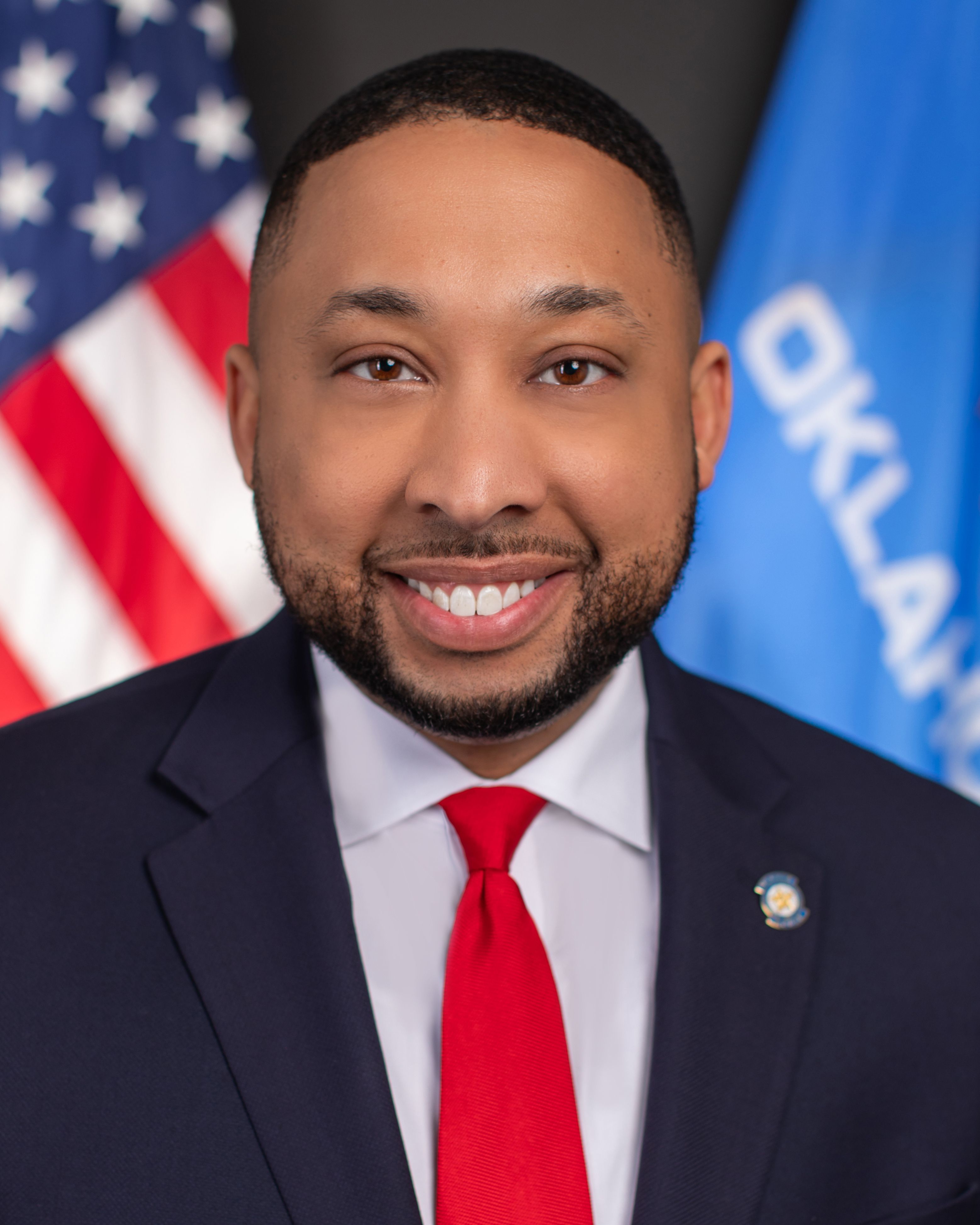
Rep. Erick Harris
Sponsored bills
Maddy summarySB 1216 updates Oklahoma's drug court eligibility rules by clarifying who can participate. It requires offenders to not be charged with drug trafficking under the Trafficking In Illegal Drugs Act, have committed a felony or specific misdemeanor, and demonstrate a substance abuse addiction (through admission, apparent signs, or known history) or have an offense eligible for drug court. The bill mandates an eligibility form explaining the program process, required waivers (including giving up the right to a quick trial), and consequences of failure (such as up to six months in an intermediate facility). This bill takes effect November 1, 2026, and directly affects offenders seeking drug court alternatives in Oklahoma.
Maddy summarySB 1827 modifies definitions within Oklahoma's Governmental Tort Claims Act to clarify which entities and individuals qualify under the law. It specifically refines terms like "charitable health care provider" (for providers serving indigent patients without charge) and "community health care provider" (including federally qualified health centers). The bill also updates the definition of "employee" to explicitly include certain medical staff, such as physicians under specific contracts with state health agencies or correctional facilities. These changes primarily affect state agencies, political subdivisions, and health care providers interacting with the tort claims process, without altering substantive liability rules.
Maddy summarySB 2139 requires Oklahoma municipalities to amend property plats to remove discriminatory language (such as racial or religious restrictions) that violate the Fair Housing Act. It directs county clerks to erase such language from existing property records after a municipality passes an ordinance, without needing property owner approval. The bill affects neighborhoods with outdated discriminatory covenants in their recorded plats. It becomes effective November 1, 2026.
Maddy summaryThis bill modifies how nursing facilities receive financial incentives within the state Medicaid program. It adjusts specific reimbursement rules to potentially alter how facilities are compensated for their services. The changes directly impact nursing home operators and the state's Medicaid funding structure. The legislation includes an emergency provision to take effect immediately upon passage.
Maddy summarySB 1213 modifies Oklahoma's inmate earned credit system by removing minimum incarceration time requirements (previously 3 months for Class 3, 8 months for Class 4) for assigning credit levels. It establishes new monthly credit rates based on an inmate's criminal history: inmates without prior felony convictions receive higher credits (Class 3: 45 credits/month, Class 4: 60 credits/month) compared to those with felony histories (Class 3: 33 credits, Class 4: 44 credits). The bill affects all state prison inmates by changing how their sentence reductions are calculated through earned credits. Key provisions include updating credit assignment criteria, requiring gender-neutral language, and specifying that credits cannot be earned for certain offenses like killing law enforcement officers. The changes apply to all inmates assigned to Class Levels 2-4 under the Department of Corrections' updated policies.
Maddy summarySB 540 would enact the Dentist and Dental Hygienist Compact, allowing Oklahoma-licensed dentists and dental hygienists to practice in other participating states without obtaining separate licenses. The bill creates a "Compact Privilege" that streamlines interstate practice by eliminating duplicative licensing requirements, directly benefiting licensed professionals seeking to work across state lines or relocate (including military members and families). Key provisions include requiring states to share disciplinary information, maintain scope-of-practice standards, and ensure practitioners comply with the laws of the state where they practice. This compact aims to improve public access to dental services and address workforce shortages in participating states.
Maddy summaryHB 1752 is a procedural bill that names the "Central Purchasing Act of 2025" and sets its effective date. It does not establish new purchasing procedures or affect any specific entities, as it is explicitly stated to be "not to be codified" in Oklahoma Statutes. The bill formally designates the act's name and specifies November 1, 2025, as its effective date. This is a standard naming and timing measure with no substantive policy changes.
Maddy summaryThis bill from the Oklahoma House of Representatives formally recognizes May 10 through May 15, 2026, as National Police Week and May 15, 2026, as Peace Officers Memorial Day within the state. The resolution honors law enforcement officers who serve with integrity and acknowledges those who have died or been injured while performing their duties. It specifically expresses condolences to the families of six Oklahoma officers who lost their lives in the line of duty during the previous year. This measure is a commemorative action that does not alter laws or create new policies but serves to recognize and remember the sacrifices made by police officers.
Maddy summaryHB 3586, the "Parents Protection Act of 2026," amends Oklahoma adoption laws and the Oklahoma Children's Code. It prohibits denying adoption eligibility based on an adoptive parent's refusal to support a child's gender transition, and explicitly states that referring to a child by their biological sex or raising them consistent with biological sex does not constitute child abuse under state law. The bill directly affects prospective adoptive parents, child welfare professionals, and children in foster care or adoption systems by changing how abuse is defined and ensuring biological sex references cannot be classified as abuse. Key provisions include updated adoption eligibility criteria (Section 7503-1.1) and revised definitions of "abuse" and "child" in the Oklahoma Children's Code (Section 1-1-105). The bill takes effect upon enactment.