Maddy summaryHB 3262 raises the maximum fee sheriffs can charge for certain services, allowing counties to collect up to a higher amount when providing justice-related assistance. The bill amends existing fee structures by inserting "up to" before "county" and "justice" in relevant sections, effectively increasing the cap on these fees. This directly affects sheriffs' offices and residents who pay these service fees, such as those using court-related support. The change applies to fees for services like processing warrants or providing court security. The bill is currently pending in committee review.

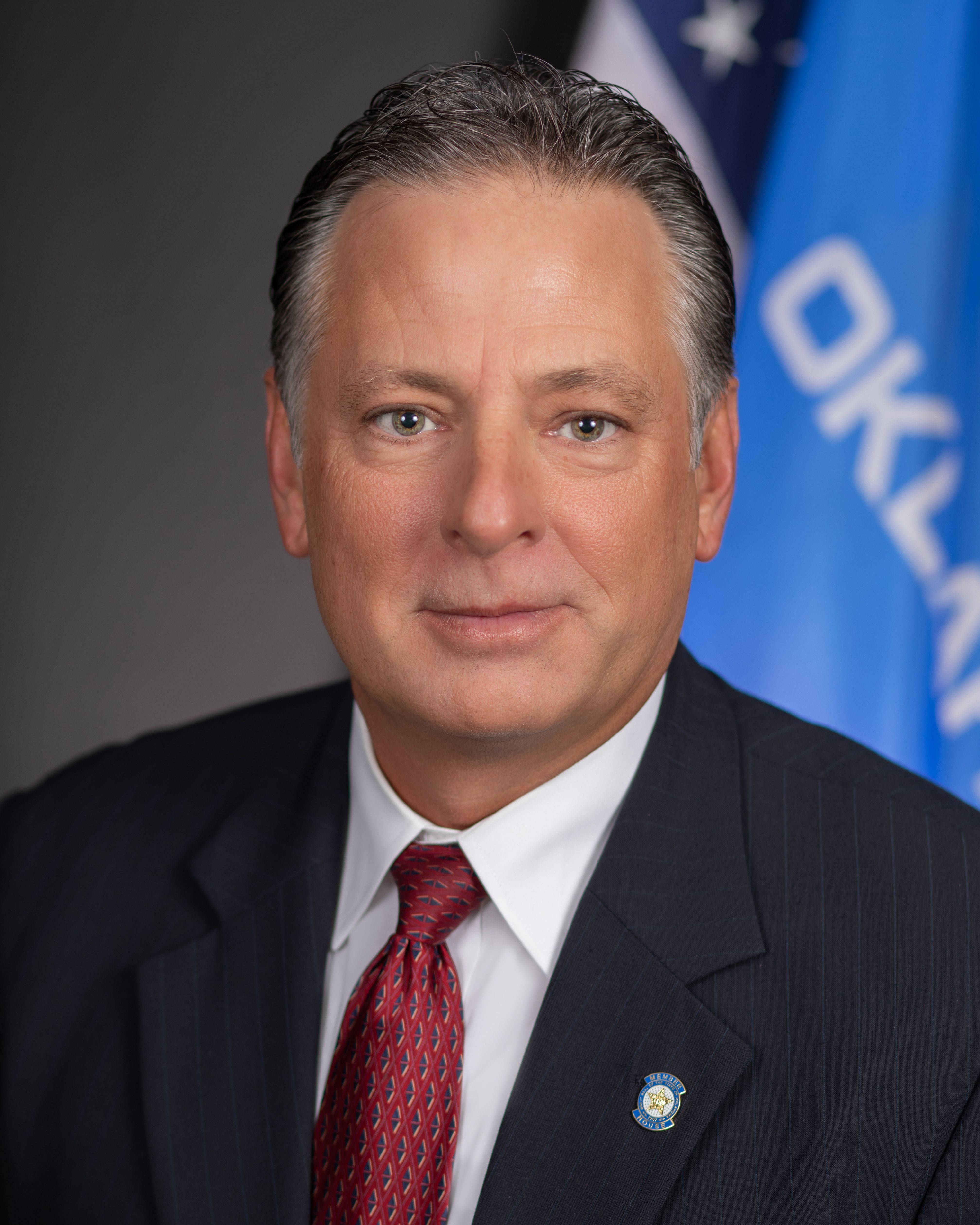
Rep. John George
Sponsored bills
Maddy summaryHB 3265 amends Oklahoma's police pension law to clarify disability benefit eligibility for law enforcement officers. It specifically expands the definition of "mental health specialist" to include licensed psychologists for disability certification (Section G). The bill establishes a clear benefit scale based on disability percentage (e.g., 50-74% impairment equals 75% of accrued retirement benefit) and presumes line-of-duty disability for officers exposed to hazardous substances like chemicals or blood-borne pathogens, unless proven otherwise (Section I). These changes directly affect Oklahoma police officers seeking disability benefits through the Oklahoma Police Pension and Retirement System.
Maddy summarySB 1405 reauthorizes a voluntary tax checkoff on Oklahoma state income tax returns, allowing taxpayers to donate a portion of their refund to the Wildlife Diversity Fund. The fund, managed by the Oklahoma Wildlife Conservation Commission, supports conservation efforts for nongame wildlife (species not classified as game or furbearer). Taxpayers who donate by mistake can request a refund within three years, and the reauthorized checkoff takes effect January 1, 2027. This bill updates statutory language to maintain the existing donation mechanism without altering its core purpose.
Maddy summaryHB 3269 allows law enforcement officers to submit proposed arrest warrants to magistrates via telephone or electronic communication (like email) instead of in person. It requires officers to verbally recite probable cause and the warrant details during a phone call, obtain the magistrate’s oral permission to print their name on the warrant, and have the entire conversation audio recorded, transcribed, and filed. If using email, the affidavit must include a notarized acknowledgment or a telephonic oath, with the magistrate noting the date and time of the oath. This bill directly affects police officers preparing warrants and magistrates reviewing them, streamlining the process while maintaining recording and documentation requirements. The changes take effect November 1, 2026.
Maddy summaryHB 3264 requires individuals convicted of 24 specific serious crimes - including first-degree murder, child sexual abuse, human trafficking, domestic abuse by strangulation, and discharging a firearm into occupied buildings - to serve at least 85% of their prison sentence before becoming eligible for parole. The bill eliminates earned credits or other sentence reductions that would allow offenders to serve less than 85% of their sentence. It applies to all convictions for these listed offenses, including attempts, conspiracies, or solicitations. The law would take effect on November 1, 2026, if passed.
Maddy summaryHB 3268 amends Oklahoma law to classify the knowing display or manufacture of a fictitious license plate as a Class D3 criminal offense. This bill directly affects individuals who create, display, or sell fake vehicle license plates. The key provision adds this specific violation to the list of Class D3 offenses under Oklahoma Statutes, which include various agricultural, livestock, and commercial violations. The bill text shows this would be added as a new item (not listed in the provided excerpt) to the existing Class D3 offenses. Note: The bill title mentions "fictious" (a typo for "fictitious"), but the provided text shows the amendment references timber-related offenses (item 34), creating inconsistency in the context provided.
Maddy summaryHB 3411, titled the "Oklahoma Agriculture Act of 2026," is a procedural bill that establishes the name for an upcoming agricultural-related law and sets its effective date. It does not create new policies or affect specific groups; it solely names the legislation and specifies November 1, 2026, as its implementation date. The bill contains no substantive provisions or mechanisms, as it is non-codified and serves only as a formal designation. This type of naming act typically precedes more detailed legislation.
Maddy summaryHB 3263 designates the morel mushroom as Oklahoma's official state mushroom through a symbolic legislative act. The bill amends Oklahoma Statutes to formally adopt this designation, with no regulatory or financial provisions affecting specific groups or policies. It becomes effective November 1, 2026, and solely serves to recognize the morel mushroom as a cultural symbol of the state. This is a purely ceremonial designation with no practical policy changes or direct impact on residents or businesses.
Maddy summaryHB 3267 adds 39 specific offenses to Oklahoma's Class C2 felony category, including bribery of public officials (such as legislators or county treasurers), pipeline sabotage, animal branding fraud, and certain gambling crimes. The bill directly affects individuals who commit these listed acts, classifying them as Class C2 felonies with corresponding penalties. Key mechanisms include expanding the legal definition of Class C2 offenses to include new provisions like "breaking and entering a commercial building" and "embezzlement by a county treasurer." This change takes effect upon the bill's passage, altering sentencing for these specific crimes under Oklahoma Statutes.
Maddy summaryHB 3266 amends Oklahoma law to expand the definition of Class D2 felony offenses, adding 22 specific violations including reckless driving that causes a collision (Section 11-901, item 10). It also includes multiple abortion-related offenses such as performing abortions after the first trimester, violating pain-awareness laws, and conducting abortions on minors without consent (items 11-19). The bill specifies penalties: Class D2 felons face up to 2 years in prison (with 20% mandatory service), increasing to 5-10 years for repeat offenders. It exempts certain offenses (like abortion violations) from these penalties, instead applying existing statutes. This bill directly affects individuals convicted of these specific offenses under Oklahoma Statutes.