Maddy summaryHB 1979 amends Oklahoma's Early Childhood Task Force membership rules. The bill replaces a specific university representative (previously from Oklahoma State University's Department of Human Development and Family Science) with the Associate Dean for Academic Programs and Student Services from OSU's College of Education and Human Sciences. This change affects the task force's composition, which advises the state on early childhood policy. The bill does not create new policies but adjusts who serves on the existing advisory group. It remains a procedural amendment focused on task force staffing, not new legislation.

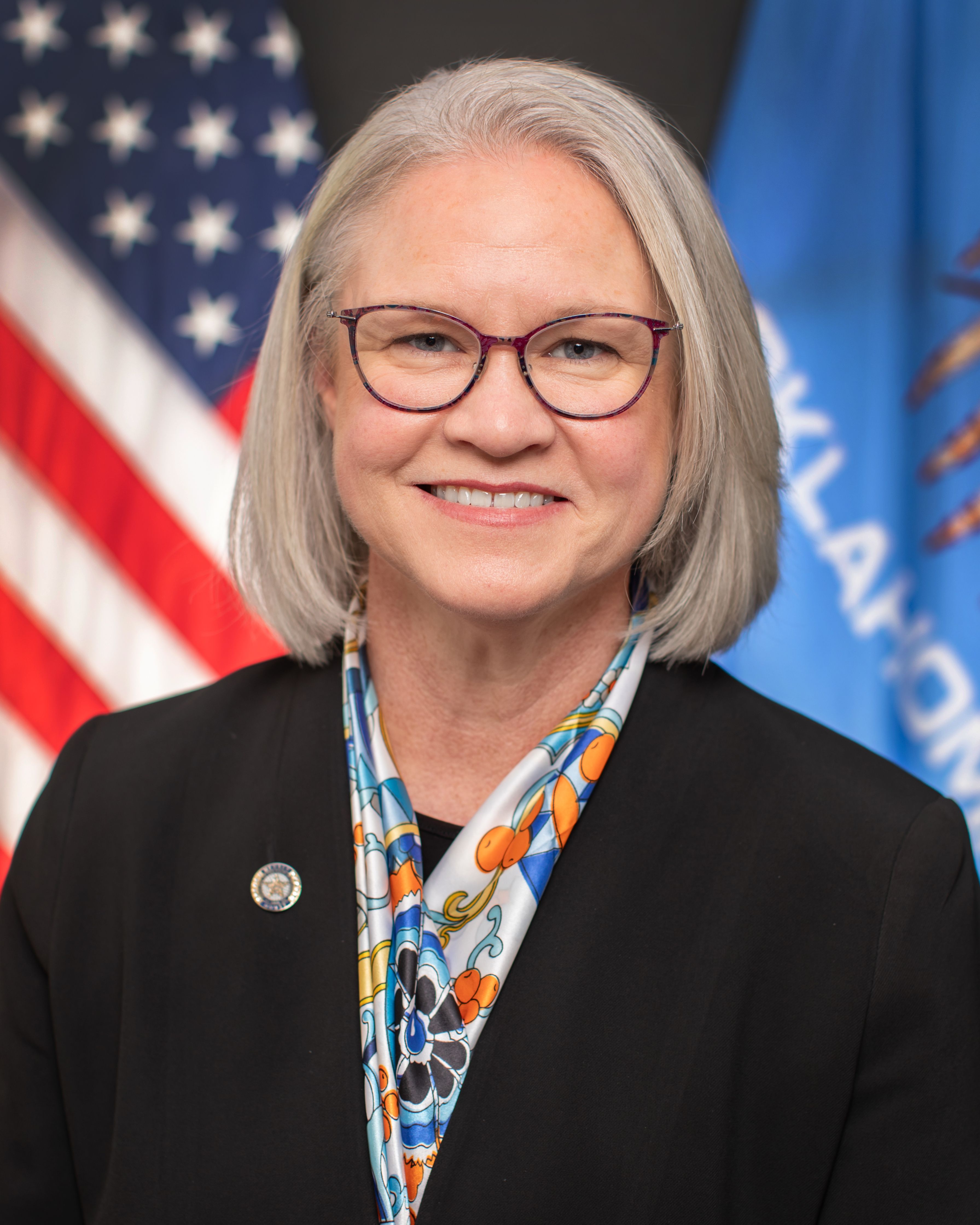
Rep. Trish Ranson
Sponsored bills
Maddy summaryHB 3378 modifies the term lengths for members of Oklahoma's Science and Technology Research and Development Board. Starting June 30, 2026, two Governor-appointed members, one Senate-appointed member, and one House-appointed member will serve two-year terms instead of the standard four-year terms, with all positions reverting to four-year terms after the initial two-year period. The bill does not change the board's composition (nine members total), appointment requirements, or responsibilities, which include overseeing science and technology initiatives. This adjustment applies only to specific board members appointed by the Governor, Senate President, and House Speaker.
Maddy summaryHB 3380, the "Fostering the Future for Oklahoman Children and Families Act," requires Oklahoma's Department of Human Services (DHS) to modernize child welfare systems within 180 days of its effective date. It mandates improved data collection and transparency, expansion of AI-driven tools for caregiver matching and funding efficiency, and annual public scorecards tracking outcomes like reducing foster care duration and improving child safety. The bill also directs DHS to create a new initiative supporting youth transitioning from foster care through online resource platforms, educational scholarships, and reallocated funding for job training. Additionally, it requires DHS to address religious accommodations for faith-based partners and foster family placements. The law takes effect November 1, 2026.
Maddy summaryHB 3383 limits most Oklahoma state employees to working no more than 14 hours in any 24-hour period, including overtime. This rule may be temporarily suspended during officially declared emergencies to protect life, public safety, or critical infrastructure. The Office of Management and Enterprise Services must define what qualifies as an emergency, and all state agencies must create new scheduling rules to comply. The law takes effect July 1, 2026.
Maddy summaryHB 3379 prohibits Oklahoma public colleges and universities from asking about a prospective student's criminal history on initial application forms or during early admissions decisions, except for convictions related to sex offenses listed in Oklahoma law (21 Okl. Stat. §§ 843.5, 1111, etc.). After admission, institutions may inquire about criminal history for counseling, campus participation decisions, or specific programs like teacher preparation, but must consider factors like time passed, rehabilitation, and the offense's relevance. The bill specifically prevents denial of admission or academic program continuation for students seeking licensed careers (e.g., teaching) based solely on criminal history, requiring institutions to offer counseling about licensing requirements instead. It takes effect July 1, 2026.
Maddy summaryHB 3384 caps annual renewal premium increases for homeowner's insurance policies at 10% starting November 1, 2026. It directly affects Oklahoma homeowners with personal residential insurance policies by limiting how much their annual renewal premiums can rise. The bill also prohibits insurers from canceling or increasing premiums solely because a homeowner filed their first claim (with specific exceptions like nonpayment or fraud), and requires written renewal notices 30 days before policy expiration. This change applies only to renewal premiums, not new policies or initial coverage.
Maddy summaryHB 3382 would provide a salary increase for most Oklahoma state employees: an 8.5% raise for those earning under $70,000 annually and a 2% raise for those earning above $70,000, effective July 1, 2026. It directly affects full-time state employees as of June 30, 2026, excluding employees of Oklahoma's higher education system (including universities) and common school districts. The bill requires the increase to be applied to base salary amounts, with the law taking full effect on November 1, 2026. This is a direct compensation adjustment with no additional policy mechanisms beyond the specified percentage increases.
Maddy summaryHB 3381 requires Oklahoma district attorneys to include "vulnerable adults" in their existing quarterly reports about juvenile cases. This amendment expands the current reporting requirement, which previously only covered juveniles, to now also include vulnerable adults. The bill modifies the existing law to mandate this updated reporting format. The change affects all district attorneys across Oklahoma who currently submit these quarterly reports. The bill is currently referred to the Criminal Judiciary committee for further consideration.
Maddy summarySB 186 creates a grant program to help teachers with temporary emergency or provisional teaching certificates obtain permanent certification. The Office of Educational Quality and Accountability will award up to 1,000 annual grants per year (first-come, first-served) to eligible teachers through their school districts. Grants cover costs for exam preparation, exam fees, and part of required professional education hours. The program is funded through a new revolving fund and takes effect July 1, 2025.
Maddy summarySB 186 creates a state grant program to help teachers with emergency or provisional teaching certificates obtain permanent certification. The Office of Educational Quality and Accountability will award up to 1,000 annual grants per year (first-come, first-served) to cover costs for competency exam preparation, exam fees, and part of required professional education hours. School districts must apply on behalf of eligible teachers using a state-prescribed form. The program is funded through a new "Teacher Certification Emergency to Permanency Revolving Fund" established in the state treasury, using state appropriations for ongoing support. The bill takes effect July 1, 2025.