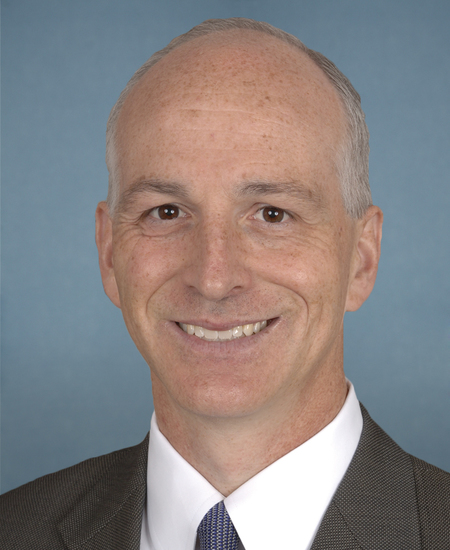
Photo of Adam Smith
D United States House · District 9 · Washington On the 2026 ballot

Rep. Adam Smith

Compare
Total votes
2,818
all sessions
Attendance
98%
54 missed
Lower than 77% of chamber peers
With party
98%
of cast votes
Higher than 86% of chamber peers
Bipartisan score
1%
crosses aisle rarely
Lower than 87% of chamber peers
Sponsored
1,271
bills & resolutions
Near the chamber average
Committees
1
assignment
1,271 bills and resolutions

Sponsored bills

Total
1,271
Primary
71
Co-sponsor
1,200
This page
1,271
matching current filters
Co-sponsor HRES 1524
In committee · Ohio House · Co-sponsor
Expressing support for the designation of the week of September 19 through September 26, 2026, as "National Estuaries Week".

Maddy summaryThis House resolution expresses support for designating the week of September 19 through September 26, 2026, as National Estuaries Week to raise public awareness about the importance of these coastal ecosystems. The bill highlights that estuaries support a significant portion of the U.S. population and economy while providing critical services such as flood control, water filtration, and habitat for fish and wildlife. It acknowledges ongoing threats to estuary health, including pollution and sea level changes, and recognizes the efforts of government agencies, organizations, and individuals working to protect and restore these areas.

In committee Sep 10, 2026 1 co-sponsor
Co-sponsor HR 10295
In committee · Ohio House · Co-sponsor
9-8-8 Call Center Improvement Act

Maddy summaryThe 9-8-8 Call Center Improvement Act directs the Secretary of Health and Human Services to provide grants to new or existing crisis call centers that serve regional or local communities. These funds are intended to help centers purchase or upgrade technology, train staff, improve daily operations, and hire additional personnel. The bill authorizes $441 million in appropriations for fiscal year 2027 to support these efforts, with the money remaining available until it is fully spent.

In committee Sep 3, 2026 1 co-sponsor
Co-sponsor HR 10287
In committee · Ohio House · Co-sponsor
9-8-8 Crisis Response Act

Maddy summaryThe 9-8-8 Crisis Response Act expands federal funding for mental health crisis response and broadens Medicaid coverage to include regional lifeline call centers and crisis stabilization facilities. The bill increases the annual budget for the Mental Health Crisis Response Partnership Pilot Program from $10 million to $100 million for fiscal years 2027 through 2029. It also allows states to use Medicaid funds to pay for these new services, with the federal government covering 85 percent of the costs. To qualify, crisis stabilization facilities must provide 24-hour care without rejecting patients based on their ability to pay or other factors, and they must maintain an average patient stay of less than 150 hours.

In committee Sep 3, 2026 1 co-sponsor
Co-sponsor HR 10280
In committee · Ohio House · Co-sponsor
9–8–8 Implementation Act of 2026

Maddy summaryThe 9-8-8 Implementation Act of 2026 expands federal funding and mandates insurance coverage for behavioral health crisis services, directly affecting individuals experiencing mental health or substance use emergencies as well as the providers who serve them. The bill authorizes grants to upgrade local lifeline call centers, build new crisis stabilization facilities, and train a larger workforce of behavioral health professionals. It requires Medicare, Medicaid, private group health plans, TRICARE, and other federal insurance programs to cover crisis response services with financial terms no more restrictive than standard medical care. Additionally, the legislation establishes a federal panel to develop training protocols for 9-1-1 dispatchers to better connect callers to appropriate crisis care rather than law enforcement responses.

In committee Sep 3, 2026 1 co-sponsor
Co-sponsor HR 10270
In committee · Ohio House · Co-sponsor
Supporting 9–8–8 Crisis Stabilization Act

Maddy summaryThe Supporting 9-8-8 Crisis Stabilization Act amends Medicaid rules to allow federal funding for specific community-based mental health facilities that were previously excluded from coverage. It defines two new types of eligible sites: crisis receiving and stabilization facilities, which must operate 24/7 with an average stay under 150 hours, and mental health and substance use urgent care centers where individuals can walk in without an appointment. These facilities are required to accept referrals from law enforcement and emergency personnel while prohibiting service denials based on factors like ability to pay or criminal justice history. The bill also directs the Department of Health and Human Services to issue implementation guidance within 180 days and submit a report to Congress one year later analyzing how these changes affect hospital admissions, incarceration rates, and overall crisis response utilization.

In committee Sep 3, 2026 1 co-sponsor
Co-sponsor HR 10246
In committee · Ohio House · Co-sponsor
9–8–8 Community Infrastructure Act

Maddy summaryThe 9-8-8 Community Infrastructure Act authorizes $1 billion in grants for capital projects at health centers and crisis response facilities. Eligible recipients include federally funded health centers, tribal organizations, and specialized non-hospital facilities that provide 24/7 mental health and substance use crisis services. Funds may be used for construction, renovation, expansion, or loan repayment to improve these infrastructure sites. The bill specifically defines eligible crisis facilities as those offering stabilization beds, sliding-scale payment options, and no-wrong-door admission without rejecting patients based on ability to pay or other factors.

In committee Sep 3, 2026 1 co-sponsor
Co-sponsor HR 10245
In committee · Ohio House · Co-sponsor
9–8–8 and 9–1–1 Integration Act

Maddy summaryThe 9-8-8 and 9-1-1 Integration Act directs the Secretary of Health and Human Services to establish a multidisciplinary panel that will develop recommendations for training and protocols for emergency dispatchers. The primary goal is to ensure that individuals experiencing behavioral health or substance use crises are connected to appropriate care services rather than being met solely by law enforcement. The panel must consider integrating the 9-8-8 crisis line with the 9-1-1 system, utilizing standardized assessment tools to evaluate caller needs, and implementing training on cultural competency and implicit bias. Additionally, the legislation requires the creation of data collection standards to track response outcomes and disparities while protecting caller privacy, with reports submitted to Congress upon the release of recommendations and every five years thereafter.

In committee Sep 3, 2026 1 co-sponsor
Co-sponsor HR 10240
In committee · Ohio House · Co-sponsor
Behavioral Health Crisis Services Expansion Act of 2026

Maddy summaryThe Behavioral Health Crisis Services Expansion Act of 2026 mandates that Medicare, Medicaid, and most private health insurance plans cover mental health and substance use crisis response services for individuals experiencing acute episodes. These covered services include care provided by mobile crisis teams, urgent care facilities, and stabilization centers that offer short-term observation without rejecting patients based on their ability to pay or other factors. The legislation also requires ambulance providers to transport individuals in crisis to appropriate facilities and extends coverage requirements to TRICARE, veterans' benefits, federal employee health plans, and the Children's Health Insurance Program. These new coverage mandates generally take effect three years after the bill is enacted, with specific provisions ensuring that financial restrictions on these services are no more severe than those applied to standard medical care.

In committee Sep 3, 2026 1 co-sponsor
Co-sponsor HCONRES 115
In committee · Ohio House · Co-sponsor
Directing the President, pursuant to section 5(c) of the War Powers Resolution, to remove United States Armed Forces from hostilities with presidentially designated terrorist organizations in the Western Hemisphere.

Maddy summaryThis House concurrent resolution directs the President to withdraw U.S. Armed Forces from hostilities with any presidentially designated terrorist organization in the Western Hemisphere. The directive is issued under section 5(c) of the War Powers Resolution and applies unless Congress has separately authorized military action through a declaration of war or specific legislation.

In committee Sep 2, 2026 1 co-sponsor
Co-sponsor HRES 1483
In committee · Ohio House · Co-sponsor
Expressing support for the recognition of August 17 through August 23, 2026, as "Warehouse Worker Recognition Week", celebrating the workers in the logistics industry.

Maddy summaryThis House resolution supports the designation of August 17 through August 23, 2026, as Warehouse Worker Recognition Week to honor over 1.8 million employees in the logistics industry. The bill highlights the critical role these workers play in the U.S. economy and supply chain while acknowledging the challenging conditions they face, such as extreme heat and long hours. It encourages increased public awareness of their contributions and commits lawmakers to collaborating on efforts to reduce workplace injuries and better support these front-line employees.

In committee Aug 13, 2026 1 co-sponsor
Showing 1 to 10 of 1,271 bills
1 2 3 128 Next