

Maddy summaryThis House resolution formally recognizes suicide as a serious public health problem in the United States and expresses support for designating September 2026 as National Suicide Prevention Month and September 10, 2026, as World Suicide Prevention Day. The bill cites data from the CDC, SAMHSA, and the VA to highlight that suicide is a leading cause of death among young people, veterans, and during the postpartum period, while also noting the significant economic costs associated with it. It declares suicide prevention a national priority and emphasizes that mental health is as important as physical health. The resolution supports the development of strategies to improve access to quality mental health, substance abuse, and suicide prevention services for all communities.
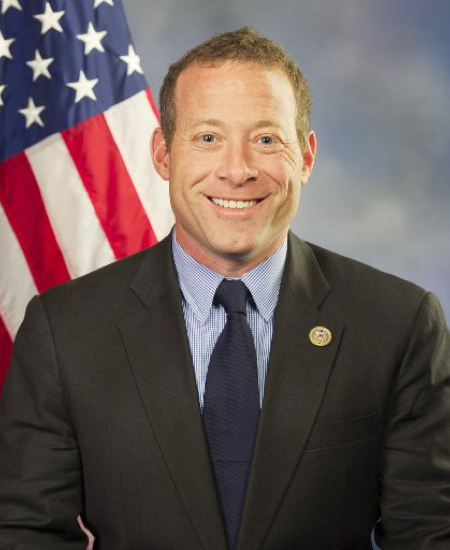
Rep. Josh Gottheimer
Sponsored bills
Maddy summaryThis bill, known as the Ratepayer Protection Act, modifies federal energy laws to ensure that large industrial customers pay for the specific infrastructure upgrades needed to serve their high electricity demands. It directly affects non-residential facilities with a peak power usage of 100 megawatts or more, requiring utilities to charge these customers the full incremental cost of any necessary generation, transmission, or distribution improvements. Under the new rules, large customers must also provide financial guarantees or contributions before such upgrades are made, ensuring utilities can recover costs even if the customer leaves the contract early. State regulators have two years to implement these standards, though the bill exempts utilities in states that have already enacted similar measures or are actively considering them.
Maddy summaryThis House resolution formally recognizes New Jersey's law enforcement officers, firefighters, and emergency medical personnel for their roles in the rescue and recovery efforts following the September 11, 2001 attacks. It highlights specific contributions, such as the large-scale waterborne evacuation across the Hudson River and the deployment of the state's urban search and rescue team to Ground Zero. The measure also honors those who have died from 9/11-related illnesses in the years since the attacks. Finally, it reaffirms the federal commitment to funding the World Trade Center Health Program and the September 11th Victim Compensation Fund.
Maddy summaryThe AI LABS Act directs the Secretary of Education to provide competitive grants to states for establishing or expanding artificial intelligence programs in elementary and secondary schools. These funds are specifically designated for creating dedicated curricula that teach students how to use and understand AI, as well as providing professional development for teachers to integrate these tools into their instruction. Additionally, the bill requires the Secretary to conduct a study on how states utilize the grant money and submit a report with recommendations to Congress within one year of enactment.
Maddy summaryThis bill directs the Secretary of Education to conduct a study on how states, local school districts, and public schools teach students about the September 11, 2001 terrorist attacks. The study must examine whether 9/11 education is required or optional in curricula, identify available teaching resources and professional development for teachers, and assess the methods used to evaluate student learning. It also requires the Secretary to work with the National September 11 Memorial & Museum and submit a report on these findings to Congress within three years of the law's enactment.
Maddy summaryThe Student Protection and University Accountability Act requires colleges receiving federal funds to establish clear, public processes for investigating discrimination complaints based on race, color, or national origin. Under this bill, universities must designate a compliance officer, provide detailed explanations for their investigative decisions, and notify complainants of outcomes within 30 days. The law also mandates that schools display federal anti-discrimination materials on campus and makes them ineligible for funding if they fail to comply with these requirements for two consecutive years. Additionally, the bill directs the Department of Education to report monthly on discrimination complaints to Congress and prohibits the agency from dismissing or delaying investigations when similar claims are filed elsewhere.
Maddy summaryHR 5267, the American Franchise Act, clarifies when franchisors can be considered joint employers of franchisee employees under federal labor laws. It defines "substantial direct and immediate control" over essential employment terms like wages, benefits, hours, hiring, and discipline - requiring franchisors to actively set these terms to be deemed joint employers. The bill explicitly excludes routine brand standards, training, or minimal safety requirements from constituting such control. This directly affects franchisors and franchisees by limiting joint employer liability to cases where franchisors exert significant, ongoing influence over core employment decisions. The law applies prospectively to new cases after enactment, not past disputes.
Maddy summaryThis House resolution marks the 25th anniversary of the September 11, 2001 terrorist attacks by formally honoring the memory of the nearly 3,000 victims and recognizing the sacrifices made by first responders, military personnel, and the passengers of United Airlines Flight 93. The bill acknowledges the ongoing health challenges faced by survivors and responders, highlighting the role of the World Trade Center Health Program in providing long-term medical support. It also credits charitable organizations and community groups that have continued to assist victims' families and veterans over the past two decades. Finally, the resolution urges the American public to observe the anniversary with ceremonies and reaffirms Congress's commitment to remembering the events and lessons of that day.
Maddy summaryThe Stop Auto Fraud Act of 2026 creates a new federal crime for individuals who knowingly stage or fabricate motor vehicle accidents to submit false insurance claims. The bill directly affects people involved in these schemes by imposing penalties that include fines and up to 10 years in prison, with sentences increasing to 20 years if serious bodily injury occurs and potentially life imprisonment if the fraud results in death. Additionally, any criminal fines collected under this new law must be deposited into the Highway Trust Fund rather than general government revenue.
Maddy summaryThis bill requires U.S. colleges and universities receiving federal student aid (Title IV) or specific grants (Title VI) to annually certify by July 31 that they will not engage in "nonexpressive commercial boycotts" of countries designated as strategic partners of the U.S. (such as Israel under existing law). The certification must confirm these institutions will permit equal academic exchanges - like study abroad programs, conferences, and research - with strategic partner countries as they do with other nations. Failure to submit the certification results in loss of federal funding eligibility for the following fiscal year. It directly affects all higher education institutions relying on federal financial aid programs.