

In committee Sep 24, 2026
1 co-sponsor
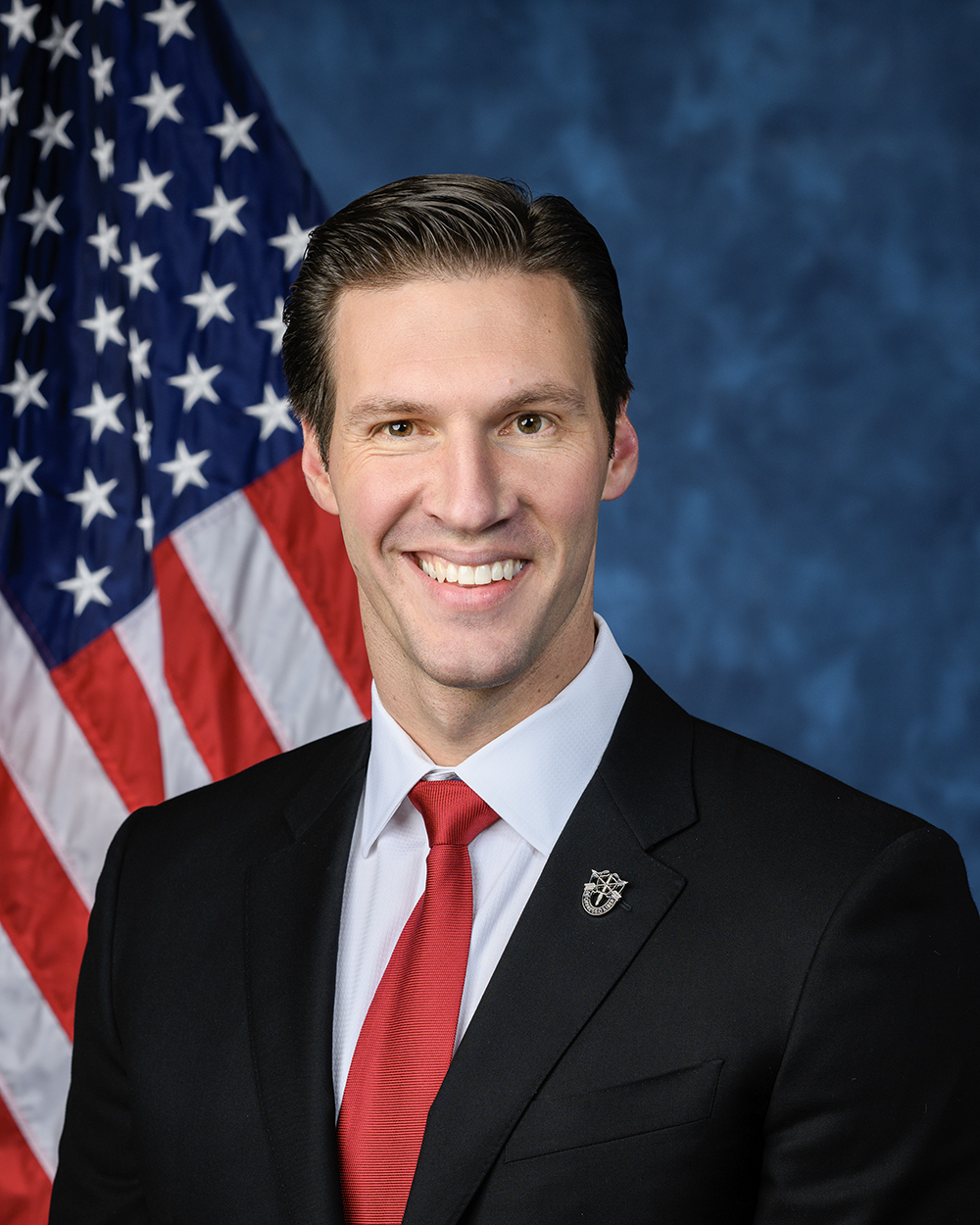
Rep. Pat Harrigan
Total votes
669
all sessions
Attendance
98%
11 missed
Near the chamber average
With party
91%
of cast votes
Lower than 91% of chamber peers
Bipartisan score
4%
crosses aisle rarely
Higher than 90% of chamber peers
Sponsored
360
bills & resolutions
Near the chamber average
Committees
7
assignments
360 bills and resolutions
Sponsored bills
Total
360
Primary
30
Co-sponsor
330
This page
360
matching current filters
In committee Sep 24, 2026
1 co-sponsor
To amend the Mineral Leasing Act for Acquired Lands to make that Act applicable to hardrock minerals.
Maddy summaryThis bill redefines which minerals fall under federal leasing rules for acquired lands. It specifically adds "hardrock minerals" (including base metals, precious metals, and gemstones) to the Mineral Leasing Act for Acquired Lands, while excluding coal, oil, gas, and other minerals covered by separate laws. The change clarifies that mining companies seeking to extract these hardrock minerals on federal lands must now follow the established leasing process. This directly affects mineral extraction companies operating on federal lands and the Bureau of Land Management, which administers these leases. The bill makes no new financial or operational requirements but updates the legal definition governing these leases.
Passed Sep 17, 2026
1 co-sponsor
REACH Act
Maddy summaryThe REACH Act creates a new $10,000 annual tax credit for eligible rural health care providers who work at least 900 hours in a rural area. This benefit applies to primary care practitioners, mental health professionals, nurses, and medical residents participating in approved training programs. The credit is subject to an income limit, reducing the amount by $1 for every dollar of adjusted gross income over $170,000 until it reaches zero. These provisions are set to take effect for taxable years beginning after December 31, 2026, and will expire for years beginning after December 31, 2033.
Budget & TaxesSupports Budget & TaxesThe bill creates a new $10,000 annual tax credit for rural health care providers, which directly impacts taxation and government spending by reducing tax revenue and incentivizing a specific workforce.
HealthcareSupports HealthcareThe REACH Act provides a significant tax credit to rural healthcare providers, including primary care practitioners and mental health professionals. This directly supports and strengthens healthcare access and services in rural areas.
In committee Sep 16, 2026
0 co-sponsors
American Reserve Modernization Act of 2026
Maddy summaryThe American Reserve Modernization Act of 2026 directs the U.S. Treasury to create two new accounts: a Strategic Bitcoin Reserve for Bitcoin acquired through government forfeiture and a Digital Asset Stockpile for other digital assets. The bill mandates that all Bitcoin held in the reserve be kept for at least 20 years, with strict rules against selling or disposing of these assets during that time. It also establishes a transparency system requiring quarterly public reports and third-party audits to verify the government's holdings and management of these digital assets.
In committee Sep 16, 2026
1 co-sponsor
Foreign Robocall Elimination Act
Maddy summaryHR 6152, the Foreign Robocall Elimination Act, establishes an interagency task force to address foreign robocalls entering the United States. The task force, composed of the FCC, FTC, DOJ, and private sector representatives, will study the origins, impacts, and potential solutions to foreign robocalls and must submit a report to Congress within 360 days. The bill also modifies existing law to require FCC notices about robocall mitigation every three years instead of annually, and introduces a bond requirement for providers using the Robocall Mitigation Database. This legislation affects telecommunications providers, federal agencies, and all U.S. telephone users who receive unwanted calls. The bill aims to improve coordination between U.S. agencies and foreign countries in combating illegal robocalls through concrete policy changes.
In committee Sep 16, 2026
1 co-sponsor
TRAPS Act
Maddy summaryThe TRAPS Act establishes a federal Task Force on Payment Scams, chaired by the Treasury Secretary, to coordinate efforts across agencies like the FTC, Federal Reserve, and consumer groups. The Task Force will study current scam tactics (such as fake text messages or fraudulent payment platforms), evaluate prevention strategies, and develop recommendations to help consumers avoid and report scams. It must submit an initial report within one year and annual updates, focusing on improving federal-state coordination and education programs. This bill directly affects government agencies and stakeholders participating in the Task Force, with the goal of protecting consumers from evolving payment scams.
In committee Sep 16, 2026
1 co-sponsor
AM Radio for Every Vehicle Act of 2025
Maddy summaryThis bill requires all new passenger vehicles manufactured for sale in the U.S. to include AM radio as standard equipment (not an optional add-on) by 2027-2028, depending on manufacturer size. It mandates that AM radio receivers must be easily accessible to drivers and allows compliance through digital AM broadcast technology. During a transition period, manufacturers must clearly label vehicles without AM radio but cannot charge extra for this feature. The bill also mandates a GAO study on AM radio's role in emergency alerts and includes a 10-year sunset provision for the rule. It preempts state laws regarding AM radio access in vehicles.
Passed Sep 16, 2026
1 co-sponsor
To authorize the Secretary of the Army to convey to the State of North Carolina a certain parcel of real property located at Fort Bragg, North Carolina, on which the State shall construct a veterans’ State home, and for other purposes.
Maddy summaryThis bill authorizes the Secretary of the Army to transfer approximately 20 acres of land at Fort Bragg in North Carolina to the state government without charge. The property is intended for the construction of a veterans' home under the jurisdiction of the North Carolina Department of Military and Veterans Affairs. The state is required to pay all costs associated with the transfer, including environmental reviews and administrative fees, with any excess prepayments refunded by the federal government. If the land is no longer used for the designated veterans' facility, ownership may revert to the United States at the Secretary's discretion.
HealthcareSupports HealthcareBill facilitates construction of a veterans' home, which provides housing and care services for veterans, indirectly supporting healthcare access for this population.
HousingSupports HousingBill transfers land to build a veterans' home, which provides housing for a specific vulnerable group, aligning with housing development goals.
VeteransSupports VeteransBill authorizes transfer of federal land to North Carolina specifically for constructing a veterans' home, directly advancing veteran services and housing.
Passed Sep 15, 2026
1 co-sponsor
Title IX Clarification Act of 2026
Maddy summaryThe Title IX Clarification Act of 2026 amends federal education law to explicitly define the terms "sex," "female," and "male" based on biological characteristics. Specifically, it states that "sex" refers to an individual's biologically determined status as male or female, while "female" and "male" are defined by the presence of specific reproductive systems capable of producing ova or sperm, respectively. These definitions apply to all education programs and activities that receive federal financial assistance starting on the date the bill becomes law. The legislation aims to clarify existing statutes by removing ambiguity around biological sex definitions in the context of Title IX protections.
In committee Sep 8, 2026
1 co-sponsor
Ask Maddy
·
AI policy assistant
Ask Maddy about Pat Harrigan
Scope: north-dakota
Hi! I can help you understand Pat Harrigan's legislative record. What would you like to know?
Try one of these
i
Maddy answers using official bill text and legislative records. Always verify before sharing.
Sources cited inline