

Maddy summaryThis bill, known as the Ratepayer Protection Act, modifies federal energy laws to ensure that large industrial customers pay for the specific infrastructure upgrades needed to serve their high electricity demands. It directly affects non-residential facilities with a peak power usage of 100 megawatts or more, requiring utilities to charge these customers the full incremental cost of any necessary generation, transmission, or distribution improvements. Under the new rules, large customers must also provide financial guarantees or contributions before such upgrades are made, ensuring utilities can recover costs even if the customer leaves the contract early. State regulators have two years to implement these standards, though the bill exempts utilities in states that have already enacted similar measures or are actively considering them.
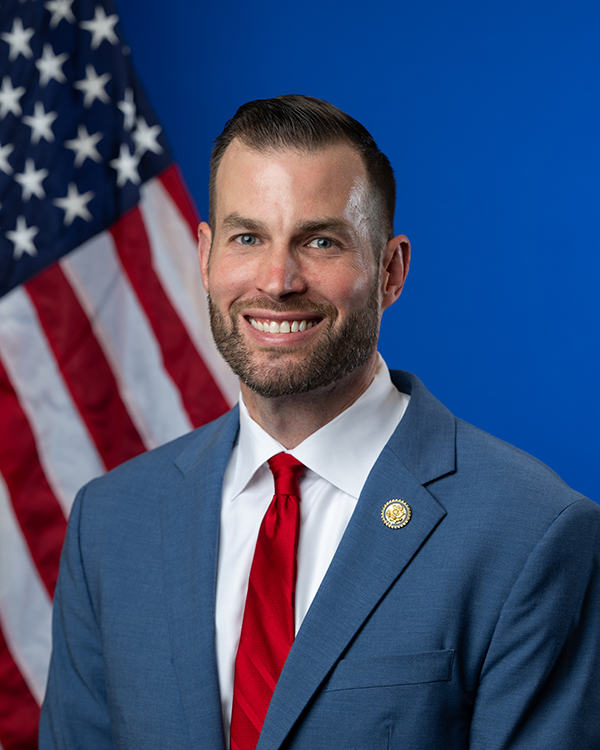
Rep. Clay Fuller
Sponsored bills
Maddy summaryHR 10501 amends the Communist Control Act of 1954 to explicitly classify the Democratic Socialists of America (DSA) as a communist political party under federal law. By adding the DSA and any successor organizations to the statutory list of banned entities, the bill subjects the group to existing restrictions on membership in government positions and other legal penalties associated with designated communist parties. This legislative change directly affects members and leaders of the DSA by potentially disqualifying them from holding public office or serving in certain federal roles.
Maddy summaryThis House resolution supports designating the week of September 20 through September 26, 2026, as "Gold Star Families Remembrance Week." It aims to honor the families of service members and veterans who have died in the line of duty. The bill encourages Americans to observe this annual week by performing acts of community service and celebrating the lives of those who made the ultimate sacrifice.
Maddy summaryThis bill would temporarily ban the export of diesel fuel from the United States. The prohibition would take effect immediately upon enactment and remain in place until December 31, 2026. This measure directly affects companies involved in shipping diesel fuel abroad by restricting their ability to sell the product to foreign markets during that specific timeframe.
Maddy summaryThe Diesel Price Reduction Act of 2026 would require the Secretary of Commerce to ban the export of diesel fuel from the United States during specific periods of high domestic prices. This prohibition begins if the average retail price of diesel exceeds $5 per gallon for fourteen consecutive days. The ban remains in effect until the price drops below $4.50 per gallon for thirty consecutive days, at which point exports are permitted to resume.
Maddy summaryThe Make Apportionment Great Again Act would change how U.S. House seats are distributed among states by excluding noncitizens from the population count used for apportionment. It requires the Secretary of Commerce to recalculate state populations using existing federal and state government records, without conducting a new census, and mandates that future censuses include a question on citizenship status. The bill establishes a legal presumption that any resulting changes in seat allocation are valid, allowing courts to overturn them only with clear evidence of statutory or constitutional violations. Additionally, it creates an expedited judicial process for legal challenges, requiring cases to be heard by three-judge panels and permitting direct appeal to the Supreme Court.
Maddy summaryThis House concurrent resolution formally denounces Sharia law and opposes its implementation within the United States. The text argues that Sharia functions as a comprehensive political and legal system that conflicts with the U.S. Constitution, specifically citing differences in criminal justice, gender equality, and individual liberties. It references historical examples of Islamic governance and recent statements by President Trump to support the claim that foreign legal systems incompatible with American values should not be applied domestically. As a concurrent resolution, this measure serves as an official expression of congressional sentiment rather than creating new binding laws or regulations.
Maddy summaryThe NEAUX PROS Act prohibits colleges that receive federal student aid from allowing individuals who hold active professional sports contracts to compete in intercollegiate athletics in the same sport. To enforce this rule, the bill conditions continued eligibility for Title IV federal funding on institutions ensuring they do not permit such dual participation, with violations subject to standard financial aid enforcement actions like suspension or termination of funds. The legislation also creates a new federal criminal offense for athletics officials who knowingly recruit or sign professional athletes, carrying penalties of up to five years in prison, or ten years if the act was done for financial gain or as part of a pattern. Individuals may avoid being classified as professional athletes by rescinding their contracts in writing before receiving any compensation or providing athletic services under those agreements.
Maddy summaryHR 10265 formally authorizes the White House Fellows Program in federal law, establishing a statutory basis for an initiative that has previously operated only under executive order. The bill creates a President's Commission on White House Fellowships, composed of up to 30 nonpartisan members appointed by the President, to oversee the recruitment and selection of 11 to 19 early-career U.S. citizens each year. Selected fellows serve as full-time employees for one year, working alongside senior federal officials and receiving pay consistent with General Schedule rates. The Office of Personnel Management is tasked with providing administrative support, and the Commission must submit annual reports to Congress detailing program activities and expenditures through fiscal year 2031.
Maddy summaryThe American Made Federal Uniforms and Apparel Act of 2026 requires federal agencies to purchase clothing, uniforms, and specific textile products only from sources where all materials are grown, reprocessed, reused, or produced in the United States. This mandate applies broadly to direct purchases, leases, rentals, and items provided through service contracts, while excluding small micro-purchases and items bought for resale in agency gift shops or exchanges. Agencies may bypass these requirements if they determine that domestic products of satisfactory quality and quantity are not available at market prices, or if the procurement is necessary for contingency operations or urgent needs outside the United States. The bill also mandates that the General Services Administration submit annual reports to Congress on compliance and requires the Federal Acquisition Regulatory Council to issue implementing regulations within 180 days of enactment.