Maddy summaryHB 1524 creates a formal grant program allowing North Dakota's Department of Commerce to fund regional planning councils. The bill directs the department to award grants supporting local implementation of state programs like housing, workforce development, rural economic initiatives, and local food systems, subject to annual legislative funding. These grants can cover program execution, resource development, and efforts to attract public or private investment in communities. The law, signed by the governor in May 2025, directly affects regional planning councils and the local communities they serve.

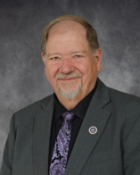
Rep. Dave Monson
Sponsored bills
Relating to a legacy earnings fund, a legacy property tax relief fund, a primary residence certification, and a limitation on property tax levies without voter approval; to amend and reenact section 6‑09.4‑10.1, subsection 1 of section 21‑10‑06, sections 40‑40‑06, 54‑27‑19.3, and 57‑02‑01, subdivision c of subsection 1 of section 57‑02‑08.1, subdivision b of subsection 2 of section 57‑02‑08.1, section 57‑02‑08.8, section 57‑02‑08.9 as amended by section 1 of Senate Bill No. 2201, as approved by the sixty-ninth legislative assembly, sections 57‑02‑08.10, 57‑02‑27, 57‑02‑27.1, 57‑02‑53, 57‑09‑04, 57‑11‑03, 57‑12‑06, 57‑15‑02.2, 57‑15‑14.2, and 57‑20‑07.1 of the North Dakota Century Code, relating to funds invested by the state investment board, property tax definitions, the homestead tax credit and renters refund, the property tax credit for disabled veterans, the primary residence credit, property classifications, assessment and budget hearing notices to property owners, school district levies, and the property tax statement; to repeal sections 21‑10‑12 and 21‑10‑13 of the North Dakota Century Code, relating to legacy fund definitions and the legacy earnings fund; to provide a statement of legislative intent; to provide for a legislative management study, to provide an appropriation; to provide an effective date; to provide an expiration date; and to declare an emergency.
Maddy summaryHB 1151 prohibits businesses from misrepresenting cell-cultured protein (lab-grown food from animal cells without slaughter) as meat. It requires clear labeling as "cell-cultured food product" and bans packaging that could confuse consumers into thinking it is meat. The law directly affects food producers and sellers of cell-cultured products in North Dakota. It repeals an outdated section of law about misrepresentation, making the new labeling rules the current standard. The bill became law after the governor signed it on April 23, 2025.
Relating to the powers and duties of center boards and the authority of a school board to pay a first-year signing bonus for teachers; and to declare an emergency.
Maddy summaryHB 1531 appropriates $75,000 from North Dakota's general fund to the Agriculture Commissioner for a study on expanding irrigation infrastructure. The study will examine economic benefits of increased irrigation in rural communities, impacts of past water projects under the Pick-Sloan Act, and differences in economic value between irrigated vs. non-irrigated land. It requires a consultant to analyze these factors and submit findings with policy recommendations to legislative leaders by July 1, 2026. The bill directly affects agricultural producers and rural communities by assessing how irrigation expansion could impact local economies.
Maddy summarySB 2228 allocates $1 million to North Dakota's department of commerce for grants to help rural grocery stores stay open and expand food access. The program prioritizes funding for existing stores over new store feasibility studies and runs for the 2025-2027 biennium. Grants can cover operational costs to sustain current stores or support new store planning. This is a one-time funding measure with no ongoing budget impact.
Maddy summaryHB 1197 creates a $50 million jail improvement fund (funded by a transfer from the Strategic Investment and Improvements Fund) to provide grants for county jail upgrades, remodeling, or replacements. The bill establishes a committee with legislative members, county representatives, and corrections stakeholders to review applications and approve grants. Counties receiving grants must contribute at least 25% of project costs, and at least 25% of annual funds must support projects in counties with populations under 15,000. The law, signed by the governor in April 2025, directly affects North Dakota counties and correctional facilities by enabling targeted infrastructure investments.
Maddy summarySB 2158 amends North Dakota law concerning the financial assets of school districts. It specifically addresses how any remaining "unobligated cash balance" - money left after a district's debts are paid - is distributed when a school district is dissolved. These amendments will clarify the process for allocating these surplus funds, impacting dissolved districts and the entities designated to receive their remaining assets.
Maddy summaryHB 1106 allocates $2 million from North Dakota's general fund to the Department of Transportation for grants supporting nonfixed route public transit services. These grants directly assist public transportation providers (such as rural or on-demand transit systems) during the 2025-2027 biennium. The bill creates a dedicated funding stream for nonfixed route transit programs without altering existing service requirements or eligibility rules.
Relating to septic systems and the environmental quality advisory committee; to amend and reenact sections 23‑35‑02, 23‑35‑08, 23.1‑01‑03, and 23.1‑17‑01 of the North Dakota Century Code, relating to the powers and duties of the department of environmental quality, boards of health, and public health units; to repeal sections 23‑35‑02.2 and 23‑35‑02.3 of the North Dakota Century Code, relating to the onsite wastewater recycling technical committee; to provide an appropriation; to provide for a transfer; and to provide an effective date.