

In committee Sep 21, 2026
1 co-sponsor
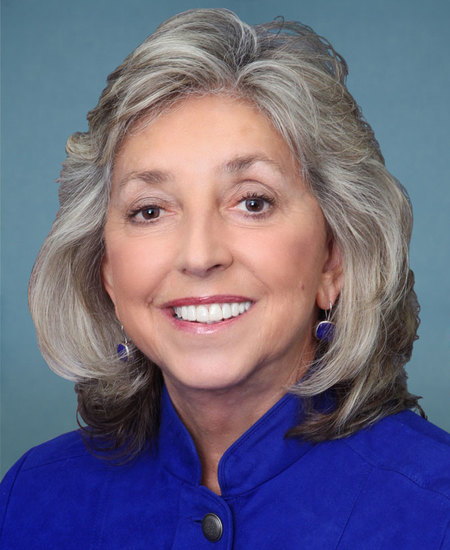
Rep. Dina Titus
Total votes
2,837
all sessions
Attendance
96%
119 missed
Lower than 92% of chamber peers
With party
97%
of cast votes
Near the chamber average
Bipartisan score
1%
crosses aisle rarely
Near the chamber average
Sponsored
2,670
bills & resolutions
Higher than 97% of chamber peers
Committees
8
assignments
2,670 bills and resolutions
Sponsored bills
Total
2,670
Primary
131
Co-sponsor
2,539
This page
2,670
matching current filters
Expressing support for the designation of the week beginning on September 14, 2026, as "National Hispanic-Serving Institutions Week".
Maddy summaryThis House resolution expresses support for designating the week beginning September 14, 2026, as National Hispanic-Serving Institutions Week. It recognizes these colleges and universities, which enroll at least 25 percent Hispanic students, for their role in providing higher education access to low-income and underserved populations. The bill highlights that these institutions serve a significant portion of the nation's undergraduate students and contribute to economic mobility. It calls on the public and interested groups to observe the week with ceremonies and activities during Hispanic Heritage Month.
In committee Sep 17, 2026
1 co-sponsor
In committee Sep 16, 2026
0 co-sponsors
In committee Sep 16, 2026
1 co-sponsor
End Tax Penalties on American Hostages Act
Maddy summaryThe End Tax Penalties on American Hostages Act modifies the Internal Revenue Code to protect United States nationals who are wrongfully detained or held hostage abroad from tax penalties and interest. It achieves this by disregarding the time spent in captivity when calculating tax deadlines, interest accruals, and penalty amounts, while also requiring the Treasury Department to update its systems to suspend collection activities for these individuals. Additionally, the bill establishes a program to refund or abate any taxes, penalties, or interest that eligible individuals paid during the period from January 1, 2021, to the date of the law's enactment. To implement these changes, the Secretary of State and the Attorney General must provide lists of affected individuals to the Treasury by January 1, 2027, and notify them of their eligibility for refunds.
Passed Sep 16, 2026
1 co-sponsor
Tyler’s Law
Maddy summaryHR 2004, titled "Tyler’s Law," requires the Secretary of Health and Human Services to study how often hospital emergency departments test for fentanyl during overdose cases (beyond standard drug tests), including associated costs, patient benefits/risks, and impacts on privacy and patient-physician relationships. The study must be completed within one year of the bill's enactment. Based on the study results, the Secretary must issue guidance within six months on whether emergency departments should routinely test for fentanyl, how to inform clinicians about test contents, and how such testing may affect future overdose risks and health outcomes. This bill directly affects hospital emergency departments and patients experiencing overdoses by shaping future testing protocols.
Passed Sep 16, 2026
1 co-sponsor
Combating Illicit Xylazine Act
Maddy summaryHR 1266, the Combating Illicit Xylazine Act, adds xylazine - a veterinary sedative increasingly found in illicit drug mixtures - to Schedule III of the Controlled Substances Act, regulating its use and trafficking. It directly affects veterinarians, animal owners, and manufacturers by allowing xylazine to be legally dispensed for animal use under specific veterinary prescriptions, while prohibiting non-veterinary human use. The bill includes transition periods (60 days for practitioners, 1 year for labeling) to ease compliance for manufacturers and practitioners, and requires the DEA and FDA to expedite necessary applications. It also mandates two congressional reports on xylazine's illicit use and trafficking patterns, and directs the Sentencing Commission to review penalties for offenses involving xylazine.
Passed Sep 16, 2026
1 co-sponsor
AM Radio for Every Vehicle Act of 2025
Maddy summaryThis bill requires all new passenger vehicles manufactured for sale in the U.S. to include AM radio as standard equipment (not an optional add-on) by 2027-2028, depending on manufacturer size. It mandates that AM radio receivers must be easily accessible to drivers and allows compliance through digital AM broadcast technology. During a transition period, manufacturers must clearly label vehicles without AM radio but cannot charge extra for this feature. The bill also mandates a GAO study on AM radio's role in emergency alerts and includes a 10-year sunset provision for the rule. It preempts state laws regarding AM radio access in vehicles.
Passed Sep 16, 2026
1 co-sponsor
Drone Safety Statement Modernization Act
Maddy summaryThe Drone Safety Statement Modernization Act requires manufacturers of small unmanned aircraft systems to provide a safety statement to operators at the time they first activate their drones. Operators must electronically acknowledge that they have read and understood this document, which covers applicable laws, airspace restrictions, and potential penalties for unsafe operation. The Federal Aviation Administration is tasked with developing these requirements and issuing an example statement within 120 days of enactment. The FAA must also review and update the safety statement requirements annually to ensure they remain current.
In committee Sep 15, 2026
1 co-sponsor
Local Communities & Bird Habitat Stewardship Act of 2026
Maddy summaryThe Local Communities & Bird Habitat Stewardship Act of 2025 establishes the Urban Bird Treaty Program, which provides grants and technical assistance to local groups - including cities, nonprofits, community organizations, and academic institutions - to protect and restore urban bird habitats. Key provisions include funding for habitat restoration (e.g., removing invasive species and planting native plants), reducing urban bird hazards, and engaging communities in monitoring and education. The program, administered by the National Fish and Wildlife Foundation, authorizes $1 million annually from 2026 to 2032 for projects focused on conserving urban bird populations through collaborative local efforts. It directly affects communities seeking to enhance green spaces and support bird conservation in populated areas.
Passed Sep 15, 2026
1 co-sponsor
Ask Maddy
·
AI policy assistant
Ask Maddy about Dina Titus
Scope: north-carolina
Hi! I can help you understand Dina Titus's legislative record. What would you like to know?
Try one of these
i
Maddy answers using official bill text and legislative records. Always verify before sharing.
Sources cited inline