

In committee Sep 24, 2026
0 co-sponsors
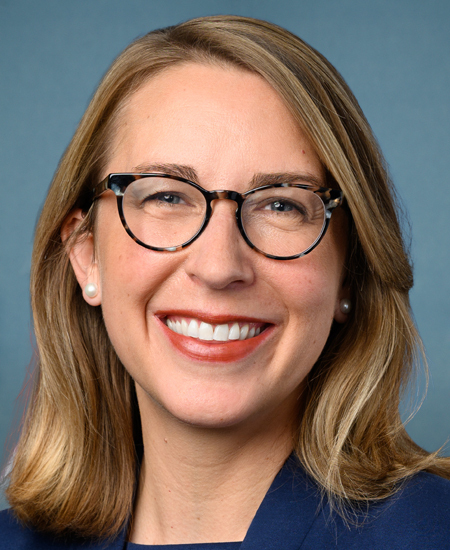
Rep. Hillary J. Scholten
Total votes
1,879
all sessions
Attendance
98%
38 missed
Lower than 77% of chamber peers
With party
94%
of cast votes
Lower than 84% of chamber peers
Bipartisan score
3%
crosses aisle rarely
Higher than 83% of chamber peers
Sponsored
789
bills & resolutions
Near the chamber average
Committees
8
assignments
789 bills and resolutions
Sponsored bills
Total
789
Primary
62
Co-sponsor
727
This page
789
matching current filters
In committee Sep 24, 2026
0 co-sponsors
In committee Sep 24, 2026
0 co-sponsors
In committee Sep 21, 2026
1 co-sponsor
To designate the facility of the United States Postal Service located at 117 West Lovett Street in Charlotte, Michigan, as the "Francis C. Flaherty Post Office Building".
Maddy summaryThis bill designates the United States Postal Service facility at 117 West Lovett Street in Charlotte, Michigan, as the "Francis C. Flaherty Post Office Building." It directly affects the specific postal location by officially changing its name in federal records and documents. The key provision ensures that all future legal and official references to this building will use the new name. This is a commemorative measure that honors an individual without altering operational policies or funding.
Passed Sep 17, 2026
1 co-sponsor
ASAP Act
Maddy summaryThis bill would require Medicare to cover early detection screening tests for Alzheimer's disease and related dementias starting January 1, 2028. It defines eligible tests as FDA-cleared genomic blood tests, blood product analyses, or equivalent medical imaging methods (like protein expression or whole genome sequencing) that detect pre-symptomatic or early-stage conditions. Medicare beneficiaries would receive this coverage without cost-sharing for these specific screenings. The bill amends Medicare coverage rules to explicitly include these tests under Section 1861(nnn) of the Social Security Act.
In committee Sep 16, 2026
1 co-sponsor
Small Business Payment for Performance Act of 2025
Maddy summaryThis bill requires federal agencies to provide small business contractors with interim partial payments of at least 50% of estimated costs when contract terms change without the business's agreement. It directly affects small businesses awarded federal construction contracts and their subcontractors, ensuring they receive upfront funds to cover increased costs from mandated changes. The key mechanism mandates that agencies issue these payments promptly upon valid requests, with small businesses required to pass the funds to relevant subcontractors. The law also specifies that these interim payments do not finalize the adjustment request, preserving the agency's right to review the full claim later.
In committee Sep 16, 2026
1 co-sponsor
Combating Illicit Xylazine Act
Maddy summaryHR 1266, the Combating Illicit Xylazine Act, adds xylazine - a veterinary sedative increasingly found in illicit drug mixtures - to Schedule III of the Controlled Substances Act, regulating its use and trafficking. It directly affects veterinarians, animal owners, and manufacturers by allowing xylazine to be legally dispensed for animal use under specific veterinary prescriptions, while prohibiting non-veterinary human use. The bill includes transition periods (60 days for practitioners, 1 year for labeling) to ease compliance for manufacturers and practitioners, and requires the DEA and FDA to expedite necessary applications. It also mandates two congressional reports on xylazine's illicit use and trafficking patterns, and directs the Sentencing Commission to review penalties for offenses involving xylazine.
Passed Sep 16, 2026
1 co-sponsor
Designating September 2026 as "National Voting Rights Month".
Maddy summaryThis House resolution designates September 2026 as National Voting Rights Month to highlight the historical and ongoing challenges faced by various groups in exercising their right to vote. It encourages Congress to pass legislation that strengthens voting protections, specifically endorsing the John R. Lewis Voting Rights Advancement Act of 2025 while opposing bills that could restrict voter eligibility. The resolution also recommends that public schools develop curricula on voting history and current suppression tactics, and it invites funding for public service announcements to promote voter registration and participation.
In committee Sep 15, 2026
1 co-sponsor
Currency Options, Information, and Navigation Act
Maddy summaryThe Currency Options, Information, and Navigation Act directs the Small Business Administration to create and publish online educational modules for small businesses regarding the use of digital assets. These resources must cover practical topics such as tax implications, security risks, payment gateway options, and the differences between various types of digital assets including stablecoins. To ensure the information is accurate and current, the bill requires the agency to consult with multiple federal regulators and establish an advisory working group that includes experts from the private sector, academia, and consumer advocacy groups. The legislation mandates that these educational materials be made available within 180 days of enactment without authorizing any new funding for their development.
Budget & TaxesSupports Budget & TaxesThe bill directs the SBA to create educational modules for small businesses on digital assets, specifically covering 'tax implications.' This action supports fiscal management by providing guidance on a complex area of taxation for businesses.
EducationSupports EducationThe bill directs the SBA to create online educational modules for small businesses on digital assets, which can be seen as a form of educational support, albeit not directly related to traditional K-12 or higher education.
TechnologySupports TechnologyThe bill directs the SBA to create online educational modules for small businesses on using digital assets, covering topics like tax, security, and payment options. This initiative promotes the understanding and adoption of technology.
In committee Sep 15, 2026
0 co-sponsors
Ask Maddy
·
AI policy assistant
Ask Maddy about Hillary J. Scholten
Scope: north-carolina
Hi! I can help you understand Hillary J. Scholten's legislative record. What would you like to know?
Try one of these
i
Maddy answers using official bill text and legislative records. Always verify before sharing.
Sources cited inline