Maddy summaryThe Diversify Act expands the federal TEACH Grant program by doubling the maximum annual award to $8,000 and increasing the total grant limit to $32,000 for eligible teacher candidates. These funds can be applied directly toward a student's full cost of attendance, including tuition and fees. The bill also broadens the definition of qualifying service to include teaching in high-need early childhood education programs, not just schools with significant shortages of qualified teachers. Additionally, it prohibits the government from imposing monetary penalties if a recipient fails to complete the required teaching service and exempts the program from automatic budget cuts known as sequestration.

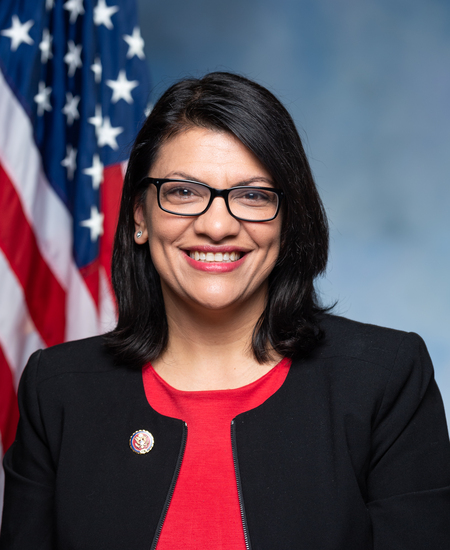
Rep. Rashida Tlaib
Sponsored bills
Maddy summaryHR 5334, the SEED Act of 2025, expands the existing educator expense deduction under federal tax law to explicitly include early childhood educators. It revises the Internal Revenue Code to cover expenses for "early childhood educators" and broadens the educational levels affected to include "pre-kindergarten through grade 12." This change allows early childhood educators (such as preschool teachers) to deduct work-related expenses like classroom supplies and professional development costs, which they previously could not claim under the existing deduction for "kindergarten through grade 12" teachers. The amendment applies to expenses incurred in taxable years beginning after December 31, 2024.
Maddy summaryThis House resolution expresses support for Military Sexual Trauma Awareness Day, observed on September 25, 2026, and affirms a commitment to supporting survivors of sexual assault or harassment in the Armed Forces. It encourages the Department of Defense and the Department of Veterans Affairs to expand access to related services and ensure they are well-publicized and available to all veterans. The resolution also promotes transparency and accountability in how these agencies handle cases to build trust and prevent retaliation for survivors. Finally, it underscores a commitment to working with the Department of Defense to address the root causes of military sexual trauma with the goal of eradicating it.
Maddy summaryThis House resolution expresses support for designating the week beginning September 14, 2026, as National Hispanic-Serving Institutions Week. It recognizes these colleges and universities, which enroll at least 25 percent Hispanic students, for their role in providing higher education access to low-income and underserved populations. The bill highlights that these institutions serve a significant portion of the nation's undergraduate students and contribute to economic mobility. It calls on the public and interested groups to observe the week with ceremonies and activities during Hispanic Heritage Month.
Maddy summaryThis bill designates the United States Postal Service facility at 117 West Lovett Street in Charlotte, Michigan, as the "Francis C. Flaherty Post Office Building." It directly affects the specific postal location by officially changing its name in federal records and documents. The key provision ensures that all future legal and official references to this building will use the new name. This is a commemorative measure that honors an individual without altering operational policies or funding.
Maddy summaryThis House resolution expresses support for recognizing Nigerian Heritage Month to celebrate the history, culture, and contributions of Nigerians and Nigerian Americans in the United States. It highlights the strong bilateral relationship between the two nations and notes that Nigerian Americans are a highly educated immigrant group making significant impacts in fields such as medicine, technology, and business. The bill encourages federal, state, and local governments, along with educational institutions, to observe this month through programs and ceremonies that highlight Nigerian heritage.
Maddy summaryThe Debt-Free College Act of 2026 establishes a state-federal partnership that provides federal grants to states to cover the unmet financial need of eligible students attending in-state public colleges, effectively making tuition debt-free for those who qualify. To participate, states must commit to capping tuition increases at inflation levels, maintaining their current level of funding for higher education, and implementing student success programs that support low-income and underserved populations. The bill also creates a separate five-year grant program for specific minority-serving institutions and tribal colleges to help them cover student costs, while simultaneously expanding federal financial aid eligibility to include "Dreamer students" who entered the United States as minors under certain conditions.
Maddy summaryThe Stop Corporate Takeovers of Physicians Act of 2026 prohibits non-physician entities from owning, controlling, or employing licensed medical professionals, requiring that medical practices be majority-owned and controlled by the clinicians who work there. The bill grants physicians and other advanced practice providers protections against non-compete agreements and bans health care providers from interfering with clinical judgment through administrative controls such as limiting patient visit times or dictating diagnostic codes. Additionally, it imposes strict restrictions on management services organizations to prevent them from exercising de facto control over medical practices, including prohibitions on controlling hiring, compensation, and billing decisions. Enforcement is handled by the Federal Trade Commission, which can treat violations as unfair business practices, while individuals and state attorneys general are also granted the right to sue for damages and injunctive relief.