

Maddy summaryThis House resolution supports designating the week of September 21 through September 25, 2026, as "National Hazing Awareness Week" to highlight the dangers of hazing in student organizations. The bill cites statistics indicating that a significant portion of college students involved in extracurriculars have experienced hazing and lists numerous individuals who have died or been severely injured as a result. It references the Stop Campus Hazing Act, which requires higher education institutions to report hazing incidents and provide prevention education. The resolution encourages the public to observe this week by promoting awareness and emphasizes that preventing hazing is an ongoing commitment rather than just a single-week event.
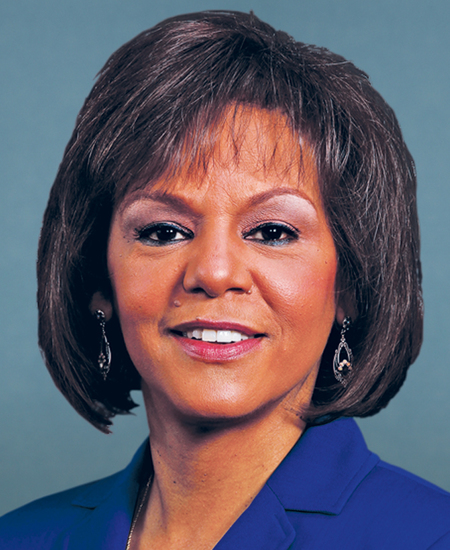
Rep. Robin L. Kelly
Sponsored bills
Maddy summaryThis House resolution expresses support for designating the week beginning September 14, 2026, as National Hispanic-Serving Institutions Week. It recognizes these colleges and universities, which enroll at least 25 percent Hispanic students, for their role in providing higher education access to low-income and underserved populations. The bill highlights that these institutions serve a significant portion of the nation's undergraduate students and contribute to economic mobility. It calls on the public and interested groups to observe the week with ceremonies and activities during Hispanic Heritage Month.
Maddy summaryThe Glaucoma Vision Act of 2026 mandates that private health insurance plans, Medicare, Medicaid, and Federal Employees Health Benefits programs cover annual glaucoma screenings for specific high-risk individuals starting in 2027. These covered individuals include adults aged 40 or older with African, Hispanic/Latino, or Asian ancestry, those with clinical risk factors such as diabetes or family history, and all adults aged 60 or older. The bill also directs the Centers for Disease Control and Prevention to award $10 million in grants over two years to provide free or low-cost screenings and treatment to uninsured high-risk populations, with priority given to underserved communities. Additionally, it authorizes $10 million for research into glaucoma treatments, including optic nerve regeneration and gene therapies.
Maddy summaryHR 5967 establishes a federal task force led by the FTC and DOJ to combat scams. The task force, including agencies like the FBI, SEC, and Social Security Administration, will develop a national strategy using existing tools such as the Consumer Sentinel Network and Internet Crime Complaint Center. Key actions include public education, coordination with industry (like banks and social media platforms), and enforcement using current laws against fraud and money laundering. The task force must report to Congress within one year and dissolve after 10 years.
Maddy summaryThe Data BRIDGE Act requires the Federal Communications Commission (FCC) to update its national broadband map within 180 days of enactment by adding agricultural areas as a dedicated layer. This change will directly affect the FCC, USDA, state governments, and broadband providers by incorporating agricultural land data into the map used to identify broadband coverage gaps. The bill mandates the FCC to consult with the USDA, Commerce Department, states, and other stakeholders to integrate existing agricultural data into the map. The goal is to improve accuracy in identifying broadband needs in rural farming communities, though it does not directly fund infrastructure.
Maddy summaryHR 2004, titled "Tyler’s Law," requires the Secretary of Health and Human Services to study how often hospital emergency departments test for fentanyl during overdose cases (beyond standard drug tests), including associated costs, patient benefits/risks, and impacts on privacy and patient-physician relationships. The study must be completed within one year of the bill's enactment. Based on the study results, the Secretary must issue guidance within six months on whether emergency departments should routinely test for fentanyl, how to inform clinicians about test contents, and how such testing may affect future overdose risks and health outcomes. This bill directly affects hospital emergency departments and patients experiencing overdoses by shaping future testing protocols.
Maddy summaryHR 1266, the Combating Illicit Xylazine Act, adds xylazine - a veterinary sedative increasingly found in illicit drug mixtures - to Schedule III of the Controlled Substances Act, regulating its use and trafficking. It directly affects veterinarians, animal owners, and manufacturers by allowing xylazine to be legally dispensed for animal use under specific veterinary prescriptions, while prohibiting non-veterinary human use. The bill includes transition periods (60 days for practitioners, 1 year for labeling) to ease compliance for manufacturers and practitioners, and requires the DEA and FDA to expedite necessary applications. It also mandates two congressional reports on xylazine's illicit use and trafficking patterns, and directs the Sentencing Commission to review penalties for offenses involving xylazine.
Maddy summaryThis bill requires all new passenger vehicles manufactured for sale in the U.S. to include AM radio as standard equipment (not an optional add-on) by 2027-2028, depending on manufacturer size. It mandates that AM radio receivers must be easily accessible to drivers and allows compliance through digital AM broadcast technology. During a transition period, manufacturers must clearly label vehicles without AM radio but cannot charge extra for this feature. The bill also mandates a GAO study on AM radio's role in emergency alerts and includes a 10-year sunset provision for the rule. It preempts state laws regarding AM radio access in vehicles.
Maddy summaryH.J. Res. 216 proposes a constitutional amendment to eliminate the exception in the Thirteenth Amendment that currently permits slavery and involuntary servitude as punishment for a crime. The resolution would amend the Constitution to explicitly state that neither slavery nor involuntary servitude may be imposed on anyone as a penalty for criminal conduct. This change would directly affect incarcerated individuals by prohibiting forced labor practices within the criminal justice system, while clarifying that voluntary work programs and community service alternatives remain permissible.