

In committee Sep 24, 2026
1 co-sponsor
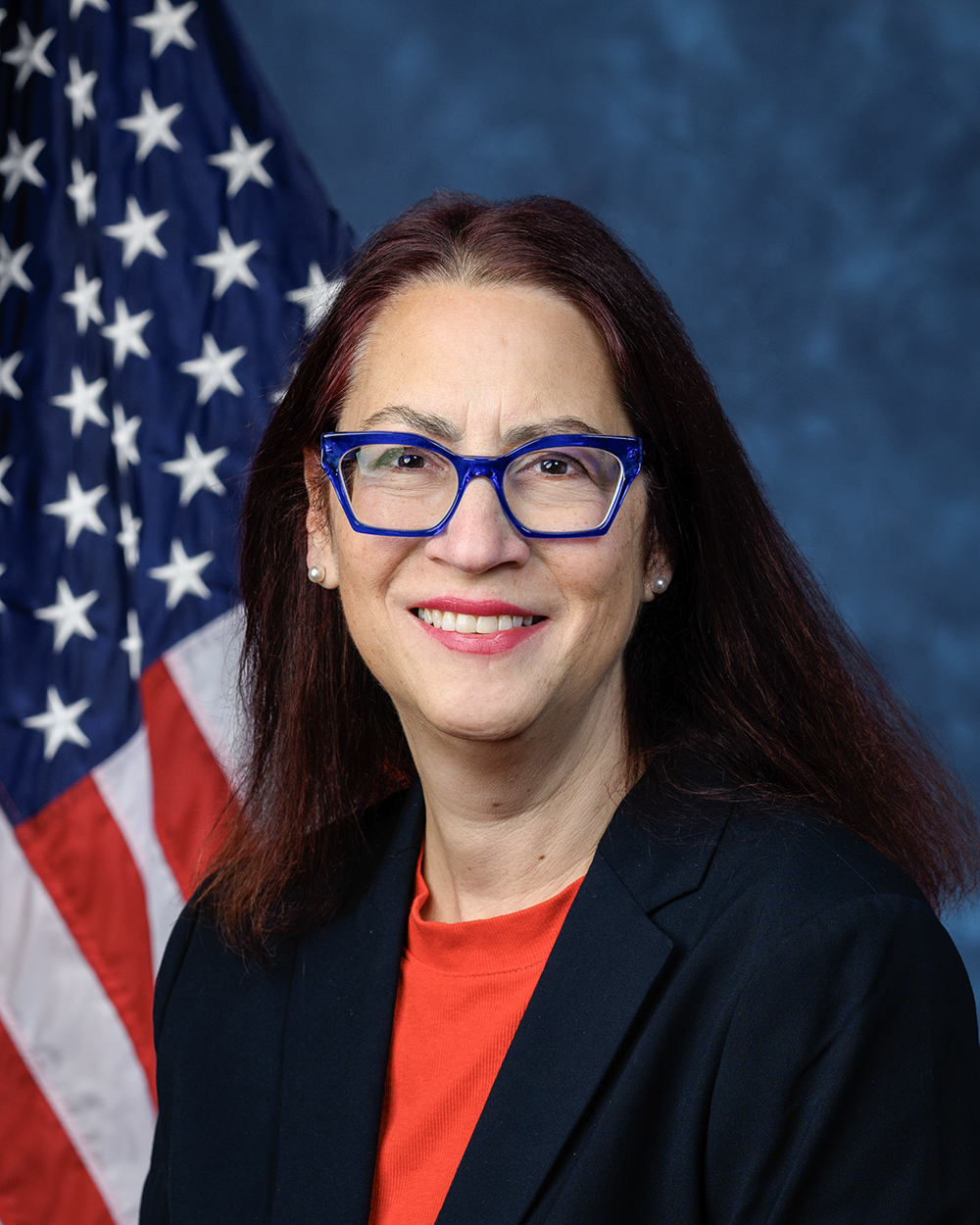
Rep. Laura Friedman
Total votes
669
all sessions
Attendance
99%
4 missed
Higher than 82% of chamber peers
With party
97%
of cast votes
Near the chamber average
Bipartisan score
1%
crosses aisle rarely
Near the chamber average
Sponsored
350
bills & resolutions
Near the chamber average
Committees
7
assignments
350 bills and resolutions
Sponsored bills
Total
350
Primary
11
Co-sponsor
339
This page
350
matching current filters
In committee Sep 24, 2026
1 co-sponsor
In committee Sep 24, 2026
1 co-sponsor
Disaster Relief Fairness Act of 2026
Maddy summaryThe Disaster Relief Fairness Act of 2026 would automatically approve major disaster declarations requested by state governors or tribal leaders between January 20, 2025, and January 20, 2029. Under this bill, the President is required to provide federal assistance if a preliminary damage assessment meets specific cost thresholds for public aid or if a regional official determines that individual assistance is warranted. Additionally, the legislation prohibits the denial of disaster relief solely because a request was submitted after a deadline.
Budget & TaxesSupports Budget & TaxesThe bill would provide federal assistance for disaster relief, which involves government spending and fiscal management. It strengthens the provision of aid, indicating support for budget allocation towards disaster response.
HousingSupports HousingThe bill provides for automatic approval of disaster declarations and federal assistance, which would include aid for housing repair and rebuilding after disasters, thus supporting housing stability and recovery.
In committee Sep 21, 2026
1 co-sponsor
Lindsey O. Graham Sanctioning Russia and Iran Act of 2026
Maddy summaryHR 5334, the SEED Act of 2025, expands the existing educator expense deduction under federal tax law to explicitly include early childhood educators. It revises the Internal Revenue Code to cover expenses for "early childhood educators" and broadens the educational levels affected to include "pre-kindergarten through grade 12." This change allows early childhood educators (such as preschool teachers) to deduct work-related expenses like classroom supplies and professional development costs, which they previously could not claim under the existing deduction for "kindergarten through grade 12" teachers. The amendment applies to expenses incurred in taxable years beginning after December 31, 2024.
Budget & TaxesSupports Budget & TaxesExpands tax deduction for early childhood educators, providing tax relief for lower/middle-income educators under IRS code, aligning with support indicators for tax relief.
EducationSupports EducationExpands tax deduction for early childhood educators' work expenses, directly supporting teachers by reducing out-of-pocket costs for supplies and professional development.
Labor & EmploymentSupports Labor & EmploymentBill expands tax deductions for early childhood educators, supporting worker benefits and financial relief for educators.
Signed into law Sep 18, 2026
1 co-sponsor
Expressing support for the designation of the week beginning on September 14, 2026, as "National Hispanic-Serving Institutions Week".
Maddy summaryThis House resolution expresses support for designating the week beginning September 14, 2026, as National Hispanic-Serving Institutions Week. It recognizes these colleges and universities, which enroll at least 25 percent Hispanic students, for their role in providing higher education access to low-income and underserved populations. The bill highlights that these institutions serve a significant portion of the nation's undergraduate students and contribute to economic mobility. It calls on the public and interested groups to observe the week with ceremonies and activities during Hispanic Heritage Month.
In committee Sep 17, 2026
1 co-sponsor
Housing Tariff Exclusion Act
Maddy summaryThe Housing Tariff Exclusion Act directs the Secretary of Commerce to create a process allowing U.S. companies to request exemptions from tariffs on building materials that are not produced in sufficient quantities domestically. The bill specifically targets products used in residential construction, such as lumber, cement, and fixtures, while excluding rare earth elements and antidumping duties. Requests for "critical homebuilding products" must be decided within 15 days, while other covered articles have a 60-day review period, with all decisions published online for transparency. The legislation includes retroactive provisions to refund overpaid tariffs on goods imported before an exemption is granted and sets a sunset date of October 1, 2029, after which no new exclusions can be issued.
In committee Sep 16, 2026
1 co-sponsor
ASAP Act
Maddy summaryThis bill would require Medicare to cover early detection screening tests for Alzheimer's disease and related dementias starting January 1, 2028. It defines eligible tests as FDA-cleared genomic blood tests, blood product analyses, or equivalent medical imaging methods (like protein expression or whole genome sequencing) that detect pre-symptomatic or early-stage conditions. Medicare beneficiaries would receive this coverage without cost-sharing for these specific screenings. The bill amends Medicare coverage rules to explicitly include these tests under Section 1861(nnn) of the Social Security Act.
In committee Sep 16, 2026
1 co-sponsor
AM Radio for Every Vehicle Act of 2025
Maddy summaryThis bill requires all new passenger vehicles manufactured for sale in the U.S. to include AM radio as standard equipment (not an optional add-on) by 2027-2028, depending on manufacturer size. It mandates that AM radio receivers must be easily accessible to drivers and allows compliance through digital AM broadcast technology. During a transition period, manufacturers must clearly label vehicles without AM radio but cannot charge extra for this feature. The bill also mandates a GAO study on AM radio's role in emergency alerts and includes a 10-year sunset provision for the rule. It preempts state laws regarding AM radio access in vehicles.
Passed Sep 16, 2026
1 co-sponsor
Providing for congressional disapproval under chapter 8 of title 5, United States Code, of the rule submitted by U.S. Immigration and Customs Enforcement of the Department of Homeland Security relating to "Establishing a Fixed Time Period of Admission and an Extension of Stay Procedure for Nonimmigrant Academic Students, Exchange Visitors, and Representatives of Foreign Information Media".
Maddy summaryThis joint resolution seeks to overturn a Department of Homeland Security rule that would establish fixed time periods for admission and specific extension procedures for nonimmigrant academic students, exchange visitors, and representatives of foreign information media. If enacted, the bill would prevent this immigration regulation from taking effect, thereby maintaining the existing framework for how these individuals manage their stay in the United States. The measure directly affects international students, cultural exchange participants, and foreign journalists by blocking changes to their visa duration limits and renewal processes.
In committee Sep 14, 2026
1 co-sponsor
Ask Maddy
·
AI policy assistant
Ask Maddy about Laura Friedman
Scope: north-carolina
Hi! I can help you understand Laura Friedman's legislative record. What would you like to know?
Try one of these
i
Maddy answers using official bill text and legislative records. Always verify before sharing.
Sources cited inline