Maddy summaryThis bill allocates $319 million from the state's General Fund to North Carolina's Medicaid program to cover anticipated changes in enrollment, service costs, and federal funding rates. The money is designated for the Department of Health and Human Services to use starting in the 2025-2027 fiscal year, with the funding officially beginning retroactively on July 1, 2025. By adjusting available funds based on projected healthcare shifts, the legislation aims to ensure the Medicaid program has sufficient resources to operate as demographics and costs evolve.

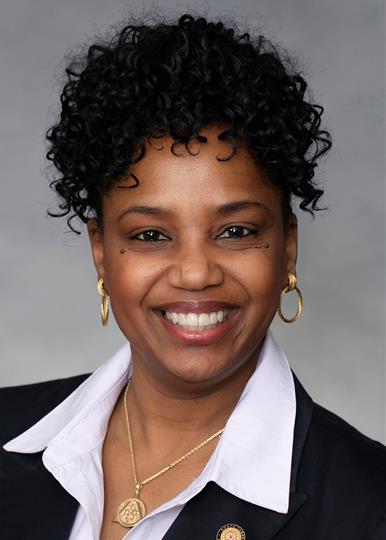
Sen. Kandie Smith
Sponsored bills
Maddy summaryThis North Carolina bill requires that the salaries of state legislators be held in escrow if the General Assembly does not pass a budget by June 30, 2026. If the Senate and House do not ratify a state budget for the 2026-2027 fiscal year by that deadline, the pay earned by legislators from July 1, 2026, forward will be withheld. The withheld funds will be released only after the legislature ratifies a budget or adjourns for the year. The legislation also sets aside ten thousand dollars to cover the administrative costs of managing the escrow account.
Maddy summarySB 1053 modifies how North Carolina handles criminal penalties for child care licensing violations by reducing the charge from a Class I felony to a Class A1 misdemeanor for first-time offenses, provided no child injury occurred. The bill allows prosecutors to still pursue felony charges for repeat offenders or cases involving multiple children, but requires them to consider specific factors like the number of children at risk and whether the operator took corrective action. To support these changes, the legislation allocates $75,000 to update enforcement protocols, training materials, and court forms for relevant state agencies and legal personnel.
Maddy summarySB 1054, titled "No Child Left Unfed," directs the North Carolina Department of Health and Human Services to allow legally operating family, friend, and neighbor child care providers to participate in the federal Child and Adult Care Food Program. The bill requires the state to take administrative steps such as identifying sponsoring organizations, simplifying application processes, and seeking federal waivers to reduce barriers for these small-scale caregivers. To support this expansion, the legislation appropriates $150,000 for initial planning and outreach, along with $500,000 in recurring funds to cover ongoing administrative costs. Additionally, the bill mandates that the department submit annual reports on enrollment numbers and barriers faced by providers, with an initial report due within 12 months of the law's effective date.
Maddy summaryThis North Carolina bill appropriates three million dollars to the Town of Ayden to address flash flooding issues. The funds are designated specifically for stormwater management projects within the Kennedy Estates subdivision. The money comes from the state General Fund and is allocated for the 2026-2027 fiscal year. The legislation is set to take effect on July 1, 2026.
Maddy summarySB 1024, titled 'My Power Bill Is Too High,' aims to protect North Carolina electricity customers by repealing the authority for multiyear rate plans that allow utility rates to increase automatically without annual review. The bill requires that all future electric utility rates be set only through a standard annual general rate case, eliminating preauthorized rate adjustments. Additionally, it modifies performance-based regulation rules to limit automatic rate increases to a maximum of four percent in the second and third years of any multiyear plan, while excluding large new generation projects from these automatic hikes. This legislation directly affects electric public utilities and their customers by ensuring more frequent regulatory oversight and greater transparency in how utility rates are determined.
Maddy summaryThe Carolina Housing Promise Act aims to improve housing affordability and accessibility across North Carolina by empowering the state's Housing Finance Agency to issue up to $18 billion in bonds for residential projects. A key provision increases an existing excise tax on real estate transfers, directing half of the new revenue to fund a new Housing Innovation Office within the agency. This office will utilize the funds to support the construction and maintenance of affordable homes, develop innovative funding models, and provide technical assistance for housing solutions. The bill also updates the legal authority for the agency to issue various types of debt instruments to finance these housing initiatives.
Maddy summaryThis bill proposes two separate constitutional amendments to North Carolina that would legalize the possession of limited amounts of cannabis for personal use and for medical purposes by patients with qualifying conditions. If passed by voters in the November 2026 election, these changes would remove criminal penalties for these specific activities while requiring the state legislature to create detailed laws governing their implementation. The amendments do not take effect immediately upon passage by the General Assembly but instead go directly to the public for a vote, with the results determining whether the new rules become part of the state constitution.
Maddy summaryThis North Carolina bill establishes a new regulatory framework specifically for large nonresidential electricity customers who consume 50 megawatts or more. It requires electric utilities to file tariffs that include strict contract terms, such as a minimum 20-year service agreement, mandatory load usage guarantees, and significant upfront payments to cover the cost of infrastructure upgrades needed to serve these clients. The legislation also mandates that these customers pay exit fees if they terminate service early or fail to meet their contracted energy demands, ensuring that other ratepayers are not financially burdened by their departure. Additionally, the bill creates a program allowing these large customers to purchase dedicated clean energy resources while ensuring that residential and small commercial customers are neither advantaged nor disadvantaged by these arrangements.
Maddy summaryThis bill designates Petey Pablo's song "Raise Up" as the official hip-hop song of North Carolina to honor the state's significant role in hip-hop culture. It also allocates $6.5 million over two years to fund a tourism and heritage initiative that promotes North Carolina's music scene through festivals, advertising, and a digital app. The funds are specifically intended to support events and partnerships in major cities like Charlotte, Raleigh, and Durham, as well as Historically Black Colleges and Universities.