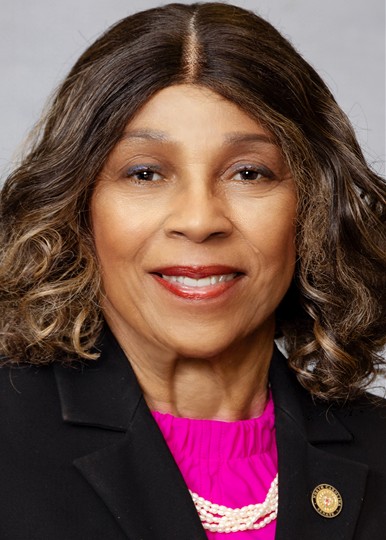
Maddy summarySB 177 expands North Carolina's Medicaid Healthcare Access and Stabilization Program (HASP) to include qualifying freestanding psychiatric hospitals, allowing them to receive increased reimbursements for services. The bill creates a new assessment (a fee) on these hospitals, calculated as a percentage of their hospital costs, to fund the program. To implement this, the state must seek federal approval from CMS to include psychiatric hospitals in HASP. This change directly affects all Medicare-certified, state-licensed freestanding psychiatric hospitals in North Carolina, requiring them to pay the new assessment while gaining eligibility for enhanced Medicaid payments.

Sen. Joyce Waddell
Sponsored bills
Maddy summarySB 675 sets a 2% maximum fee limit for second or junior lien mortgages in North Carolina, aligning state rules with federal Qualified Mortgage standards. It allows up to 3% total fees across all lenders for such loans, referencing federal guidelines (12 C.F.R. §1026.43(e)(3)). The bill directly affects borrowers taking second mortgages and lenders who charge fees on these loans. It requires lenders to comply with these fee limits on loans secured by real property, effective upon enactment.
Maddy summaryThis bill modifies North Carolina's Cosmetic Art Act to create a new professional category called "hair designer" specifically for natural hair care services. It reduces the training hours required to become a licensed cosmetologist and removes the apprenticeship requirement for licensure. The legislation also formally defines "natural hair care" as services that involve tension on hair strands through twisting, wrapping, extending, or locking. These changes aim to deregulate certain hair care practices while establishing new licensing pathways for specialists in that field.
Maddy summaryThis bill allocates $319 million from the state's General Fund to North Carolina's Medicaid program to cover anticipated changes in enrollment, service costs, and federal funding rates. The money is designated for the Department of Health and Human Services to use starting in the 2025-2027 fiscal year, with the funding officially beginning retroactively on July 1, 2025. By adjusting available funds based on projected healthcare shifts, the legislation aims to ensure the Medicaid program has sufficient resources to operate as demographics and costs evolve.
Maddy summaryThe CARDINAL Act establishes a new state program that provides an additional $1,000 to children born in North Carolina between 2025 and 2028 who receive federal contributions into a specific type of savings account known as a Trump Account. To fund this initiative, the bill redirects $192 million from the state's existing Opportunity Scholarship Grant Fund Reserve, which was originally set aside for the 2026-2027 school year. The legislation also modifies the priority order for awarding opportunity scholarships in 2026-2027, ensuring that students who received grants in the previous year are processed first if funds are insufficient to cover all applicants.
Maddy summarySB 1053 modifies how North Carolina handles criminal penalties for child care licensing violations by reducing the charge from a Class I felony to a Class A1 misdemeanor for first-time offenses, provided no child injury occurred. The bill allows prosecutors to still pursue felony charges for repeat offenders or cases involving multiple children, but requires them to consider specific factors like the number of children at risk and whether the operator took corrective action. To support these changes, the legislation allocates $75,000 to update enforcement protocols, training materials, and court forms for relevant state agencies and legal personnel.
Maddy summarySB 1054, titled "No Child Left Unfed," directs the North Carolina Department of Health and Human Services to allow legally operating family, friend, and neighbor child care providers to participate in the federal Child and Adult Care Food Program. The bill requires the state to take administrative steps such as identifying sponsoring organizations, simplifying application processes, and seeking federal waivers to reduce barriers for these small-scale caregivers. To support this expansion, the legislation appropriates $150,000 for initial planning and outreach, along with $500,000 in recurring funds to cover ongoing administrative costs. Additionally, the bill mandates that the department submit annual reports on enrollment numbers and barriers faced by providers, with an initial report due within 12 months of the law's effective date.
Maddy summaryThe Carolina Housing Promise Act aims to improve housing affordability and accessibility across North Carolina by empowering the state's Housing Finance Agency to issue up to $18 billion in bonds for residential projects. A key provision increases an existing excise tax on real estate transfers, directing half of the new revenue to fund a new Housing Innovation Office within the agency. This office will utilize the funds to support the construction and maintenance of affordable homes, develop innovative funding models, and provide technical assistance for housing solutions. The bill also updates the legal authority for the agency to issue various types of debt instruments to finance these housing initiatives.
Maddy summaryThis bill proposes two separate constitutional amendments to North Carolina that would legalize the possession of limited amounts of cannabis for personal use and for medical purposes by patients with qualifying conditions. If passed by voters in the November 2026 election, these changes would remove criminal penalties for these specific activities while requiring the state legislature to create detailed laws governing their implementation. The amendments do not take effect immediately upon passage by the General Assembly but instead go directly to the public for a vote, with the results determining whether the new rules become part of the state constitution.
Maddy summaryThis bill designates Petey Pablo's song "Raise Up" as the official hip-hop song of North Carolina to honor the state's significant role in hip-hop culture. It also allocates $6.5 million over two years to fund a tourism and heritage initiative that promotes North Carolina's music scene through festivals, advertising, and a digital app. The funds are specifically intended to support events and partnerships in major cities like Charlotte, Raleigh, and Durham, as well as Historically Black Colleges and Universities.