Maddy summaryThis bill allocates $319 million from the state's General Fund to North Carolina's Medicaid program to cover anticipated changes in enrollment, service costs, and federal funding rates. The money is designated for the Department of Health and Human Services to use starting in the 2025-2027 fiscal year, with the funding officially beginning retroactively on July 1, 2025. By adjusting available funds based on projected healthcare shifts, the legislation aims to ensure the Medicaid program has sufficient resources to operate as demographics and costs evolve.

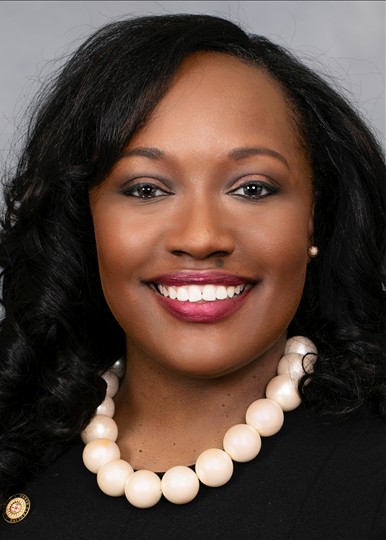
Sen. Natalie Murdock
Sponsored bills
Maddy summaryThe CARDINAL Act establishes a new state program that provides an additional $1,000 to children born in North Carolina between 2025 and 2028 who receive federal contributions into a specific type of savings account known as a Trump Account. To fund this initiative, the bill redirects $192 million from the state's existing Opportunity Scholarship Grant Fund Reserve, which was originally set aside for the 2026-2027 school year. The legislation also modifies the priority order for awarding opportunity scholarships in 2026-2027, ensuring that students who received grants in the previous year are processed first if funds are insufficient to cover all applicants.
Maddy summaryThis North Carolina bill removes state funding limits on light rail and commuter rail projects and allocates money for rail safety. It amends existing statutes to allow the Department of Transportation to provide more than the current ten percent cap on state funding for these rail initiatives. Additionally, the legislation directs one million dollars from the Highway Fund to the Department of Transportation specifically for safety and security measures on the CATS Blue Lynx rail line. The changes are scheduled to take effect on July 1, 2026.
Maddy summaryThis North Carolina bill requires that the salaries of state legislators be held in escrow if the General Assembly does not pass a budget by June 30, 2026. If the Senate and House do not ratify a state budget for the 2026-2027 fiscal year by that deadline, the pay earned by legislators from July 1, 2026, forward will be withheld. The withheld funds will be released only after the legislature ratifies a budget or adjourns for the year. The legislation also sets aside ten thousand dollars to cover the administrative costs of managing the escrow account.
Maddy summarySB 1024, titled 'My Power Bill Is Too High,' aims to protect North Carolina electricity customers by repealing the authority for multiyear rate plans that allow utility rates to increase automatically without annual review. The bill requires that all future electric utility rates be set only through a standard annual general rate case, eliminating preauthorized rate adjustments. Additionally, it modifies performance-based regulation rules to limit automatic rate increases to a maximum of four percent in the second and third years of any multiyear plan, while excluding large new generation projects from these automatic hikes. This legislation directly affects electric public utilities and their customers by ensuring more frequent regulatory oversight and greater transparency in how utility rates are determined.
Maddy summaryThis bill repeals a previous law that expanded cooperation between local jails and federal immigration enforcement and requires a judicial warrant based on probable cause before federal agents can arrest, search, or detain individuals within North Carolina. It also prohibits state and local facilities from holding people solely on immigration detainers beyond their scheduled release time and allows local law enforcement to decline cooperation with federal immigration requests. To support these changes, the legislation appropriates four million dollars to fund legal services for immigrants, specifically directing grants to four nonprofit organizations for representation, asylum applications, and community legal education. The measures are designed to increase transparency in enforcement actions and restore community trust by limiting the use of administrative warrants and ensuring access to legal counsel.
Maddy summaryThis bill designates Petey Pablo's song "Raise Up" as the official hip-hop song of North Carolina to honor the state's significant role in hip-hop culture. It also allocates $6.5 million over two years to fund a tourism and heritage initiative that promotes North Carolina's music scene through festivals, advertising, and a digital app. The funds are specifically intended to support events and partnerships in major cities like Charlotte, Raleigh, and Durham, as well as Historically Black Colleges and Universities.
Maddy summaryThis bill creates the Midwifery Education Grant Program to increase the number of midwives in North Carolina by funding training programs at specific University of North Carolina institutions. It provides up to $20 million in state funds to support eligible universities that offer advanced nursing degrees but currently lack certified nurse-midwife training programs. To receive grants, institutions must partner with a hospital, submit a budget, and commit to graduating at least 20 midwives within five years, with priority given to historically black colleges and universities. The legislation appropriates $4 million per institution and requires the university system to report on grant usage and program timelines to state oversight committees.
Maddy summaryThis North Carolina bill directs the Department of Health and Human Services to study health challenges faced by women serving in the military. The study will examine how to improve maternity care coordination, access to community resources, and mental health support for pregnant and postpartum veterans, while also looking at ways to reduce maternal mortality and address racial disparities. To complete this research, the state has allocated $100,000 for the 2026-2027 fiscal year, and the final report with recommendations is due by April 1, 2027.
Maddy summaryThis North Carolina bill aims to improve access to affordable child care by increasing subsidy rates and providing financial support to providers. Starting in October 2026, the state will raise payment rates for licensed centers and homes to match the 75th percentile of market rates, with a specific provision to maintain higher local rates in counties with very few children if the statewide rate would be too low. The legislation appropriates $110 million in recurring funds to implement these rate increases and reinstitutes a $50 million stabilization grant program to help providers with compensation. Additionally, the bill allocates $50 million for matching grants to counties and private employers for physical improvements and capacity expansion, and $60 million for a two-year pilot program that offers subsidies to help child care workers afford care for their own children. To qualify for the worker assistance pilot, providers must be full-time employees earning below 85% of the state median income, and the program requires a 25% match from the employer while prioritizing areas with the highest unmet demand for care.