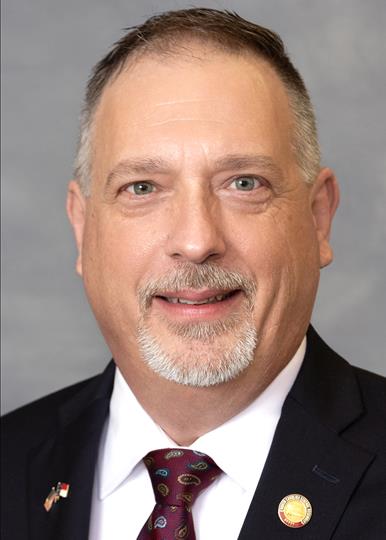
Photo of Ray Pickett
R North Carolina House · District 93 On the 2026 ballot

Rep. Ray Pickett

Compare
Total votes
1,056
all sessions
Attendance
96%
44 missed
Higher than 91% of chamber peers
With party
99%
of cast votes
Near the chamber average
Bipartisan score
1%
crosses aisle rarely
Near the chamber average
Sponsored
316
bills & resolutions
Near the chamber average
Committees
12
assignments
316 bills and resolutions

Sponsored bills

Total
316
Primary
33
Co-sponsor
283
This page
316
matching current filters
Co-sponsor HB 96
Vetoed · North Carolina House · Co-sponsor
Expedited Removal of Unauthorized Persons.

Maddy summaryHB 96 creates a new process for property owners or their authorized representatives to quickly remove "unauthorized persons" (those occupying residential property without legal right, no rental agreement, and no rent paid) from their homes. To use this process, the property owner must complete a sworn affidavit at the courthouse ($25 fee) proving all legal conditions are met, then provide it to local law enforcement. Law enforcement must remove the person within 24 hours of receiving the affidavit. This applies only to residential property and excludes tenants who stayed past their lease term. The bill directly affects property owners, law enforcement agencies, and individuals occupying property without legal authorization.

Vetoed Aug 31, 2026 1 co-sponsor
Co-sponsor HB 562
Signed into law · North Carolina House · Co-sponsor
Budget Technical Corrections Modifications.

Maddy summaryHB 562, the Healthcare Investment Act, updates qualification standards for mental health, developmental disabilities, and substance abuse professionals in North Carolina. It allows individuals with an associate degree in human services to qualify as Associate Professionals (with less than two years of experience) or Qualified Professionals (with two years of supervised experience). The bill also creates a new pathway for Qualified Substance Abuse Prevention Professionals (QSAPPs) to qualify with an associate degree and two years of supervised experience in addiction prevention - before completing a bachelor's degree. These changes will expand the pool of eligible professionals for state-funded services under the Commission for Mental Health, Developmental Disabilities, and Substance Abuse Services.

Signed into law Aug 11, 2026 1 co-sponsor
Co-sponsor HB 268
Signed into law · North Carolina House · Co-sponsor
2026 Budget Technical Corrections - II.

Maddy summaryHB 268 authorizes the University of North Carolina system to finance specific capital projects at UNC Chapel Hill and UNC Wilmington using alternative funding sources like gifts, grants, and revenue bonds - instead of state general funds. It specifically covers major projects including Chapel Hill's electrical system upgrade and Fetzer Hall addition, plus Wilmington's parking deck and student housing. The bill allows the university board to issue special obligation bonds up to 5% over the project costs to cover expenses, with potential adjustments approved by the state budget director. This directly affects the two universities by enabling them to fund these infrastructure improvements through non-state appropriations.

Signed into law Aug 11, 2026 1 co-sponsor
Co-sponsor HB 199
Passed · North Carolina House · Co-sponsor
Authorize Municipal Deannexation.

Maddy summaryHB 199 establishes a regulatory framework for nonconsensual towing businesses that attach devices (boots) or tow vehicles without the owner's consent on private property. The bill creates a Towing and Recovery Commission within the Department of Public Safety to issue permits, set maximum fees for booting/towing/storage (considering vehicle type and regional costs), and require standardized billing forms. The Commission must maintain a public database of businesses, handle complaints, and submit annual reports starting in 2027. This law directly affects nonconsensual towing businesses, property owners who may face unauthorized towing, and the public by introducing oversight and fee transparency.

Passed Aug 6, 2026 1 co-sponsor
Co-sponsor HB 437
Vetoed · North Carolina House · Co-sponsor
Drug-Free Zones/Unauthorized Public Camping.

Maddy summaryHB 437 establishes "Drug-Free Homeless Service Zones" within 300 feet of facilities that provide homeless services (like shelters or transitional housing) using public funds. It increases penalties for drug offenses committed in these zones: individuals 21+ face Class E felony charges, while facility operators allowing such offenses face Class 1 misdemeanor charges. Facilities must display visible signs identifying the zone, and the law applies to offenses committed on or after December 1, 2025. The bill directly affects homeless service providers, their operators, and individuals committing drug offenses in designated zones.

Vetoed Jul 27, 2026 1 co-sponsor
Co-sponsor HB 133
Signed into law · North Carolina House · Co-sponsor
NC Farmland and Military Protection Act.

Maddy summaryHB 133, the NC Farmland and Military Protection Act, bans U.S.-designated adversarial foreign governments from buying, leasing, or holding interests in agricultural land or land within 75 miles of major military installations like Fort Bragg and Camp Lejeune. It directly affects foreign governments identified by the U.S. State Department as adversaries under arms regulations, preventing them from acquiring land critical to food production or near military sites. The law excludes agricultural research leases under 250 acres and makes any violating land transfer legally void. This focuses on restricting foreign control of strategic land without altering existing domestic land transactions.

Signed into law Jul 8, 2026 1 co-sponsor
Co-sponsor HB 372
Signed into law · North Carolina House · Co-sponsor
Home-Based Business Fairness Act.

Maddy summaryHB 372 prevents North Carolina cities from banning or requiring permits for "no-impact home-based businesses," directly affecting residents who run small home businesses like crafts or consulting. The bill prohibits cities from mandating rezoning, fire sprinklers, or applications for these businesses, while allowing limited regulations to ensure safety, residential compatibility, and compliance with laws (e.g., no traffic spikes or visible storefronts). It defines "no-impact" businesses as those operating inside homes/yards, selling legal goods, with minimal employees or visitors, and not generating street parking. The law does not override private agreements like homeowners association (HOA) rules or restrictions on illegal activities (e.g., drug sales).

Signed into law Jul 8, 2026 1 co-sponsor
Co-sponsor HB 517
Signed into law · North Carolina House · Co-sponsor
Modify Nonprofit Corporations Act/Charitable Organizations.

Maddy summaryHB 517 modifies North Carolina's Nonprofit Corporations Act to expand merger options for charitable organizations and simplify disclosure requirements. It allows charitable nonprofits to merge with specific tax-exempt limited liability companies (LLCs) that would qualify for 501(c)(3) status if not disregarded for tax purposes, and clarifies rules for merging with unincorporated entities like partnerships. The bill also permits charitable organizations to satisfy state disclosure obligations by providing the acknowledgment required for federal tax deductions, aligning state and federal compliance. This directly affects North Carolina-based charitable nonprofits and their merger partners by reducing administrative barriers and clarifying legal pathways.

Signed into law Jul 8, 2026 1 co-sponsor
Co-sponsor HB 1173
Signed into law · North Carolina House · Co-sponsor
Jaleeyah's Law.

Maddy summaryThis bill, known as Jaleeyah's Law, strengthens North Carolina's anti-gang laws by updating definitions of criminal gangs and increasing penalties for soliciting minors to participate in gang activity. It creates new offenses for encouraging people under 18 to join gangs and for gang members possessing firearms, with stricter penalties for those under 18. The legislation also allocates funding to hire additional prosecutors and investigators specifically focused on criminal gang cases. These changes will take effect in 2026 and aim to provide clearer legal tools for prosecuting gang-related crimes.

Signed into law Jul 7, 2026 1 co-sponsor
Co-sponsor HB 1083
Passed · North Carolina House · Co-sponsor
Voluntary Portable Benefits Plan Act.

Maddy summaryThis bill creates a voluntary program allowing businesses in North Carolina to contribute to portable benefit accounts for their independent contractors. The plan enables hiring parties to fund benefits such as health insurance, retirement, and disability through a third-party administrator, which helps contractors maintain coverage when moving between jobs. To encourage participation, the legislation allows businesses to deduct contributions as business expenses and permits contractors to exclude those amounts from their taxable income. Additionally, the bill includes a $100,000 appropriation to fund public education about the program, which will take effect on July 1, 2026.

Passed Jul 1, 2026 1 co-sponsor
Showing 1 to 10 of 316 bills
1 2 3 32 Next