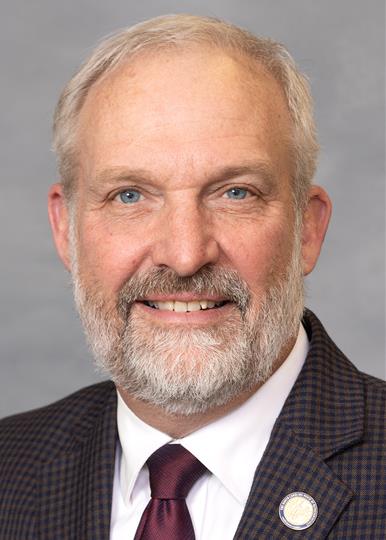
Photo of Jeff Zenger
R North Carolina House · District 74 On the 2026 ballot

Rep. Jeff Zenger

Compare
Total votes
1,056
all sessions
Attendance
98%
26 missed
Near the chamber average
With party
99%
of cast votes
Higher than 86% of chamber peers
Bipartisan score
1%
crosses aisle rarely
Lower than 89% of chamber peers
Sponsored
294
bills & resolutions
Near the chamber average
Committees
9
assignments
294 bills and resolutions

Sponsored bills

Total
294
Primary
53
Co-sponsor
241
This page
294
matching current filters
Co-sponsor HB 96
Vetoed · North Carolina House · Co-sponsor
Expedited Removal of Unauthorized Persons.

Maddy summaryHB 96 creates a new process for property owners or their authorized representatives to quickly remove "unauthorized persons" (those occupying residential property without legal right, no rental agreement, and no rent paid) from their homes. To use this process, the property owner must complete a sworn affidavit at the courthouse ($25 fee) proving all legal conditions are met, then provide it to local law enforcement. Law enforcement must remove the person within 24 hours of receiving the affidavit. This applies only to residential property and excludes tenants who stayed past their lease term. The bill directly affects property owners, law enforcement agencies, and individuals occupying property without legal authorization.

Vetoed Aug 31, 2026 1 co-sponsor
Primary HB 133
Signed into law · North Carolina House · Lead sponsor
NC Farmland and Military Protection Act.

Maddy summaryHB 133, the NC Farmland and Military Protection Act, bans U.S.-designated adversarial foreign governments from buying, leasing, or holding interests in agricultural land or land within 75 miles of major military installations like Fort Bragg and Camp Lejeune. It directly affects foreign governments identified by the U.S. State Department as adversaries under arms regulations, preventing them from acquiring land critical to food production or near military sites. The law excludes agricultural research leases under 250 acres and makes any violating land transfer legally void. This focuses on restricting foreign control of strategic land without altering existing domestic land transactions.

Signed into law Jul 8, 2026 0 co-sponsors
Co-sponsor HB 517
Signed into law · North Carolina House · Co-sponsor
Modify Nonprofit Corporations Act/Charitable Organizations.

Maddy summaryHB 517 modifies North Carolina's Nonprofit Corporations Act to expand merger options for charitable organizations and simplify disclosure requirements. It allows charitable nonprofits to merge with specific tax-exempt limited liability companies (LLCs) that would qualify for 501(c)(3) status if not disregarded for tax purposes, and clarifies rules for merging with unincorporated entities like partnerships. The bill also permits charitable organizations to satisfy state disclosure obligations by providing the acknowledgment required for federal tax deductions, aligning state and federal compliance. This directly affects North Carolina-based charitable nonprofits and their merger partners by reducing administrative barriers and clarifying legal pathways.

Signed into law Jul 8, 2026 1 co-sponsor
Primary HB 56
Signed into law · North Carolina House · Lead sponsor
2026 Budget Technical Corrections.

Maddy summaryHB 56 (incorrectly titled "UNC Enrollment" in the query; actual focus is school transparency) requires North Carolina local school boards to publicly post detailed compensation and position information for central office staff on their websites by August 15, 2025. It mandates publishing total compensation (salary, bonuses, travel reimbursements), position titles, department assignments, and creation dates for each role. The law applies directly to all central office employees, including administrators, finance staff, and third-party contractors working at school districts. This transparency measure aims to make school district spending and staffing more visible to the public, with records updated annually. The bill does not affect student enrollment or university operations (UNC system).

Signed into law Jul 7, 2026 0 co-sponsors
Primary HB 376
Signed into law · North Carolina House · Lead sponsor
Water/Wastewater Affordability and Capacity Act.

Maddy summaryHB 376 makes various changes to regulations concerning on-site wastewater systems and the professionals who manage them in North Carolina. The bill establishes term limits for members of the On-Site Wastewater Contractors and Inspectors Certification Board. It also modifies the certification and renewal requirements for various on-site wastewater roles, such as contractors, inspectors, and evaluators, by detailing specific education, experience, examination, liability coverage, and continuing education criteria. Additionally, the bill revises the process for local boards of health to adopt more stringent wastewater system rules, requiring an agreement and approval from the Department, along with public hearings for such proposals.

Signed into law Jul 2, 2026 0 co-sponsors
Co-sponsor HB 1083
Passed · North Carolina House · Co-sponsor
Voluntary Portable Benefits Plan Act.

Maddy summaryThis bill creates a voluntary program allowing businesses in North Carolina to contribute to portable benefit accounts for their independent contractors. The plan enables hiring parties to fund benefits such as health insurance, retirement, and disability through a third-party administrator, which helps contractors maintain coverage when moving between jobs. To encourage participation, the legislation allows businesses to deduct contributions as business expenses and permits contractors to exclude those amounts from their taxable income. Additionally, the bill includes a $100,000 appropriation to fund public education about the program, which will take effect on July 1, 2026.

Passed Jul 1, 2026 1 co-sponsor
Co-sponsor HB 600
died · North Carolina House · Co-sponsor
Recognition of the Tuscarora.

Maddy summaryHB 600 officially recognizes the Tuscarora Indians of Kahtenuaka Territories as a tribe under North Carolina law, effective July 1, 2025. The bill designates them as eligible for federal programs and services available to Native American tribes, based on historical treaties and their continuous presence in the state. It requires two Tuscarora representatives to serve on the State Commission of Indian Affairs and one to serve on the American Indian Heritage Commission. This recognition grants the tribe formal standing and representation in state-level tribal affairs.

died Jul 1, 2026 1 co-sponsor
Primary HB 34
Passed · North Carolina House · Lead sponsor
Strengthen Medicaid Provider Controls.

Maddy summaryHB 34 creates a new criminal offense for stealing or misusing someone else's mail, directly affecting individuals who unlawfully take, control, or transfer mail intended for others. The bill defines "mail" broadly to include letters, packages, or valuable items sent to another person and prohibits two specific actions: stealing mail to deprive the owner, or transferring mail to benefit someone not entitled to it. Punishments range from a Class A1 misdemeanor for first-time, low-value thefts (under $200) to a Class D felony for repeat offenses or high-value thefts (over $2,000). This law, effective December 1, 2025, applies to offenses committed after that date.

Passed Jun 25, 2026 0 co-sponsors
Co-sponsor HR 1239
Passed · North Carolina House · Co-sponsor
Honor Mike Clampitt.

Maddy summaryThis House Resolution honors the life and memory of James Michael "Mike" Clampitt, a former member of the North Carolina House of Representatives from District 119. The bill formally recognizes his extensive background in public service, which included decades as a firefighter and deputy sheriff in North Carolina before his election to the state legislature. It expresses the House's appreciation for his legislative work and extends condolences to his family, with a copy of the resolution sent to them.

Passed Jun 24, 2026 1 co-sponsor
Primary HB 301
Failed · North Carolina House · Lead sponsor
Social Media and Artificial Intelligence (AI) Safety.

Maddy summaryHB 301, titled "Social Media Protections for Minors Under 16," aims to regulate social media platforms for minors in North Carolina. The bill prohibits social media platforms from allowing children under 14 years of age to create accounts and requires them to terminate existing accounts for this age group, deleting their personal data. For minors aged 14 or 15, platforms must obtain parental or guardian consent before they can create or maintain an account. The North Carolina Department of Justice is responsible for enforcing these provisions, which allows for civil penalties and damages for violations, including potential lawsuits by affected minors.

Failed Jun 24, 2026 0 co-sponsors
Showing 1 to 10 of 294 bills
1 2 3 30 Next