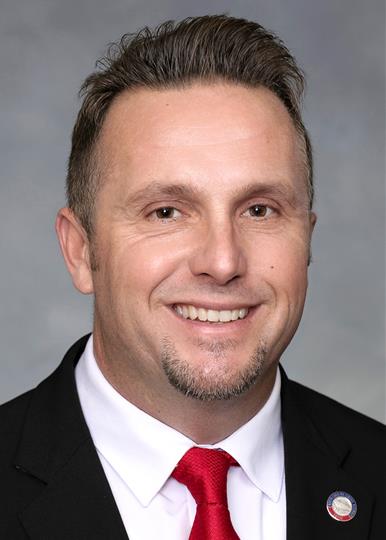
Photo of Brian Biggs
R North Carolina House · District 70 On the 2026 ballot

Rep. Brian Biggs

Compare
Total votes
542
all sessions
Attendance
99%
6 missed
Near the chamber average
With party
99%
of cast votes
Higher than 86% of chamber peers
Bipartisan score
0%
crosses aisle rarely
Lower than 89% of chamber peers
Sponsored
265
bills & resolutions
Near the chamber average
Committees
8
assignments
265 bills and resolutions

Sponsored bills

Total
265
Primary
54
Co-sponsor
211
This page
265
matching current filters
Primary HB 96
Vetoed · North Carolina House · Lead sponsor
Expedited Removal of Unauthorized Persons.

Maddy summaryHB 96 creates a new process for property owners or their authorized representatives to quickly remove "unauthorized persons" (those occupying residential property without legal right, no rental agreement, and no rent paid) from their homes. To use this process, the property owner must complete a sworn affidavit at the courthouse ($25 fee) proving all legal conditions are met, then provide it to local law enforcement. Law enforcement must remove the person within 24 hours of receiving the affidavit. This applies only to residential property and excludes tenants who stayed past their lease term. The bill directly affects property owners, law enforcement agencies, and individuals occupying property without legal authorization.

Vetoed Aug 31, 2026 0 co-sponsors
Co-sponsor HB 268
Signed into law · North Carolina House · Co-sponsor
2026 Budget Technical Corrections - II.

Maddy summaryHB 268 authorizes the University of North Carolina system to finance specific capital projects at UNC Chapel Hill and UNC Wilmington using alternative funding sources like gifts, grants, and revenue bonds - instead of state general funds. It specifically covers major projects including Chapel Hill's electrical system upgrade and Fetzer Hall addition, plus Wilmington's parking deck and student housing. The bill allows the university board to issue special obligation bonds up to 5% over the project costs to cover expenses, with potential adjustments approved by the state budget director. This directly affects the two universities by enabling them to fund these infrastructure improvements through non-state appropriations.

Signed into law Aug 11, 2026 1 co-sponsor
Co-sponsor HB 834
Signed into law · North Carolina House · Co-sponsor
State Board of Elections Administrative Changes.

Maddy summaryHouse Bill 834, titled the "Sportsman's Voter Act," requires that individuals applying for a hunting or fishing license in North Carolina be offered the opportunity to register to vote. It also mandates that these applicants be offered the chance to participate in the state's Organ Donor Registry. The bill directs the Wildlife Resources Commission to create rules for implementing these offers during the license application process, in consultation with the State Board of Elections and the Division of Motor Vehicles. This act will take effect on July 1, 2025.

Signed into law Aug 11, 2026 1 co-sponsor
Co-sponsor HB 328
Passed · North Carolina House · Co-sponsor
Regulate Hemp-Derived Consumables.

Maddy summaryHB 328 bans delta-8, delta-9, and other hemp-derived consumables (including CBD products and vapor devices) on all North Carolina public school grounds, buildings, and school-sponsored events. It requires schools to adopt written policies prohibiting these products, including posting signs, notifying students/parents, and enforcing the ban, with definitions explicitly covering "delta-8," "delta-9," and vaping products. The policy applies to all students, staff, and visitors, though it allows hemp/tobacco use in supervised instructional or research settings without ingestion. The bill takes effect for the 2025-2026 school year and aligns with existing tobacco product restrictions.

Passed Jul 30, 2026 1 co-sponsor
Co-sponsor HB 437
Vetoed · North Carolina House · Co-sponsor
Drug-Free Zones/Unauthorized Public Camping.

Maddy summaryHB 437 establishes "Drug-Free Homeless Service Zones" within 300 feet of facilities that provide homeless services (like shelters or transitional housing) using public funds. It increases penalties for drug offenses committed in these zones: individuals 21+ face Class E felony charges, while facility operators allowing such offenses face Class 1 misdemeanor charges. Facilities must display visible signs identifying the zone, and the law applies to offenses committed on or after December 1, 2025. The bill directly affects homeless service providers, their operators, and individuals committing drug offenses in designated zones.

Vetoed Jul 27, 2026 1 co-sponsor
Co-sponsor HB 920
Signed into law · North Carolina House · Co-sponsor
Virtual Currency Kiosk Consumer Protection Act.

Maddy summaryHB 920, the NC Digital Asset Freedom Act, allows North Carolina residents and businesses to use qualifying digital assets for everyday transactions and tax payments. To qualify, digital assets must meet strict criteria including 10 years of security, $750 billion market capitalization, decentralized governance, proof-of-work security, and U.S. regulatory classification as a non-security. The bill recognizes these assets as legally valid payment methods (preventing denial of enforceability) and permits tax payments to the state using them, requiring reporting of U.S. dollar equivalents at transaction time. It also mandates privacy protections for users and imposes a $2,000 daily transaction limit for new users of digital asset kiosks to prevent fraud.

Signed into law Jul 8, 2026 1 co-sponsor
Co-sponsor HB 133
Signed into law · North Carolina House · Co-sponsor
NC Farmland and Military Protection Act.

Maddy summaryHB 133, the NC Farmland and Military Protection Act, bans U.S.-designated adversarial foreign governments from buying, leasing, or holding interests in agricultural land or land within 75 miles of major military installations like Fort Bragg and Camp Lejeune. It directly affects foreign governments identified by the U.S. State Department as adversaries under arms regulations, preventing them from acquiring land critical to food production or near military sites. The law excludes agricultural research leases under 250 acres and makes any violating land transfer legally void. This focuses on restricting foreign control of strategic land without altering existing domestic land transactions.

Signed into law Jul 8, 2026 1 co-sponsor
Co-sponsor HB 162
Signed into law · North Carolina House · Co-sponsor
Parking Lot Reform/Stormwater Control.

Maddy summaryHB 162 requires North Carolina counties and cities to conduct criminal history background checks through the State Bureau of Investigation for all job applicants whose positions involve working with children in any capacity. This applies specifically to local government employment decisions, mandating checks for roles like childcare workers, school staff, or youth program coordinators, but not for general positions. The law takes effect October 1, 2025, and does not alter existing background check processes for non-child-related roles. It directly affects local government hiring practices by adding a mandatory screening requirement for child-impacting positions.

Signed into law Jul 7, 2026 1 co-sponsor
Co-sponsor HB 1083
Passed · North Carolina House · Co-sponsor
Voluntary Portable Benefits Plan Act.

Maddy summaryThis bill creates a voluntary program allowing businesses in North Carolina to contribute to portable benefit accounts for their independent contractors. The plan enables hiring parties to fund benefits such as health insurance, retirement, and disability through a third-party administrator, which helps contractors maintain coverage when moving between jobs. To encourage participation, the legislation allows businesses to deduct contributions as business expenses and permits contractors to exclude those amounts from their taxable income. Additionally, the bill includes a $100,000 appropriation to fund public education about the program, which will take effect on July 1, 2026.

Passed Jul 1, 2026 1 co-sponsor
Co-sponsor HB 198
Failed · North Carolina House · Co-sponsor
ABC Omnibus of 2026.

Maddy summaryHB 198 requires alcohol law enforcement officers to notify the permit holder (not just the employee) within five business days when a violation occurs on a licensed establishment's premises. This applies to both citations issued to employees and reports from other law enforcement agencies about violations of alcohol or related laws. The notice must be sent via email or certified mail and must identify the specific violation and the involved employee. The bill directly affects bars, restaurants, and other businesses holding alcohol permits in North Carolina by mandating clearer, faster communication about violations. It does not change enforcement powers but standardizes how permit holders receive violation notices.

Failed Jun 30, 2026 1 co-sponsor
Showing 1 to 10 of 265 bills
1 2 3 27 Next