Maddy summaryHB 96 creates a new process for property owners or their authorized representatives to quickly remove "unauthorized persons" (those occupying residential property without legal right, no rental agreement, and no rent paid) from their homes. To use this process, the property owner must complete a sworn affidavit at the courthouse ($25 fee) proving all legal conditions are met, then provide it to local law enforcement. Law enforcement must remove the person within 24 hours of receiving the affidavit. This applies only to residential property and excludes tenants who stayed past their lease term. The bill directly affects property owners, law enforcement agencies, and individuals occupying property without legal authorization.

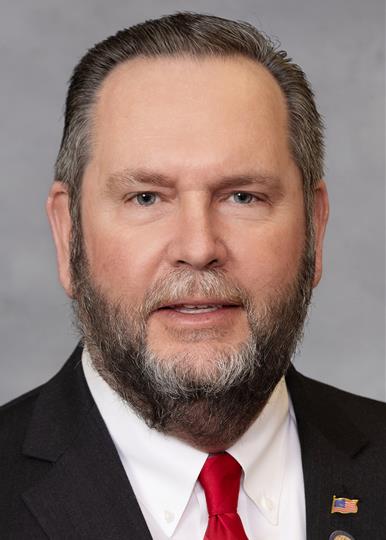
Rep. Alan Branson
Sponsored bills
Maddy summaryHB 268 authorizes the University of North Carolina system to finance specific capital projects at UNC Chapel Hill and UNC Wilmington using alternative funding sources like gifts, grants, and revenue bonds - instead of state general funds. It specifically covers major projects including Chapel Hill's electrical system upgrade and Fetzer Hall addition, plus Wilmington's parking deck and student housing. The bill allows the university board to issue special obligation bonds up to 5% over the project costs to cover expenses, with potential adjustments approved by the state budget director. This directly affects the two universities by enabling them to fund these infrastructure improvements through non-state appropriations.
Maddy summaryHouse Bill 834, titled the "Sportsman's Voter Act," requires that individuals applying for a hunting or fishing license in North Carolina be offered the opportunity to register to vote. It also mandates that these applicants be offered the chance to participate in the state's Organ Donor Registry. The bill directs the Wildlife Resources Commission to create rules for implementing these offers during the license application process, in consultation with the State Board of Elections and the Division of Motor Vehicles. This act will take effect on July 1, 2025.
Maddy summaryHB 328 bans delta-8, delta-9, and other hemp-derived consumables (including CBD products and vapor devices) on all North Carolina public school grounds, buildings, and school-sponsored events. It requires schools to adopt written policies prohibiting these products, including posting signs, notifying students/parents, and enforcing the ban, with definitions explicitly covering "delta-8," "delta-9," and vaping products. The policy applies to all students, staff, and visitors, though it allows hemp/tobacco use in supervised instructional or research settings without ingestion. The bill takes effect for the 2025-2026 school year and aligns with existing tobacco product restrictions.
Maddy summaryHB 133, the NC Farmland and Military Protection Act, bans U.S.-designated adversarial foreign governments from buying, leasing, or holding interests in agricultural land or land within 75 miles of major military installations like Fort Bragg and Camp Lejeune. It directly affects foreign governments identified by the U.S. State Department as adversaries under arms regulations, preventing them from acquiring land critical to food production or near military sites. The law excludes agricultural research leases under 250 acres and makes any violating land transfer legally void. This focuses on restricting foreign control of strategic land without altering existing domestic land transactions.
Maddy summaryHB 162 requires North Carolina counties and cities to conduct criminal history background checks through the State Bureau of Investigation for all job applicants whose positions involve working with children in any capacity. This applies specifically to local government employment decisions, mandating checks for roles like childcare workers, school staff, or youth program coordinators, but not for general positions. The law takes effect October 1, 2025, and does not alter existing background check processes for non-child-related roles. It directly affects local government hiring practices by adding a mandatory screening requirement for child-impacting positions.
Maddy summaryHB 56 (incorrectly titled "UNC Enrollment" in the query; actual focus is school transparency) requires North Carolina local school boards to publicly post detailed compensation and position information for central office staff on their websites by August 15, 2025. It mandates publishing total compensation (salary, bonuses, travel reimbursements), position titles, department assignments, and creation dates for each role. The law applies directly to all central office employees, including administrators, finance staff, and third-party contractors working at school districts. This transparency measure aims to make school district spending and staffing more visible to the public, with records updated annually. The bill does not affect student enrollment or university operations (UNC system).
Maddy summaryThis bill imposes a $10 fee on every customer entering sexually oriented businesses in North Carolina that also hold an alcohol permit. The collected fees must be remitted quarterly to the Department of Revenue and deposited into a fund designated for sexual assault and rape crisis services. Businesses are required to keep daily records of customer counts without collecting personal names, and they must submit these records for audit upon request. The legislation aims to address secondary impacts on public health and safety by funding support services rather than targeting the businesses' expressive content.
Maddy summaryHB 198 requires alcohol law enforcement officers to notify the permit holder (not just the employee) within five business days when a violation occurs on a licensed establishment's premises. This applies to both citations issued to employees and reports from other law enforcement agencies about violations of alcohol or related laws. The notice must be sent via email or certified mail and must identify the specific violation and the involved employee. The bill directly affects bars, restaurants, and other businesses holding alcohol permits in North Carolina by mandating clearer, faster communication about violations. It does not change enforcement powers but standardizes how permit holders receive violation notices.
Maddy summaryHB 301, titled "Social Media Protections for Minors Under 16," aims to regulate social media platforms for minors in North Carolina. The bill prohibits social media platforms from allowing children under 14 years of age to create accounts and requires them to terminate existing accounts for this age group, deleting their personal data. For minors aged 14 or 15, platforms must obtain parental or guardian consent before they can create or maintain an account. The North Carolina Department of Justice is responsible for enforcing these provisions, which allows for civil penalties and damages for violations, including potential lawsuits by affected minors.