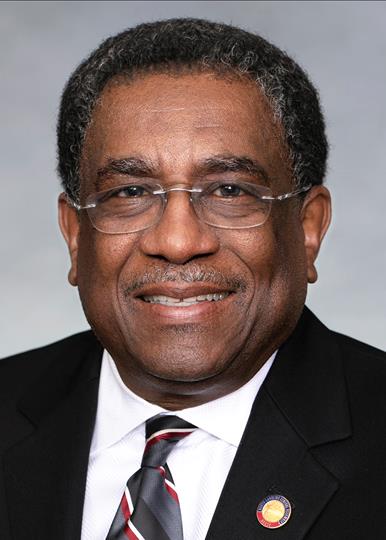
Photo of Garland Pierce
D North Carolina House · District 48 On the 2026 ballot

Rep. Garland Pierce

Compare
Total votes
7,664
all sessions
Attendance
97%
196 missed
Near the chamber average
With party
97%
of cast votes
Lower than 84% of chamber peers
Bipartisan score
2%
crosses aisle rarely
Higher than 82% of chamber peers
Sponsored
2,283
bills & resolutions
Higher than 90% of chamber peers
Committees
14
assignments
2,283 bills and resolutions

Sponsored bills

Total
2,283
Primary
208
Co-sponsor
2,075
This page
2,283
matching current filters
Co-sponsor HB 96
Vetoed · North Carolina House · Co-sponsor
Expedited Removal of Unauthorized Persons.

Maddy summaryHB 96 creates a new process for property owners or their authorized representatives to quickly remove "unauthorized persons" (those occupying residential property without legal right, no rental agreement, and no rent paid) from their homes. To use this process, the property owner must complete a sworn affidavit at the courthouse ($25 fee) proving all legal conditions are met, then provide it to local law enforcement. Law enforcement must remove the person within 24 hours of receiving the affidavit. This applies only to residential property and excludes tenants who stayed past their lease term. The bill directly affects property owners, law enforcement agencies, and individuals occupying property without legal authorization.

Vetoed Aug 31, 2026 1 co-sponsor
Co-sponsor HB 832
Failed · North Carolina House · Co-sponsor
Education Omnibus.

Maddy summaryHB 832 revises North Carolina's school safety grant program to expand eligible uses of funds for training aimed at improving student well-being and safety. It allows public school units to fund evidence-based programs including suicide prevention training (CALM), trauma-focused therapies (like cognitive behavioral therapy), violence prevention, and peer mentoring facilitation. The bill specifically permits up to $350,000 in annual funding for these expanded services, directly affecting school staff, counselors, and students in North Carolina public schools. This change modifies existing grant rules without creating new funding or altering overall program structure.

Failed Aug 6, 2026 1 co-sponsor
Co-sponsor HB 133
Signed into law · North Carolina House · Co-sponsor
NC Farmland and Military Protection Act.

Maddy summaryHB 133, the NC Farmland and Military Protection Act, bans U.S.-designated adversarial foreign governments from buying, leasing, or holding interests in agricultural land or land within 75 miles of major military installations like Fort Bragg and Camp Lejeune. It directly affects foreign governments identified by the U.S. State Department as adversaries under arms regulations, preventing them from acquiring land critical to food production or near military sites. The law excludes agricultural research leases under 250 acres and makes any violating land transfer legally void. This focuses on restricting foreign control of strategic land without altering existing domestic land transactions.

Signed into law Jul 8, 2026 1 co-sponsor
Co-sponsor HB 349
Passed · North Carolina House · Co-sponsor
Modify Health Care Powers of Attorney/Advance Directives.

Maddy summaryHB 349 updates North Carolina's requirements for healthcare powers of attorney (POA) and advance health care directives (like living wills). It clarifies witness and notary rules to prevent conflicts of interest (e.g., prohibiting facility staff from witnessing), standardizes forms for easier use, and allows electronic filing of directives with the Secretary of State’s registry. The bill directly affects residents planning ahead for medical decisions, ensuring their chosen agents or instructions are legally recognized. Key changes include revised witness eligibility criteria, simplified form language, and a new online filing option to improve accessibility. The bill does not alter medical care standards but streamlines the legal process for end-of-life planning.

Passed Jun 25, 2026 1 co-sponsor
Co-sponsor HB 936
Failed · North Carolina House · Co-sponsor
Robocall Solicitation Modifications.

Maddy summaryHB 936 modifies North Carolina's laws governing telephone solicitations to specifically address robocalls and spam text messages. The bill defines "robocall" to include artificial or prerecorded voice messages, ringless voicemails, and scam texts, and applies new restrictions to "robocallers." It prohibits robocalls before 8:00 A.M. or after 9:00 P.M., forbids intimidating language, and prevents misleading caller identification. Additionally, it clarifies the requirements for "prior express written consent" needed for solicitors to contact individuals on the "Do Not Call" Registry, stipulating conditions for this consent.

Failed Jun 24, 2026 1 co-sponsor
Co-sponsor HB 258
Signed into law · North Carolina House · Co-sponsor
Worker Safety Act of 2026.

Maddy summaryHB 258, the Utility Worker Protection Act, increases penalties for assaulting utility and communications workers by designating such assaults as Class A1 misdemeanors - the highest misdemeanor level - when the worker is visibly identifiable (e.g., wearing company-logoed uniforms) and performing duties. It directly affects workers providing electricity, gas, telecommunications, or internet services, including those employed by public, private, or cooperative entities. The bill adds specific language to North Carolina’s assault statute, requiring prosecutors to apply this enhanced penalty for assaults meeting these criteria, without needing other legal provisions. The law takes effect December 1, 2025, applying to offenses committed on or after that date.

Signed into law Jun 22, 2026 1 co-sponsor
Co-sponsor HB 315
Signed into law · North Carolina House · Co-sponsor
Prohibit Litigation Investments/Amend Workers' Compensation Benefits.

Maddy summaryHB 315 creates new criminal offenses for wrongfully entering restricted business areas (like secure storage rooms) and for stealing or fraudulently obtaining gift cards. It directly affects businesses (by protecting secure areas), gift card holders (by criminalizing theft of their cards), and individuals who commit these acts. Key provisions include classifying unauthorized building entry as a misdemeanor or felony based on prior offenses, defining gift card theft as a Class 1 misdemeanor for cards under $1,000 (or felony for higher value), and expanding "organized retail theft" to include conspiracy around gift cards with penalties tied to total value stolen. The law takes effect December 1, 2025, and applies to offenses committed after that date.

Signed into law Jun 22, 2026 1 co-sponsor
Co-sponsor HB 657
died · North Carolina House · Co-sponsor
Duke's Rescue Act.

Maddy summaryHB 657, the "Duke's Rescue Act," sets minimum care standards for domestic dogs and cats in North Carolina, directly affecting pet owners and caretakers. The bill requires owners to provide adequate food, water, shelter, space, exercise, and veterinary treatment, with detailed definitions (e.g., shelter must protect from extreme weather like temperatures above 85°F or below 32°F). Exceptions are included for activities like hunting, herding livestock, and agricultural work, where certain standards do not apply. This law establishes concrete, measurable requirements for animal welfare without specifying enforcement mechanisms.

died Jun 16, 2026 1 co-sponsor
Co-sponsor HB 1143
In committee · North Carolina House · Co-sponsor
Principal Fellows and Admin. Intern. Stipends.

Maddy summaryThis bill modifies the North Carolina Principal Fellows Program to clarify how forgivable scholarship loans are administered and to set specific rules for grant funding. It designates the Authority to manage loan agreements and repayment monitoring while requiring the Commission to select up to eight grant recipients annually for principal preparation and two recipients for innovative training development. The legislation also establishes reporting requirements for grant recipients, mandating the collection of data on student achievement, job placement rates, and retention in high-need schools. Additionally, the bill allows the use of administrative funds from the Trust Fund to cover program operations, staff salaries, and evaluation costs, with limits set at the greater of two percent of appropriated funds or one hundred sixty thousand dollars per year.

In committee May 19, 2026 1 co-sponsor
Co-sponsor HB 451
In committee · North Carolina House · Co-sponsor
Diabetes Education for Parents.

Maddy summaryHB 451 requires North Carolina public schools to provide parents and legal guardians with an annual information packet about type 1 and type 2 diabetes at the start of each school year. The packet must include descriptions of diabetes types, risk factors, warning signs, screening processes, and recommendations to consult healthcare providers for diagnosis or treatment planning. Schools must also ensure staff are trained to support students with diabetes through individualized care plans. The law, effective July 1, 2025, includes $10,000 in state funds to help schools develop implementation guidance. It directly affects all parents/guardians of students in North Carolina public schools.

In committee May 19, 2026 1 co-sponsor
Showing 1 to 10 of 2,283 bills
1 2 3 229 Next