Maddy summaryHB 268 authorizes the University of North Carolina system to finance specific capital projects at UNC Chapel Hill and UNC Wilmington using alternative funding sources like gifts, grants, and revenue bonds - instead of state general funds. It specifically covers major projects including Chapel Hill's electrical system upgrade and Fetzer Hall addition, plus Wilmington's parking deck and student housing. The bill allows the university board to issue special obligation bonds up to 5% over the project costs to cover expenses, with potential adjustments approved by the state budget director. This directly affects the two universities by enabling them to fund these infrastructure improvements through non-state appropriations.

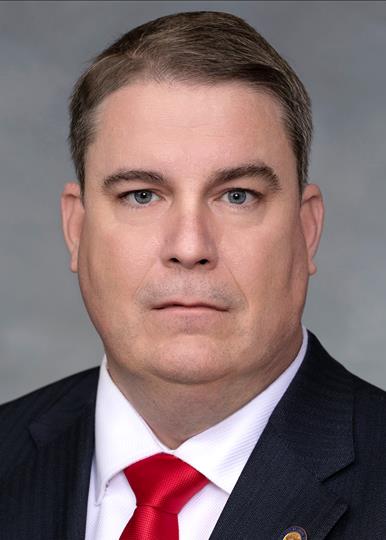
Rep. Brenden Jones
Sponsored bills
Maddy summaryHB 116 changes Columbus County's school board election system to require partisan races for its five-member board, replacing the current non-partisan process. The bill establishes five single-member districts where voters elect one representative per district, with candidates required to reside in the district they seek to represent (excluding the Whiteville School Administrative Unit from the countywide vote). It mandates partisan elections during even-numbered year general elections and repeals nine outdated election statutes specific to Columbus County. The changes take effect December 1, 2026, for future elections, though current 2022/2024 board members will serve their full terms.
Maddy summaryHB 133, the NC Farmland and Military Protection Act, bans U.S.-designated adversarial foreign governments from buying, leasing, or holding interests in agricultural land or land within 75 miles of major military installations like Fort Bragg and Camp Lejeune. It directly affects foreign governments identified by the U.S. State Department as adversaries under arms regulations, preventing them from acquiring land critical to food production or near military sites. The law excludes agricultural research leases under 250 acres and makes any violating land transfer legally void. This focuses on restricting foreign control of strategic land without altering existing domestic land transactions.
Maddy summaryThis House Resolution honors the life and memory of James Michael "Mike" Clampitt, a former member of the North Carolina House of Representatives from District 119. The bill formally recognizes his extensive background in public service, which included decades as a firefighter and deputy sheriff in North Carolina before his election to the state legislature. It expresses the House's appreciation for his legislative work and extends condolences to his family, with a copy of the resolution sent to them.
Maddy summaryHB 171 prohibits North Carolina state agencies from implementing diversity, equity, and inclusion (DEI) programs, including in hiring, employment practices, or training. It defines DEI broadly as any initiative influencing hiring or benefits based on protected characteristics (like race or gender) beyond merit-based processes. The bill mandates state auditor compliance audits, imposes civil penalties up to $5,000 per violation, and allows employees to file lawsuits after submitting a grievance to their agency. It explicitly excludes compliance with existing anti-discrimination laws (such as Title IX and the ADA) and protects First Amendment rights.
Maddy summaryThis bill, known as the Mike Clampitt 1st Responder Tax Fairness Act, aims to expand tax exemptions for volunteer fire departments and rescue squads in North Carolina. Specifically, it allows these independent groups, which have two or fewer paid employees and are already exempt from state income tax, to avoid paying a highway use tax on specific emergency vehicles like fire trucks, forest firefighting units, and other emergency service vehicles. The change applies to vehicles when a certificate of title is issued on or after July 1, 2026, ensuring these organizations can acquire necessary equipment without incurring this particular tax. By broadening the existing exemption, the legislation directly benefits volunteer responders who operate outside of local government units.
Maddy summaryThis bill, known as the Curriculum Honesty, Compliance, and Child Safety Act, establishes new rules for North Carolina public schools regarding parental rights and curriculum content. It requires schools to obtain parental consent before changing a student's name or gender designation in records and mandates that parents be notified before their child receives counseling related to sexuality or gender identity. Additionally, the legislation prohibits any instruction on gender identity or sexual activity in grades kindergarten through fourth grade, with exceptions only for answering student-initiated questions. The bill also creates mechanisms for enforcement, allowing parents to sue schools for violations and authorizing state auditors to investigate noncompliance.
Maddy summaryHB 318 requires North Carolina county jails and detention facilities to check the immigration status of individuals charged with specific offenses (including certain felonies, misdemeanors, and impaired driving) and to notify U.S. Immigration and Customs Enforcement (ICE) if a detainer is issued. If ICE issues a detainer, facilities must hold the person for up to 48 hours (or until ICE takes custody) and notify ICE 2 hours before the person would otherwise be released. For pretrial defendants facing similar charges, the bill mandates a two-hour hold to allow ICE to issue a detainer; if none is received, the defendant must be released. The law also shields state officials from liability when following these procedures.
Maddy summaryHB 549 clarifies the State Auditor's authority by exempting the Office of the State Auditor from certain financial oversight laws and IT procurement rules. It specifies that the Auditor can access all state agency records (including digital data), investigate misuse of public funds, and refer certain cases to other agencies like the State Ethics Commission. The bill directly affects the State Auditor’s office, state agencies, and publicly funded entities that handle state or federal funds. These changes streamline the Auditor’s ability to conduct audits and investigations while maintaining clear boundaries for their oversight role.
Maddy summaryHB 1003 updates North Carolina's legal definitions related to funeral services and cremation. It clarifies terms like "alkaline hydrolysis" (a water-based process for remains), "authorizing agent," "cremated remains," and requirements for cremation containers and caskets. The bill reorganizes these definitions under a new Article 13F titled "Cremations and Alkaline Hydrolysis" to improve clarity in existing law. This affects funeral service providers, crematories, and the North Carolina Board of Funeral Service by standardizing terminology in regulations. The bill is procedural, focusing on definitional updates rather than new policy changes.