Maddy summaryThis bill proposes a constitutional amendment to guarantee voters in North Carolina the right to early voting for all primary and general elections. If approved by voters in a 2026 referendum, the amendment would require county election boards to designate a minimum of 14 days for early voting, with sites open at least 8:00 A.M. to 7:30 P.M. on weekdays and same-day voter registration available at these sites. The legislation also mandates that early voting locations and staffing levels be adjusted to meet voter demand, ensuring consistent operating hours across the state. This change would be implemented only if a majority of voters cast ballots in favor of the amendment at the upcoming general election.

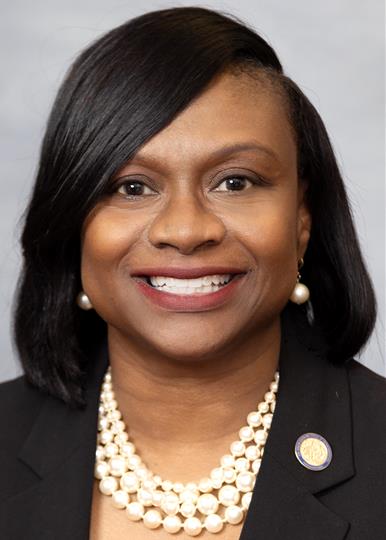
Rep. Monika Johnson-Hostler
Sponsored bills
Maddy summaryThis bill imposes a $10 fee on every customer entering sexually oriented businesses in North Carolina that also hold an alcohol permit. The collected fees must be remitted quarterly to the Department of Revenue and deposited into a fund designated for sexual assault and rape crisis services. Businesses are required to keep daily records of customer counts without collecting personal names, and they must submit these records for audit upon request. The legislation aims to address secondary impacts on public health and safety by funding support services rather than targeting the businesses' expressive content.
Maddy summaryThis bill establishes an Interstate Compact for School Psychologists in North Carolina, allowing licensed professionals to practice in other participating states without facing repetitive licensing requirements. The legislation creates a commission to oversee the agreement and defines specific rules for mobility, including provisions for military families and standards for professional conduct. Additionally, the bill allocates funds to support a virtual training program for school psychologists. By streamlining the licensure process, the measure aims to increase the availability of qualified mental health services in schools across member states.
Maddy summaryThis bill modifies the North Carolina Principal Fellows Program to clarify how forgivable scholarship loans are administered and to set specific rules for grant funding. It designates the Authority to manage loan agreements and repayment monitoring while requiring the Commission to select up to eight grant recipients annually for principal preparation and two recipients for innovative training development. The legislation also establishes reporting requirements for grant recipients, mandating the collection of data on student achievement, job placement rates, and retention in high-need schools. Additionally, the bill allows the use of administrative funds from the Trust Fund to cover program operations, staff salaries, and evaluation costs, with limits set at the greater of two percent of appropriated funds or one hundred sixty thousand dollars per year.
Maddy summaryThis bill, known as the Mike Clampitt 1st Responder Tax Fairness Act, aims to expand tax exemptions for volunteer fire departments and rescue squads in North Carolina. Specifically, it allows these independent groups, which have two or fewer paid employees and are already exempt from state income tax, to avoid paying a highway use tax on specific emergency vehicles like fire trucks, forest firefighting units, and other emergency service vehicles. The change applies to vehicles when a certificate of title is issued on or after July 1, 2026, ensuring these organizations can acquire necessary equipment without incurring this particular tax. By broadening the existing exemption, the legislation directly benefits volunteer responders who operate outside of local government units.
Maddy summaryThis bill proposes to allocate $2,178,000 in state funds to hire at least 25 additional Adult Protective Services workers across North Carolina counties starting in the 2026-2027 fiscal year. The money is intended specifically to cover salaries and benefits for new staff who will investigate reports of elder abuse, neglect, and exploitation, with distribution based on factors like case volume and the number of seniors in each area. The legislation explicitly prohibits using these funds to replace existing staff or for any purpose other than paying the new workers. Although the bill was withdrawn from committee in May 2026, its primary function is to increase state funding for local social services agencies to address a growing demand for elder abuse investigations.
Maddy summaryThis bill allocates $6 million in state funds to expand two food assistance programs in North Carolina for the 2026-2027 fiscal year. The first $4 million supports FarmSHARE, which provides grants to buy locally grown food and distribute it for free to food-insecure individuals and households. The second $2 million funds the Double Up Food Bucks Program, allowing people receiving nutrition assistance to use their benefits to purchase fresh fruits and vegetables at farmers markets and other local retailers. Both programs require the state department to submit annual reports detailing participation numbers, distribution metrics, and financial data to legislative oversight committees. The legislation takes effect on July 1, 2026.
Maddy summaryThis North Carolina bill allows taxpayers to deduct up to $5,000 of unreimbursed costs for prescribed medications and pharmacy fees from their state income tax. The deduction applies to expenses not covered by tax-advantaged accounts like Flexible Spending or Health Savings Accounts and prevents double-dipping if a federal deduction is already claimed for the same year. Effective for tax years starting on or after January 1, 2026, the measure directly affects individuals paying out-of-pocket for prescription drugs who itemize their state taxes.
Maddy summaryHouse Bill 433 allows licensed registered nurses (RNs) to serve as school nurses in North Carolina public schools. The bill prohibits the State Board of Education from requiring a four-year degree for school nurse employment. It specifies that RNs with at least two years of experience in a hospital or health clinic can work as school nurses without needing additional certifications or licenses. These qualified registered nurses will be paid under the certified school nurse pay scale.
Maddy summaryThis bill establishes a grant program within the North Carolina Department of Health and Human Services to fund community organizations focused on improving maternal health outcomes for Black women. The program provides financial awards ranging from $10,000 to $50,000 to support initiatives that address social determinants of health, such as housing, transportation, nutrition, and access to childcare. Eligible applicants must be community-based groups led by Black women that offer evidence-based services including doula support, mental health care, and culturally respectful training for health workers. The legislation also requires the department to provide technical assistance to grant recipients and submit annual reports on fund usage and program effectiveness.