Maddy summaryHB 96 creates a new process for property owners or their authorized representatives to quickly remove "unauthorized persons" (those occupying residential property without legal right, no rental agreement, and no rent paid) from their homes. To use this process, the property owner must complete a sworn affidavit at the courthouse ($25 fee) proving all legal conditions are met, then provide it to local law enforcement. Law enforcement must remove the person within 24 hours of receiving the affidavit. This applies only to residential property and excludes tenants who stayed past their lease term. The bill directly affects property owners, law enforcement agencies, and individuals occupying property without legal authorization.

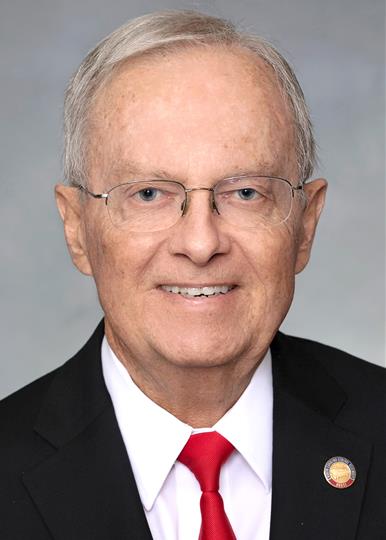
Rep. Frank Iler
Sponsored bills
Maddy summaryThis bill directs the North Carolina Office of the State Auditor to conduct a performance audit of the Ferry Division within the Department of Transportation. The audit will examine financial spending, operational efficiency, and the current route system to identify ways to reduce costs and increase revenue. Additionally, the review will explore options for diversifying funding sources to support capital projects and cover operating expenses. The State Auditor must submit a final report detailing these findings to the Joint Legislative Transportation Oversight Committee and the Fiscal Research Division by October 1, 2026.
Maddy summaryThis bill, known as Jaleeyah's Law, strengthens North Carolina's anti-gang laws by updating definitions of criminal gangs and increasing penalties for soliciting minors to participate in gang activity. It creates new offenses for encouraging people under 18 to join gangs and for gang members possessing firearms, with stricter penalties for those under 18. The legislation also allocates funding to hire additional prosecutors and investigators specifically focused on criminal gang cases. These changes will take effect in 2026 and aim to provide clearer legal tools for prosecuting gang-related crimes.
Maddy summaryThis bill creates a voluntary program allowing businesses in North Carolina to contribute to portable benefit accounts for their independent contractors. The plan enables hiring parties to fund benefits such as health insurance, retirement, and disability through a third-party administrator, which helps contractors maintain coverage when moving between jobs. To encourage participation, the legislation allows businesses to deduct contributions as business expenses and permits contractors to exclude those amounts from their taxable income. Additionally, the bill includes a $100,000 appropriation to fund public education about the program, which will take effect on July 1, 2026.
Maddy summaryHB 600 officially recognizes the Tuscarora Indians of Kahtenuaka Territories as a tribe under North Carolina law, effective July 1, 2025. The bill designates them as eligible for federal programs and services available to Native American tribes, based on historical treaties and their continuous presence in the state. It requires two Tuscarora representatives to serve on the State Commission of Indian Affairs and one to serve on the American Indian Heritage Commission. This recognition grants the tribe formal standing and representation in state-level tribal affairs.
Maddy summaryHB 198 requires alcohol law enforcement officers to notify the permit holder (not just the employee) within five business days when a violation occurs on a licensed establishment's premises. This applies to both citations issued to employees and reports from other law enforcement agencies about violations of alcohol or related laws. The notice must be sent via email or certified mail and must identify the specific violation and the involved employee. The bill directly affects bars, restaurants, and other businesses holding alcohol permits in North Carolina by mandating clearer, faster communication about violations. It does not change enforcement powers but standardizes how permit holders receive violation notices.
Maddy summaryHB 117 allows the towns of Ocean Isle Beach and Sunset Beach to use revenue from on-street parking fees in the same way they currently use revenue from off-street parking facilities. This bill amends existing law (S.L. 2021-46) to explicitly include these towns in the rule governing parking fee usage, which previously applied only to Holden Beach, Sunset Beach, and Surf City. The change provides these towns with greater flexibility to allocate parking revenue for local needs without requiring new tax authority.
Maddy summaryThis bill authorizes the University of North Carolina system to finance specific capital improvement projects, such as dormitory renovations and new construction, using non-state funds like gifts, grants, and hospital receipts. It allows the university to issue special obligation bonds to cover these costs and includes a mechanism for the Director of the Budget to adjust project funding if necessary. Additionally, the legislation standardizes the residency determination process for admission to the North Carolina School of Science and Mathematics and revises tuition grant rules for graduates of that school and the UNC School of the Arts. These changes aim to support university infrastructure development and ensure equitable access to specialized science and arts programs for North Carolina residents.
Maddy summaryThis bill expands tuition waivers at North Carolina community colleges to children of public safety workers who are injured or disabled in the line of duty. It allows children aged 17 to 24 of law enforcement officers, experienced correctional officers, and firefighters to attend classes for free if their parent is permanently and totally disabled due to a traumatic work-related injury. The waiver covers the cost of tuition for the time needed to complete the student's chosen educational program, provided they meet standard admission requirements. The law takes effect with the 2026-2027 academic year.
Maddy summaryThis North Carolina bill requires all private employers with 25 or more employees to use the federal E-Verify system to check the work authorization of every new hire. It mandates that state and local government agencies also comply with these verification rules and allows employers to avoid penalties if they can prove they acted in good faith and did not knowingly accept fraudulent documents. The legislation establishes a 30-day grace period for employers to fix minor compliance errors and increases fines for repeat offenders while protecting workers who report suspected violations from retaliation. Additionally, it grants the state labor commissioner the authority to conduct random or risk-based audits of employers and provides funding to support enforcement efforts.