Maddy summaryThis bill directs the North Carolina Office of the State Auditor to conduct a performance audit of the Ferry Division within the Department of Transportation. The audit will examine financial spending, operational efficiency, and the current route system to identify ways to reduce costs and increase revenue. Additionally, the review will explore options for diversifying funding sources to support capital projects and cover operating expenses. The State Auditor must submit a final report detailing these findings to the Joint Legislative Transportation Oversight Committee and the Fiscal Research Division by October 1, 2026.

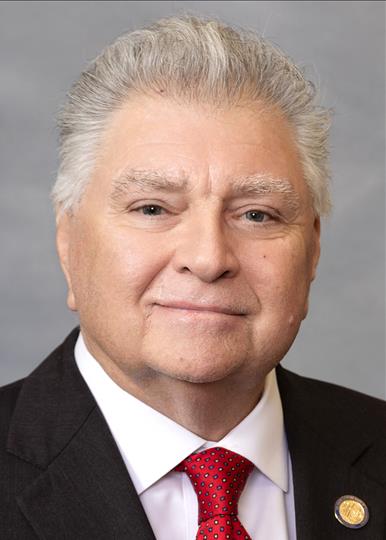
Rep. Phil Shepard
Sponsored bills
Maddy summaryHB 34 creates a new criminal offense for stealing or misusing someone else's mail, directly affecting individuals who unlawfully take, control, or transfer mail intended for others. The bill defines "mail" broadly to include letters, packages, or valuable items sent to another person and prohibits two specific actions: stealing mail to deprive the owner, or transferring mail to benefit someone not entitled to it. Punishments range from a Class A1 misdemeanor for first-time, low-value thefts (under $200) to a Class D felony for repeat offenses or high-value thefts (over $2,000). This law, effective December 1, 2025, applies to offenses committed after that date.
Maddy summaryHB 565 ("Check Yes, Save Lives") allows North Carolina taxpayers to register as organ donors by checking a box on their state income tax return, starting with tax returns for 2026 and later. This directly affects all North Carolina taxpayers who file income tax returns, providing a simple, automatic way to enroll in the organ donation program during annual tax filing. The bill amends tax and organ donation statutes to add income tax return enrollment as a valid method for making an anatomical gift (under Section 130A-412.7(1a)), while keeping existing options like driver's license or wills. It requires coordination between the Department of Revenue and Motor Vehicles to update the Organ Donor Registry, ensuring the tax-based enrollment is properly recorded. The policy change streamlines donor registration without altering the existing organ donation process or eligibility.
Maddy summaryThis bill establishes a regulatory framework for North Carolina banks and credit unions to offer digital asset services, such as custody, staking, and transaction processing. It requires these financial institutions to notify state regulators before starting custody services and obtain specific approval if they intend to manage customer assets in a fiduciary capacity. The legislation also mandates clear written agreements between institutions and customers, explicitly stating that digital assets held by the bank are not insured deposits or liabilities of the institution. By defining key terms like digital assets and staking, the act aims to provide legal clarity and safety standards for the growing digital asset market within the state.
Maddy summaryThis bill requires all members of the Jacksonville City Council to be elected by the entire city population rather than by specific geographic wards. Starting with the 2027 municipal elections, the current system of four ward-based representatives and two at-large members will be replaced so that every council seat is filled by citywide voting. The legislation maintains the existing schedule of staggered four-year terms for council members to ensure continuity in local government. This change directly affects voters in Jacksonville, who will no longer vote only for candidates representing their specific neighborhood but for all council candidates from across the city.
Maddy summaryThis bill directs the North Carolina Department of Transportation to conduct a study on how well the Strategic Prioritization Funding Plan for Transportation Investments is working. The department must examine why some projects under this plan are delayed and gather input from construction partners and planning groups. By November 1, 2026, the agency will submit a report with its findings and suggestions for improving project delivery to state legislative committees. The bill does not change any laws immediately but requires an evaluation to inform future decisions on transportation funding.
Maddy summaryThis North Carolina joint resolution urges the U.S. Congress to eliminate the United States Department of Education by returning control of education to the states. The bill argues that federal involvement has led to excessive regulations and mandates without improving student reading scores, asserting that states are better equipped to handle education based on local needs. It also states that removing the department would not stop federal funding programs from reaching states but would instead allow taxpayer dollars to be used more efficiently. As a non-binding resolution, it does not directly change laws or allocate funds but serves as a formal statement of support for federal efforts to abolish the department.
Maddy summaryThis bill, known as the Mike Clampitt 1st Responder Tax Fairness Act, aims to expand tax exemptions for volunteer fire departments and rescue squads in North Carolina. Specifically, it allows these independent groups, which have two or fewer paid employees and are already exempt from state income tax, to avoid paying a highway use tax on specific emergency vehicles like fire trucks, forest firefighting units, and other emergency service vehicles. The change applies to vehicles when a certificate of title is issued on or after July 1, 2026, ensuring these organizations can acquire necessary equipment without incurring this particular tax. By broadening the existing exemption, the legislation directly benefits volunteer responders who operate outside of local government units.
Maddy summaryThis North Carolina bill allows taxpayers to deduct up to $5,000 of unreimbursed costs for prescribed medications and pharmacy fees from their state income tax. The deduction applies to expenses not covered by tax-advantaged accounts like Flexible Spending or Health Savings Accounts and prevents double-dipping if a federal deduction is already claimed for the same year. Effective for tax years starting on or after January 1, 2026, the measure directly affects individuals paying out-of-pocket for prescription drugs who itemize their state taxes.
Maddy summaryThis bill increases penalties for secret peeping offenses in North Carolina when the victim is a minor under the age of 18. It reclassifies certain non-consensual viewing acts from misdemeanors to Class A1 misdemeanors and elevates crimes involving photography or image dissemination to felony levels, specifically Class H felonies for offenses against minors. The legislation also allocates $25,000 to fund a public awareness campaign about these updated laws. These stricter punishments and funding measures will take effect on July 1, 2026, with the new penalty provisions becoming active on December 1, 2026.