

Maddy summaryHB 562, the Healthcare Investment Act, updates qualification standards for mental health, developmental disabilities, and substance abuse professionals in North Carolina. It allows individuals with an associate degree in human services to qualify as Associate Professionals (with less than two years of experience) or Qualified Professionals (with two years of supervised experience). The bill also creates a new pathway for Qualified Substance Abuse Prevention Professionals (QSAPPs) to qualify with an associate degree and two years of supervised experience in addiction prevention - before completing a bachelor's degree. These changes will expand the pool of eligible professionals for state-funded services under the Commission for Mental Health, Developmental Disabilities, and Substance Abuse Services.
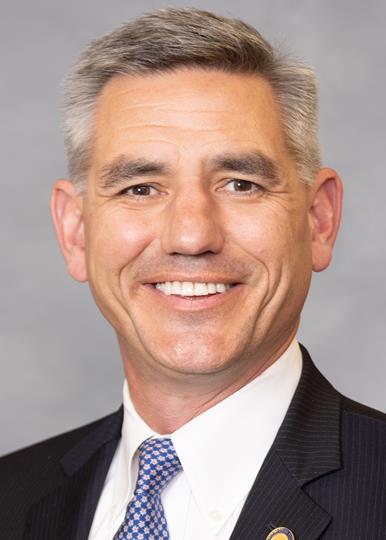
Rep. Brian Turner
Sponsored bills
Maddy summaryHB 747 updates North Carolina's wildlife laws with three key changes. It requires the Wildlife Resources Commission to keep personal information (like addresses and email) and details about rare species habitats confidential to prevent harm or theft. The bill also creates two new license plates - “Wildlife Resources” (requiring 300+ applications before development) and “Lifetime Conservationist” - with sales revenue funding conservation accounts. Additionally, it shortens the out-of-state boat number reciprocity period from 90 to 60 days and adds safety rules for personal watercraft, including mandatory Coast Guard-approved life jackets and restrictions on close following. These changes affect the Commission, vehicle owners, and boaters, effective October 1, 2025.
Maddy summaryThis bill proposes a constitutional amendment to guarantee voters in North Carolina the right to early voting for all primary and general elections. If approved by voters in a 2026 referendum, the amendment would require county election boards to designate a minimum of 14 days for early voting, with sites open at least 8:00 A.M. to 7:30 P.M. on weekdays and same-day voter registration available at these sites. The legislation also mandates that early voting locations and staffing levels be adjusted to meet voter demand, ensuring consistent operating hours across the state. This change would be implemented only if a majority of voters cast ballots in favor of the amendment at the upcoming general election.
Maddy summaryThis House Resolution honors the life and memory of James Michael "Mike" Clampitt, a former member of the North Carolina House of Representatives from District 119. The bill formally recognizes his extensive background in public service, which included decades as a firefighter and deputy sheriff in North Carolina before his election to the state legislature. It expresses the House's appreciation for his legislative work and extends condolences to his family, with a copy of the resolution sent to them.
Maddy summaryHB 936 modifies North Carolina's laws governing telephone solicitations to specifically address robocalls and spam text messages. The bill defines "robocall" to include artificial or prerecorded voice messages, ringless voicemails, and scam texts, and applies new restrictions to "robocallers." It prohibits robocalls before 8:00 A.M. or after 9:00 P.M., forbids intimidating language, and prevents misleading caller identification. Additionally, it clarifies the requirements for "prior express written consent" needed for solicitors to contact individuals on the "Do Not Call" Registry, stipulating conditions for this consent.
Maddy summaryThis House Resolution honors the Carolina Hurricanes hockey team for winning the 2026 Stanley Cup and recognizes their contributions to the state of North Carolina. The bill formally acknowledges the team's historic season, including their record-breaking regular performance and playoff victory, while also praising the owner, management, and coaching staff for their leadership. It directs the Principal Clerk to send a certified copy of the resolution to the team, its owner Tom Dundon, and head coach Rod Brind'Amour. This measure serves as a commemorative gesture rather than establishing new laws or funding.
Maddy summaryHB 315 creates new criminal offenses for wrongfully entering restricted business areas (like secure storage rooms) and for stealing or fraudulently obtaining gift cards. It directly affects businesses (by protecting secure areas), gift card holders (by criminalizing theft of their cards), and individuals who commit these acts. Key provisions include classifying unauthorized building entry as a misdemeanor or felony based on prior offenses, defining gift card theft as a Class 1 misdemeanor for cards under $1,000 (or felony for higher value), and expanding "organized retail theft" to include conspiracy around gift cards with penalties tied to total value stolen. The law takes effect December 1, 2025, and applies to offenses committed after that date.
Maddy summaryThis bill, known as the Mike Clampitt 1st Responder Tax Fairness Act, aims to expand tax exemptions for volunteer fire departments and rescue squads in North Carolina. Specifically, it allows these independent groups, which have two or fewer paid employees and are already exempt from state income tax, to avoid paying a highway use tax on specific emergency vehicles like fire trucks, forest firefighting units, and other emergency service vehicles. The change applies to vehicles when a certificate of title is issued on or after July 1, 2026, ensuring these organizations can acquire necessary equipment without incurring this particular tax. By broadening the existing exemption, the legislation directly benefits volunteer responders who operate outside of local government units.
Maddy summaryThis bill proposes to allocate $2,178,000 in state funds to hire at least 25 additional Adult Protective Services workers across North Carolina counties starting in the 2026-2027 fiscal year. The money is intended specifically to cover salaries and benefits for new staff who will investigate reports of elder abuse, neglect, and exploitation, with distribution based on factors like case volume and the number of seniors in each area. The legislation explicitly prohibits using these funds to replace existing staff or for any purpose other than paying the new workers. Although the bill was withdrawn from committee in May 2026, its primary function is to increase state funding for local social services agencies to address a growing demand for elder abuse investigations.
Maddy summaryHB 1184, known as the Voucher School Transparency Act, requires nonpublic schools in North Carolina that receive Opportunity Scholarship funds to submit detailed annual reports to the State Board of Education. These schools must provide financial documentation, standardized test scores for students in grades three and higher, and specific data on graduation rates, teacher licensure, and student demographics. The bill also mandates that schools with at least 70 scholarship recipients or $100,000 in funding undergo annual financial audits, while smaller schools are audited every three years. Additionally, the legislation requires these institutions to conduct criminal background checks for staff, maintain physical facilities within the state, and share safety plans with local law enforcement.