Maddy summaryHB 83 increases criminal penalties for adults who share inappropriate content with minors under 13 (Class G felony) or under 16 (Class H felony), and creates a new felony for habitual indecent exposure near minors (two prior convictions). It requires courts to consider sex offender registration for these offenses and prohibits transportation companies (like ride-share services) from serving unemancipated minors without parental consent. The bill directly affects adults sharing content with minors, individuals exposing themselves to minors, and transportation companies serving minors. It focuses on concrete policy changes to strengthen protections for minors through stricter penalties and registration requirements.

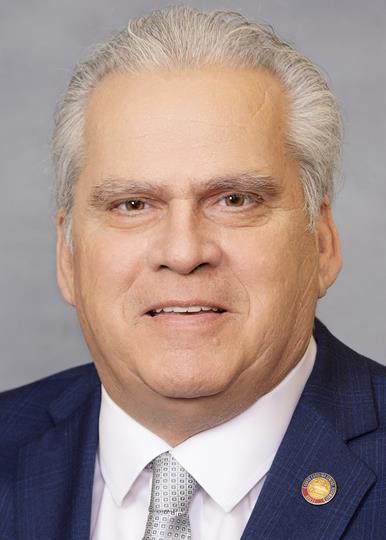
Rep. John Torbett
Sponsored bills
Maddy summaryThis House Resolution honors the life and memory of James Michael "Mike" Clampitt, a former member of the North Carolina House of Representatives from District 119. The bill formally recognizes his extensive background in public service, which included decades as a firefighter and deputy sheriff in North Carolina before his election to the state legislature. It expresses the House's appreciation for his legislative work and extends condolences to his family, with a copy of the resolution sent to them.
Maddy summaryHB 171 prohibits North Carolina state agencies from implementing diversity, equity, and inclusion (DEI) programs, including in hiring, employment practices, or training. It defines DEI broadly as any initiative influencing hiring or benefits based on protected characteristics (like race or gender) beyond merit-based processes. The bill mandates state auditor compliance audits, imposes civil penalties up to $5,000 per violation, and allows employees to file lawsuits after submitting a grievance to their agency. It explicitly excludes compliance with existing anti-discrimination laws (such as Title IX and the ADA) and protects First Amendment rights.
Maddy summaryHB 165 establishes the Child and Family Welfare Ombudsman Office within North Carolina's Department of Health and Human Services, directly serving foster parents, birth families, and resource parents navigating the state's child welfare system. The office will investigate complaints about foster care licensing, placement, and adoption processes; provide educational resources; mediate conflicts; and protect whistleblowers reporting violations. It requires confidentiality for all communications and mandates annual public reports on trends and complaints handled. Funded with $137,000 for 2025-2026 and $145,000 for 2026-2027, the office must begin operations by January 1, 2026.
Maddy summaryHB 144 is a proposed constitutional amendment that would change how North Carolina's State Board of Education is structured. It requires voters to elect all board members (except the Lieutenant Governor and Treasurer, who are Council of State members) from districts established by the General Assembly, with terms of four years. The Superintendent of Public Instruction would automatically serve as the board's chair (ex officio member) without needing separate election. This amendment must be approved by voters in the 2026 election and would take effect for terms beginning January 1, 2029. It does not change the current composition of the board but alters how members are selected and who serves as chair.
Maddy summaryThis bill amends the charter of the Town of Stanley to grant the Town Manager the authority to hire, suspend, or remove most town employees, specifically excluding the town attorney, tax collector, and clerk. Under this change, the Town Council would retain the power to appoint and dismiss the town attorney while delegating all other personnel decisions to the manager. The legislation also clarifies that the mayor and council members cannot serve as the town manager or interim manager, ensuring a clear separation between elected officials and the appointed chief administrator.
Maddy summaryThis bill, known as the Curriculum Honesty, Compliance, and Child Safety Act, establishes new rules for North Carolina public schools regarding parental rights and curriculum content. It requires schools to obtain parental consent before changing a student's name or gender designation in records and mandates that parents be notified before their child receives counseling related to sexuality or gender identity. Additionally, the legislation prohibits any instruction on gender identity or sexual activity in grades kindergarten through fourth grade, with exceptions only for answering student-initiated questions. The bill also creates mechanisms for enforcement, allowing parents to sue schools for violations and authorizing state auditors to investigate noncompliance.
Maddy summaryHB 402 requires North Carolina state agencies to assess the financial impact of proposed permanent rules. If a rule would cost affected individuals or businesses $20 million or more over five years, it must be approved by the General Assembly before taking effect. For rules with a $1 million or more annual cost impact, agencies must prepare a fiscal note for review by the Office of State Budget and Management. The bill also mandates a two-thirds vote by agency boards to adopt rules exceeding the $1 million cost threshold. This directly affects state agencies creating regulations and the businesses or residents who would bear the costs of those rules.
Maddy summaryHB 549 clarifies the State Auditor's authority by exempting the Office of the State Auditor from certain financial oversight laws and IT procurement rules. It specifies that the Auditor can access all state agency records (including digital data), investigate misuse of public funds, and refer certain cases to other agencies like the State Ethics Commission. The bill directly affects the State Auditor’s office, state agencies, and publicly funded entities that handle state or federal funds. These changes streamline the Auditor’s ability to conduct audits and investigations while maintaining clear boundaries for their oversight role.
Maddy summaryHB 612, the "Fostering Care in NC Act," updates North Carolina's laws governing child abuse, neglect, and dependency cases. It expands the definition of "abused juveniles" to include specific offenses like sexual crimes, human trafficking, and certain violent acts, affecting how cases are classified. The bill requires county social services directors to use either a family-centered assessment or a formal investigation when reviewing reports, and to collect military affiliation details of the juvenile's caregiver. It also clarifies that court jurisdiction over juveniles continues until age 18, emancipation, or death. These changes standardize responses to child welfare reports and improve information gathering for safety decisions.