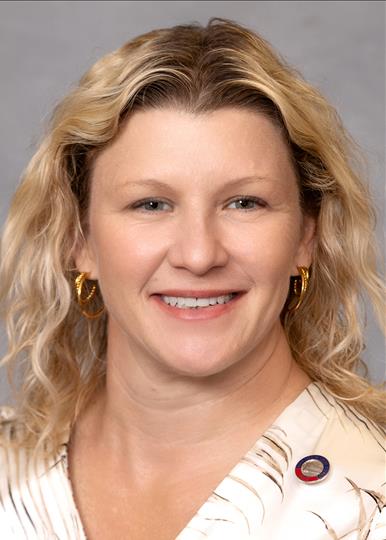
Photo of Laura Budd
D North Carolina House · District 103 On the 2026 ballot

Rep. Laura Budd

Compare
Total votes
542
all sessions
Attendance
97%
15 missed
Near the chamber average
With party
95%
of cast votes
Near the chamber average
Bipartisan score
2%
crosses aisle rarely
Near the chamber average
Sponsored
273
bills & resolutions
Near the chamber average
Committees
7
assignments
273 bills and resolutions

Sponsored bills

Total
273
Primary
19
Co-sponsor
254
This page
273
matching current filters
Primary HB 199
Passed · North Carolina House · Lead sponsor
Authorize Municipal Deannexation.

Maddy summaryHB 199 establishes a regulatory framework for nonconsensual towing businesses that attach devices (boots) or tow vehicles without the owner's consent on private property. The bill creates a Towing and Recovery Commission within the Department of Public Safety to issue permits, set maximum fees for booting/towing/storage (considering vehicle type and regional costs), and require standardized billing forms. The Commission must maintain a public database of businesses, handle complaints, and submit annual reports starting in 2027. This law directly affects nonconsensual towing businesses, property owners who may face unauthorized towing, and the public by introducing oversight and fee transparency.

Passed Aug 6, 2026 0 co-sponsors
Co-sponsor HB 133
Signed into law · North Carolina House · Co-sponsor
NC Farmland and Military Protection Act.

Maddy summaryHB 133, the NC Farmland and Military Protection Act, bans U.S.-designated adversarial foreign governments from buying, leasing, or holding interests in agricultural land or land within 75 miles of major military installations like Fort Bragg and Camp Lejeune. It directly affects foreign governments identified by the U.S. State Department as adversaries under arms regulations, preventing them from acquiring land critical to food production or near military sites. The law excludes agricultural research leases under 250 acres and makes any violating land transfer legally void. This focuses on restricting foreign control of strategic land without altering existing domestic land transactions.

Signed into law Jul 8, 2026 1 co-sponsor
Co-sponsor HB 1104
Signed into law · North Carolina House · Co-sponsor
Improve Involuntary Commitment Process and Enhance Public Safety.

Maddy summaryThis bill requires the North Carolina Department of Health and Human Services, the Department of Information Technology, and the Administrative Office of the Courts to study the state's involuntary commitment process. The agencies must identify gaps in the current system and submit a report with recommendations by February 1, 2027. Key areas for improvement include ensuring judges receive timely clinical data, training legal officials on community-based treatment options, and updating electronic forms to capture consistent data. The legislation also aims to increase data sharing between health and court systems to support more effective legal and clinical outcomes.

Signed into law Jul 7, 2026 1 co-sponsor
Co-sponsor HB 198
Failed · North Carolina House · Co-sponsor
ABC Omnibus of 2026.

Maddy summaryHB 198 requires alcohol law enforcement officers to notify the permit holder (not just the employee) within five business days when a violation occurs on a licensed establishment's premises. This applies to both citations issued to employees and reports from other law enforcement agencies about violations of alcohol or related laws. The notice must be sent via email or certified mail and must identify the specific violation and the involved employee. The bill directly affects bars, restaurants, and other businesses holding alcohol permits in North Carolina by mandating clearer, faster communication about violations. It does not change enforcement powers but standardizes how permit holders receive violation notices.

Failed Jun 30, 2026 1 co-sponsor
Co-sponsor HB 258
Signed into law · North Carolina House · Co-sponsor
Worker Safety Act of 2026.

Maddy summaryHB 258, the Utility Worker Protection Act, increases penalties for assaulting utility and communications workers by designating such assaults as Class A1 misdemeanors - the highest misdemeanor level - when the worker is visibly identifiable (e.g., wearing company-logoed uniforms) and performing duties. It directly affects workers providing electricity, gas, telecommunications, or internet services, including those employed by public, private, or cooperative entities. The bill adds specific language to North Carolina’s assault statute, requiring prosecutors to apply this enhanced penalty for assaults meeting these criteria, without needing other legal provisions. The law takes effect December 1, 2025, applying to offenses committed on or after that date.

Signed into law Jun 22, 2026 1 co-sponsor
Co-sponsor HB 1123
Signed into law · North Carolina House · Co-sponsor
UNC Omnibus and Capital Contracting Law Changes.

Maddy summaryThis bill authorizes the University of North Carolina system to finance specific capital improvement projects, such as dormitory renovations and new construction, using non-state funds like gifts, grants, and hospital receipts. It allows the university to issue special obligation bonds to cover these costs and includes a mechanism for the Director of the Budget to adjust project funding if necessary. Additionally, the legislation standardizes the residency determination process for admission to the North Carolina School of Science and Mathematics and revises tuition grant rules for graduates of that school and the UNC School of the Arts. These changes aim to support university infrastructure development and ensure equitable access to specialized science and arts programs for North Carolina residents.

Signed into law Jun 19, 2026 1 co-sponsor
Co-sponsor HB 921
In committee · North Carolina House · Co-sponsor
ABC and Gaming Omnibus Bill.

Maddy summaryHB 921, the ABC and Gaming Omnibus Bill, makes several key changes to North Carolina's alcohol laws. It allows ABC stores to open on Sundays with local government approval (subject to specific ordinances), clarifies rules for mobile bars to serve alcohol at events without requiring additional permits, and requires ABC stores to prominently display North Carolina-made spirits. The bill also permits businesses with mixed beverage permits to purchase spirits from any designated ABC store in the state and removes restrictions on draft line cleaning services for alcohol manufacturers. These changes primarily affect ABC stores, mobile bar businesses, local governments approving Sunday sales, and nonprofit organizations running 50/50 raffles.

In committee May 19, 2026 1 co-sponsor
Co-sponsor HB 1019
Passed · North Carolina House · Co-sponsor
Mike Clampitt 1st Responder Tax Fairness Act.

Maddy summaryThis bill, known as the Mike Clampitt 1st Responder Tax Fairness Act, aims to expand tax exemptions for volunteer fire departments and rescue squads in North Carolina. Specifically, it allows these independent groups, which have two or fewer paid employees and are already exempt from state income tax, to avoid paying a highway use tax on specific emergency vehicles like fire trucks, forest firefighting units, and other emergency service vehicles. The change applies to vehicles when a certificate of title is issued on or after July 1, 2026, ensuring these organizations can acquire necessary equipment without incurring this particular tax. By broadening the existing exemption, the legislation directly benefits volunteer responders who operate outside of local government units.

Passed May 18, 2026 1 co-sponsor
Co-sponsor HB 1086
In committee · North Carolina House · Co-sponsor
Child Care Initiative Funds/Reform/Study.

Maddy summaryThis bill creates a pilot program to train new individuals with no prior experience as lead teachers in North Carolina's licensed child care centers. Funded by state money and requiring a local match, the program offers free, intensive training courses through community colleges in selected counties, with graduates receiving a state credential and potential stipends for completing the course and working for a year. The initiative aims to expand the child care workforce by establishing academies across the state, starting in Johnston and Wayne counties, and includes requirements for local partnerships to select additional sites. Additionally, the bill directs the North Carolina Partnership for Children to study the feasibility of liability insurance for providers and update bidding rules for child care grants.

In committee May 12, 2026 1 co-sponsor
Co-sponsor HB 433
Signed into law · North Carolina House · Co-sponsor
State Fiscal Recovery Fund/NC Pandemic Recovery Office Revisions.

Maddy summaryHouse Bill 433 allows licensed registered nurses (RNs) to serve as school nurses in North Carolina public schools. The bill prohibits the State Board of Education from requiring a four-year degree for school nurse employment. It specifies that RNs with at least two years of experience in a hospital or health clinic can work as school nurses without needing additional certifications or licenses. These qualified registered nurses will be paid under the certified school nurse pay scale.

Signed into law May 12, 2026 1 co-sponsor
Showing 1 to 10 of 273 bills
1 2 3 28 Next