Maddy summaryThis bill authorizes the establishment of two memorials honoring Wisconsin infantry regiments at Civil War battle sites. It directs the Secretary of the Interior to approve locations within Antietam National Battlefield for regiments that fought at Antietam (1862) and within Manassas National Battlefield Park for regiments that fought at the Second Battle of Bull Run (1862). The memorials must be funded and built by private entities - no federal funds may be used for design, acquisition, site preparation, or installation - and the National Park Service will assume maintenance responsibility after installation.

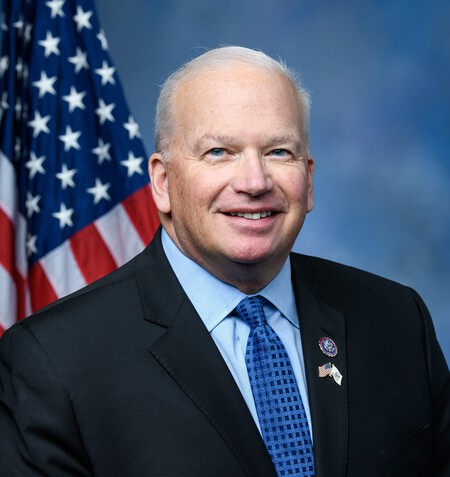
Rep. Scott Fitzgerald
Sponsored bills
Maddy summaryHR 5267, the American Franchise Act, clarifies when franchisors can be considered joint employers of franchisee employees under federal labor laws. It defines "substantial direct and immediate control" over essential employment terms like wages, benefits, hours, hiring, and discipline - requiring franchisors to actively set these terms to be deemed joint employers. The bill explicitly excludes routine brand standards, training, or minimal safety requirements from constituting such control. This directly affects franchisors and franchisees by limiting joint employer liability to cases where franchisors exert significant, ongoing influence over core employment decisions. The law applies prospectively to new cases after enactment, not past disputes.
Maddy summaryThis House resolution marks the 25th anniversary of the September 11, 2001 terrorist attacks by formally honoring the memory of the nearly 3,000 victims and recognizing the sacrifices made by first responders, military personnel, and the passengers of United Airlines Flight 93. The bill acknowledges the ongoing health challenges faced by survivors and responders, highlighting the role of the World Trade Center Health Program in providing long-term medical support. It also credits charitable organizations and community groups that have continued to assist victims' families and veterans over the past two decades. Finally, the resolution urges the American public to observe the anniversary with ceremonies and reaffirms Congress's commitment to remembering the events and lessons of that day.
Maddy summaryThis bill requires the United States Postal Service to assign a single, unique ZIP Code to each of 80 specific communities across various states within one year of enactment. The legislation directly affects residents and businesses in these listed areas by ensuring they have their own distinct postal identifier rather than sharing codes with neighboring regions. The primary mechanism is a mandatory directive for the USPS to update its coding system to reflect these individual community boundaries.
Maddy summaryThe CLEAR Forms Act directs the Securities and Exchange Commission to create new registration forms for specific insurance products, including contingent deferred annuities and registered index-linked life insurance. The bill requires the agency to design these forms so that purchasers can make informed decisions, mandating investor testing to ensure the language is understandable for these complex financial instruments. If the SEC fails to finalize the rules within 30 months of enactment, insurers would be permitted to register these products using existing forms currently used for variable annuities and life insurance.
Maddy summaryThis bill would prohibit any state or local government designated as a "sanctuary jurisdiction" from receiving grant funds distributed by the Department of Housing and Urban Development (HUD). A jurisdiction is defined as a sanctuary if it has laws, policies, or practices that restrict officials from sharing information about an individual's immigration status or from complying with federal requests to detain or notify about the release of individuals. The funding restriction would apply to grants distributed 180 days after the bill's enactment. To determine which jurisdictions qualify for this ineligibility, the HUD Secretary is required to consult with the Secretary of Homeland Security.
Maddy summaryThe PROTECT USA Act of 2026 prohibits U.S. companies from complying with foreign sustainability laws, such as the European Union's Corporate Sustainability Due Diligence Directive, to protect American businesses from extraterritorial regulations. This law defines "entities integral to the national interests of the United States" as domestic corporations operating in key sectors like energy, mining, and manufacturing, and it bans these companies from taking actions required by foreign due diligence rules unless they face specific hardships. The bill includes a process where the President can grant exemptions if a company demonstrates that compliance would cause particular hardship, while also protecting these entities from legal penalties or adverse actions taken by foreign governments for non-compliance. Additionally, the Act prevents U.S. courts from recognizing judgments against American companies based on violations of these foreign sustainability regulations.
Maddy summaryThe Consumer Financial Protection Accountability and Reform Act of 2026 significantly restructures the Bureau of Consumer Financial Protection by subjecting it to the regular federal appropriations process and establishing an independent Inspector General appointed by the President. The bill restricts the Bureau's supervisory authority over banks and credit unions with assets under $30 billion, allowing these institutions to elect to remain under their existing prudential regulators instead. It also introduces a safe harbor for small-dollar loans of $3,500 or less that meet specific structural requirements, shielding compliant lenders from civil money penalties and private damages. Additionally, the legislation creates federal standards for earned wage access services, requiring providers to offer a no-cost option for early wage access and prohibiting them from treating these services as credit or debt under federal law.
Maddy summaryThe NDO Fairness Act modifies federal law to establish a new court order process allowing law enforcement to delay notifying individuals when seeking electronic communications data (like emails or messages) under existing warrants or subpoenas. Courts must issue written findings showing specific, serious risks (such as endangering safety or destroying evidence) and limit delays to 90 days (or up to one year for child exploitation cases), with strict requirements for narrow tailoring. The bill mandates annual reports to Congress tracking usage, including how often delays are granted and whether they affect media or First Amendment activities. After delays expire, individuals can request copies of disclosed information within 180 days, though sensitive materials like child exploitation evidence may be redacted.
Maddy summaryHR 7008, the Stop Insider Trading Act, restricts Members of Congress, their spouses, and dependent children from purchasing certain investments like stocks in publicly traded companies. It requires 7-14 days' advance public notice before selling any such investment, including the sale date, description, and number of shares. Exceptions apply for work-related transactions (e.g., employer compensation) and reinvesting dividends. Violations trigger a fee of $2,000 or 10% of the investment’s value (whichever is greater), plus any net gain, paid from personal funds - not congressional allowances or campaign donations. The bill aims to prevent conflicts of interest by increasing transparency around congressional financial dealings.