

In committee Sep 24, 2026
1 co-sponsor
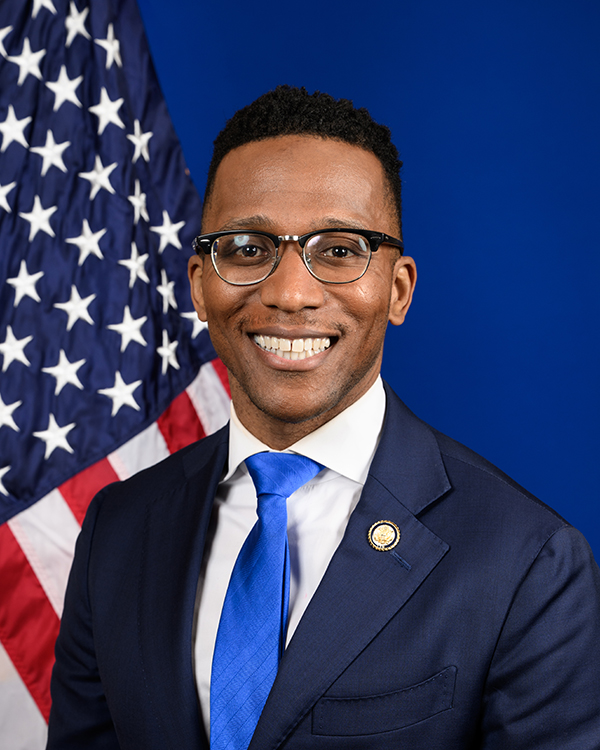
Rep. Christian D. Menefee
Total votes
264
all sessions
Attendance
96%
10 missed
Near the chamber average
With party
97%
of cast votes
Near the chamber average
Bipartisan score
2%
crosses aisle rarely
Near the chamber average
Sponsored
112
bills & resolutions
Lower than 94% of chamber peers
Committees
4
assignments
112 bills and resolutions
Sponsored bills
Total
112
Primary
4
Co-sponsor
108
This page
112
matching current filters
In committee Sep 21, 2026
1 co-sponsor
Disaster Relief Fairness Act of 2026
Maddy summaryThe Disaster Relief Fairness Act of 2026 would automatically approve major disaster declarations requested by state governors or tribal leaders between January 20, 2025, and January 20, 2029. Under this bill, the President is required to provide federal assistance if a preliminary damage assessment meets specific cost thresholds for public aid or if a regional official determines that individual assistance is warranted. Additionally, the legislation prohibits the denial of disaster relief solely because a request was submitted after a deadline.
Budget & TaxesSupports Budget & TaxesThe bill would provide federal assistance for disaster relief, which involves government spending and fiscal management. It strengthens the provision of aid, indicating support for budget allocation towards disaster response.
HousingSupports HousingThe bill provides for automatic approval of disaster declarations and federal assistance, which would include aid for housing repair and rebuilding after disasters, thus supporting housing stability and recovery.
In committee Sep 21, 2026
1 co-sponsor
Relief Without Delay Act
Maddy summaryThe Relief Without Delay Act ensures that FEMA can continue disaster relief operations and access its Disaster Relief Fund even if the government shuts down due to a lapse in appropriations. It requires FEMA to submit monthly public reports detailing how disaster funds are obligated and spent, while also mandating the Department of Housing and Urban Development to assess unmet housing needs after major disasters. Additionally, the bill directs NOAA and FEMA to improve tornado detection capabilities using new technologies like artificial intelligence and establishes a grant program for communities to build storm shelters and upgrade warning systems.
HousingSupports HousingThe bill mandates HUD to assess unmet housing needs after major disasters, which directly supports addressing housing issues in affected communities.
TechnologySupports TechnologyThe bill directs NOAA and FEMA to improve tornado detection capabilities, which implies an advancement in technology for public safety.
In committee Sep 17, 2026
1 co-sponsor
Expressing support for the recognition of Nigerian Heritage Month and celebrating the heritage, culture, and contributions of Nigerians and Nigerian Americans in the United States.
Maddy summaryThis House resolution expresses support for recognizing Nigerian Heritage Month to celebrate the history, culture, and contributions of Nigerians and Nigerian Americans in the United States. It highlights the strong bilateral relationship between the two nations and notes that Nigerian Americans are a highly educated immigrant group making significant impacts in fields such as medicine, technology, and business. The bill encourages federal, state, and local governments, along with educational institutions, to observe this month through programs and ceremonies that highlight Nigerian heritage.
In committee Sep 16, 2026
1 co-sponsor
Glaucoma Vision Act of 2026
Maddy summaryThe Glaucoma Vision Act of 2026 mandates that private health insurance plans, Medicare, Medicaid, and Federal Employees Health Benefits programs cover annual glaucoma screenings for specific high-risk individuals starting in 2027. These covered individuals include adults aged 40 or older with African, Hispanic/Latino, or Asian ancestry, those with clinical risk factors such as diabetes or family history, and all adults aged 60 or older. The bill also directs the Centers for Disease Control and Prevention to award $10 million in grants over two years to provide free or low-cost screenings and treatment to uninsured high-risk populations, with priority given to underserved communities. Additionally, it authorizes $10 million for research into glaucoma treatments, including optic nerve regeneration and gene therapies.
In committee Sep 16, 2026
1 co-sponsor
Equity in Research Act
Maddy summaryThe Equity in Research Act directs the National Science Foundation to create a grant program that provides financial assistance to specific institutions of higher education for improving their research capabilities. These grants, ranging from $1 million to $5 million per institution, can be used to upgrade building infrastructure, purchase materials and equipment, and cover personnel costs related to research activities. The bill targets a defined group of schools, including Historically Black Colleges and Universities, Hispanic-serving institutions, Tribal colleges, and various other minority-serving and land-grant universities. To fund this initiative, the legislation authorizes $50 million in appropriations for fiscal year 2027 and each subsequent year.
Budget & TaxesSupports Budget & TaxesThe bill establishes a grant program providing financial assistance to higher education institutions, directly impacting government spending and appropriations to improve research capabilities.
EducationSupports EducationThe bill establishes a grant program through the National Science Foundation to provide financial assistance to institutions of higher education, specifically targeting improvements in research capabilities, infrastructure, and personnel costs.
TechnologySupports TechnologyThe bill funds research capabilities, which often involve advanced technology and equipment, thereby strengthening the technology sector within academic institutions.
In committee Sep 16, 2026
1 co-sponsor
Survivors’ Rights Restitution Act of 2026
Maddy summaryThe Survivors' Rights Restitution Act of 2026 establishes a federal compensation program administered by the Attorney General for victims of sexual assault, abuse, trafficking, or exploitation involving Jeffrey Epstein or Ghislaine Maxwell, as well as victims whose rights were violated by the federal government. Petitions are filed with the United States Court of Federal Claims and assigned to special adjudicators who must be mental health professionals or experts in victim services, civil rights law, or claims administration. The process is designed to be informal and less adversarial than standard litigation, with decisions required within 120 days and a minimum compensation award of $123,000. Compensation is funded by a dedicated Treasury account that accepts forfeited assets and voluntary contributions, and payments are exempt from federal income tax and means-tested benefit calculations.
Budget & TaxesSupports Budget & TaxesThe bill establishes a federal compensation program, directly impacting government spending and fiscal management to fund restitution for victims.
Criminal JusticeSupports Criminal JusticeThe bill establishes a federal compensation program for victims of sexual assault and other crimes, addressing victim rights and restitution within the criminal justice system.
HealthcareSupports HealthcareThe bill establishes a compensation program for victims of sexual assault and exploitation and requires adjudicators to be mental health professionals or victim services experts, indicating support for mental health and victim support within healt...
In committee Sep 15, 2026
1 co-sponsor
Recognizing the 25th anniversary of the terrorist attacks of September 11, 2001, honoring the memory of the victims, recognizing the courage and sacrifice of the heroes who answered the call to serve, acknowledging the charitable organizations that continue to support survivors and victims' families, and reaffirming the enduring commitment of the United States to never forget.
Maddy summaryThis House resolution marks the 25th anniversary of the September 11, 2001 terrorist attacks by formally honoring the memory of the nearly 3,000 victims and recognizing the sacrifices made by first responders, military personnel, and the passengers of United Airlines Flight 93. The bill acknowledges the ongoing health challenges faced by survivors and responders, highlighting the role of the World Trade Center Health Program in providing long-term medical support. It also credits charitable organizations and community groups that have continued to assist victims' families and veterans over the past two decades. Finally, the resolution urges the American public to observe the anniversary with ceremonies and reaffirms Congress's commitment to remembering the events and lessons of that day.
In committee Sep 3, 2026
1 co-sponsor
Recognizing the significance of "Chicano/Chicana Heritage Month" in August as an important time to celebrate the significant contributions of Mexican Americans to the history of the United States.
Maddy summaryThis House resolution formally recognizes August as Chicano/Chicana Heritage Month to celebrate the historical contributions of Mexican Americans to the United States. It highlights specific achievements in science, civil rights, labor, and arts, while acknowledging ongoing challenges such as discrimination and underrepresentation in public and private sectors. The bill encourages the observation of this month through appropriate events and activities but does not create new laws or funding mechanisms.
In committee Aug 24, 2026
1 co-sponsor
Ask Maddy
·
AI policy assistant
Ask Maddy about Christian D. Menefee
Scope: new-york
Hi! I can help you understand Christian D. Menefee's legislative record. What would you like to know?
Try one of these
i
Maddy answers using official bill text and legislative records. Always verify before sharing.
Sources cited inline