Maddy summaryThis bill requires the Federal Energy Regulatory Commission (FERC) to submit annual reports to Congress about pending hydropower license applications. Specifically, FERC must report on licenses where licensees notified them at least 3 years prior but haven't received new licenses yet, including details like notification dates, docket numbers, application status, and upcoming proceedings. The reports aim to increase transparency in the relicensing process for existing hydropower facilities. This directly affects FERC (which must provide the reports) and Congress (which receives them), with no direct impact on hydropower operators or the licensing outcome itself.

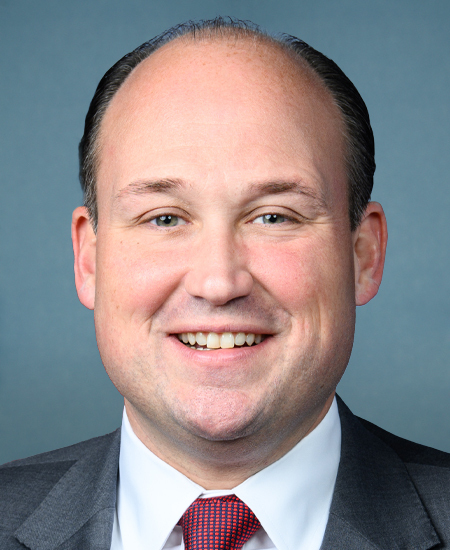
Rep. Nicholas A. Langworthy
Sponsored bills
Maddy summaryThis bill designates the American mastodon as the national fossil mammal and the Tyrannosaurus rex as the national fossil dinosaur for the United States. It achieves this by amending Title 36 of the U.S. Code to officially recognize these specific species within the legal framework for national symbols. The changes update the relevant chapter heading to include "fossil" and add a new section to formally establish these designations.
Maddy summaryThe American Quantum Competitiveness Act designates the Secretary of Commerce as the primary advisor to the President on policies regarding the commercial development and supply chains for quantum technology. The bill directs the Department of Commerce to promote U.S. leadership in this field by encouraging private sector investment, entering agreements with trusted suppliers and foreign partners, and identifying barriers to investment. It requires the Secretary to establish methods for assessing risks associated with critical components sourced from specific "covered nations" and to coordinate with allies to maintain resilient supply chains. Additionally, the legislation mandates that the Secretary publish a comprehensive strategy report every three years, starting two years after enactment, which includes recommendations for further government or private sector actions to strengthen U.S. economic competitiveness in quantum technology.
Maddy summaryThe Recycled Materials Attribution Act of 2026 allows companies to use mass balance accounting to support claims about recycled content in their products, provided they follow independent third-party certification rules. This method lets manufacturers mix recycled materials with conventional ones in the same supply chain while still crediting the final product with a specific amount of recycled content based on documented inputs. The Federal Trade Commission will update its existing environmental marketing guidelines to reflect these new standards and will enforce the rules against misleading recycled content claims. Additionally, the law prevents states from passing their own conflicting regulations on how recycled content claims are made or enforced.
Maddy summaryThe Packaging and Claims Knowledge Act of 2025 requires companies to ensure that recyclable, compostable, and reusable claims on consumer product packaging are accurate and supported by third-party certification. The bill mandates that recyclable claims must include information about local recycling availability, while compostable claims must be backed by scientific evidence and clearly explain disposal limitations. Companies must also provide actual reuse systems or products for reusable packaging claims, and the Federal Trade Commission will issue guidance on compliance without creating binding regulations.
Maddy summaryHR 6152, the Foreign Robocall Elimination Act, establishes an interagency task force to address foreign robocalls entering the United States. The task force, composed of the FCC, FTC, DOJ, and private sector representatives, will study the origins, impacts, and potential solutions to foreign robocalls and must submit a report to Congress within 360 days. The bill also modifies existing law to require FCC notices about robocall mitigation every three years instead of annually, and introduces a bond requirement for providers using the Robocall Mitigation Database. This legislation affects telecommunications providers, federal agencies, and all U.S. telephone users who receive unwanted calls. The bill aims to improve coordination between U.S. agencies and foreign countries in combating illegal robocalls through concrete policy changes.
Maddy summaryThis bill would require Medicare to cover early detection screening tests for Alzheimer's disease and related dementias starting January 1, 2028. It defines eligible tests as FDA-cleared genomic blood tests, blood product analyses, or equivalent medical imaging methods (like protein expression or whole genome sequencing) that detect pre-symptomatic or early-stage conditions. Medicare beneficiaries would receive this coverage without cost-sharing for these specific screenings. The bill amends Medicare coverage rules to explicitly include these tests under Section 1861(nnn) of the Social Security Act.
Maddy summaryThis bill amends the existing Northern Border Security Review Act to update deadlines and requirements for border security assessments. It requires the Department of Homeland Security Secretary to submit a northern border threat analysis by September 2, 2026, and every two years after, with strategy updates due 90 days after each analysis. The bill also mandates classified briefings to congressional committees 30 days after each threat analysis and directs the development of performance measures for Air and Marine Operations within six months of enactment. These changes directly affect the DHS Secretary, congressional committees, and U.S. Customs and Border Protection's operations along the northern border.