

Requires elections and terms of certain officials occur on even-numbered years except in the city of New York
This bill requires elections for certain judges (like county court and family court judges outside New York City) and city officials (such as supervisors) to occur in even-numbered years, instead of odd years. It applies to judicial positions and municipal offices in all areas except New York City, which maintains its current election schedule. Vacancies in these roles must be filled at the next even-year general election (held three months after the vacancy), with temporary appointments ending by December 31 of the following year. The bill amends constitutional provisions to standardize election timing for these positions statewide, excluding New York City.
Bill status
in committee
1 of 4 stages cleared
Introduction
Feb 2025
Committee Review
Floor Vote
Governor
Introduced Feb 11, 2025
Last action Jun 5, 2026
Maddy AI version diff · 3 comparisons
What changed between versions
A5036B
→
A5036C
·
4 edits
MODERATE
This bill version updates the procedural history of the legislation and significantly revises the proposed constitutional amendments regarding election timing. The most critical change is the shift in the proposed amendment's language to allow the legislature to schedule elections for state and local offices to occur in odd-numbered years, provided the resulting term expires in an even-numbered year. This modification aims to align election cycles with the current political calendar while maintaining the standard four-year term length.
Scope change
The bill's scope regarding election scheduling was expanded to explicitly permit odd-numbered year elections for state and local offices, whereas the previous version only described the standard even-numbered year cycle.
TIMELINE
The proposed constitutional amendment was changed to allow the legislature to schedule elections for state and local offices in odd-numbered years, as long as the term ends in an even-numbered year.
REQUIREMENT
The text was updated to clarify that the new election timing rules do not apply to judicial offices, which remain subject to existing vacancy procedures.
The proposed amendment now includes a specific cutoff date (November 2034) for when these new election timing rules can be applied to fill unexpired terms.
TECHNICAL
Minor wording adjustments were made to clarify that the term of a judicial officer expires at the end of an even-numbered year and to define when an office is considered vacant.
Floor votes
How they voted
No floor votes recorded yet.
Full legislative history
Actions timeline
Total actions
23
Key actions
6
Committee
8
Amendments
6
Jun 5, 2026
Committee
REPORTED REFERRED TO RULES
lower
Jun 4, 2026
Committee
REFERENCE CHANGED TO WAYS AND MEANS
lower
Jun 4, 2026
Committee
OPINION REFERRED TO JUDICIARY
lower
Jun 3, 2026
Lower · Passed
PRINT NUMBER 5036C
lower
Jun 3, 2026
Lower · Passed
AMEND AND RECOMMIT TO ELECTION LAW
lower
Jun 2, 2026
Committee
OPINION REFERRED TO JUDICIARY
lower
Jun 1, 2026
Lower · Passed
PRINT NUMBER 5036B
lower
Jun 1, 2026
Lower · Passed
AMEND AND RECOMMIT TO ELECTION LAW
lower
May 26, 2026
Lower · Passed
PRINT NUMBER 5036A
lower
May 26, 2026
Lower · Passed
AMEND AND RECOMMIT TO ELECTION LAW
lower
Jan 30, 2026
Committee
OPINION REFERRED TO JUDICIARY
lower
Jan 7, 2026
Committee
REFERRED TO ELECTION LAW
lower
Mar 6, 2025
Committee
OPINION REFERRED TO JUDICIARY
lower
Feb 11, 2025
Committee
REFERRED TO ELECTION LAW
lower
1 primary · 0 co-sponsors
Sponsors
Role
Legislator
Party
State
District
P
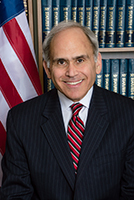
Jonathan Jacobson
DDemocratic
Ask Maddy
·
AI policy assistant
Ask Maddy about A 5036
Scope: NY
Hi! I can help you understand A 5036. What would you like to know?
Try one of these
i
Maddy answers using official bill text and legislative records. Always verify before sharing.
Sources cited inline