Maddy summaryThe EBOLA Act requires the President to rejoin the World Health Organization within 30 days of enactment and immediately coordinate with that body to address an ongoing Ebola outbreak in Central and Eastern Africa. The legislation authorizes necessary funding to cover U.S. membership fees and financial obligations, as well as voluntary contributions to support international disease response efforts. By mandating this rapid re-entry into the global health agency, the bill aims to enhance the nation's ability to monitor emerging infectious diseases and prevent the spread of the virus to American soil.

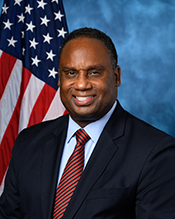
Rep. Jonathan L. Jackson
Sponsored bills
Maddy summaryThis House resolution marks the 25th anniversary of the September 11, 2001 terrorist attacks by formally honoring the memory of the nearly 3,000 victims and recognizing the sacrifices made by first responders, military personnel, and the passengers of United Airlines Flight 93. The bill acknowledges the ongoing health challenges faced by survivors and responders, highlighting the role of the World Trade Center Health Program in providing long-term medical support. It also credits charitable organizations and community groups that have continued to assist victims' families and veterans over the past two decades. Finally, the resolution urges the American public to observe the anniversary with ceremonies and reaffirms Congress's commitment to remembering the events and lessons of that day.
Maddy summaryThe Access to School Supplies Act of 2026 establishes a five-year pilot program that provides competitive grants to up to ten local school districts serving high-poverty schools. These funds are intended to help districts purchase books, supplies, and other materials for students and instructional staff at no cost. The legislation authorizes $100 million annually from fiscal years 2027 through 2031 and requires recipients to submit annual reports detailing how the money was spent and which schools benefited. A small portion of the total funding is reserved for outlying areas and Bureau of Indian Education schools, while the program sunsets on September 30, 2031.
Maddy summaryHRES 179 is a non-binding House resolution expressing congressional support for strengthening U.S.-Africa partnerships in critical minerals development. It directly affects U.S. federal agencies (like State, Commerce, and USAID) and African nations with critical mineral reserves, such as the Democratic Republic of Congo and Zambia. The resolution urges the administration to create a 5-year strategy focused on diversifying U.S. mineral supply chains away from foreign entities of concern, providing financing and technical assistance to support responsible mining projects in Africa, and expanding value-added processing to boost both U.S. security and African economic development. It emphasizes mobilizing public-private investment to increase U.S. access to critical minerals like cobalt and lithium while promoting environmentally and socially responsible practices.
Maddy summaryThe AIDA bill aims to support African and Caribbean diaspora communities in the U.S. who send remittances to their countries of origin. It would create tax deductions for remittances used for housing, education, healthcare, or small business support (up to $3,000 annually) and exclude income from certified diaspora investments from taxable income (up to $12,000 annually). The bill also establishes programs through the International Development Finance Corporation to support diaspora-led investments and reduce remittance costs by removing regulatory barriers for diaspora-owned remittance providers. It repeals a remittance excise tax and requires annual reports to measure the impact on development in Africa and the Caribbean.
Maddy summaryThe L'Ouverture Economic Development Plan for Haiti Act of 2025 creates a Haitian American Enterprise Fund to support economic development in Haiti through private sector investments. The fund will finance projects in agriculture, manufacturing, tourism, and infrastructure, with special focus on empowering women and youth, and aims to create jobs to reduce migration from Haiti. It authorizes $1 billion annually from 2026-2031 to support these initiatives, managed by a private nonprofit organization with oversight from a diverse board. The legislation emphasizes building sustainable economic opportunities within Haiti to meet the country's development needs while strengthening ties with the Haitian-American diaspora.
Maddy summaryThe Recycled Materials Attribution Act of 2026 allows companies to use mass balance accounting to support claims about recycled content in their products, provided they follow independent third-party certification rules. This method lets manufacturers mix recycled materials with conventional ones in the same supply chain while still crediting the final product with a specific amount of recycled content based on documented inputs. The Federal Trade Commission will update its existing environmental marketing guidelines to reflect these new standards and will enforce the rules against misleading recycled content claims. Additionally, the law prevents states from passing their own conflicting regulations on how recycled content claims are made or enforced.
Maddy summaryThe Care is an Economic Development Strategy (CEDS) Act amends the Public Works and Economic Development Act of 1965 to require that local economic development plans include strategies for increasing access to affordable, quality care-based services. These services specifically include child care, early childhood education, disability and long-term care, and elder care. The bill directs the Secretary of Commerce to issue implementation guidance within one year of enactment to help grant recipients integrate these requirements into their existing plans. To minimize administrative burden, communities with previously approved development strategies are only required to update their plans for compliance during their next regularly scheduled revision cycle.
National Law Enforcement Officers Remembrance, Support and Community Outreach Act. [ sic ] This bill temporarily directs the Department of the Interior to award a grant to the National Law Enforcement Officers Memorial Fund for the expenses associated with operating and enhancing the community outreach, public education, and officer safety and wellness programs of the National Law Enforcement Museum.
Maddy summaryThe Green New Deal for Public Housing Act directs the Department of Housing and Urban Development to provide grants to public housing agencies and tribal entities for the comprehensive rehabilitation, energy upgrades, and modernization of public housing stock. These funds are intended to transform properties into zero-carbon homes by installing renewable energy systems, electrifying appliances, and repairing infrastructure, while also establishing workforce development programs that offer training, apprenticeships, and stipends to residents and local low-income workers. The bill mandates strict labor standards, including prevailing wages and the use of U.S.-made materials, and requires agencies to maintain or increase the total number of public housing units while prioritizing resident participation through elected councils and community engagement processes.