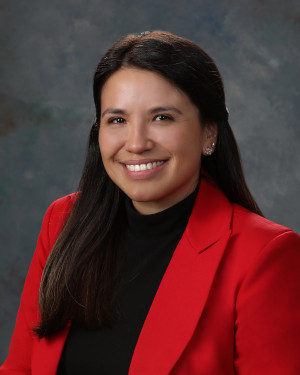
Maddy summarySB 14 creates a Health Professions Advisory Committee to select recipients for loan repayment awards under New Mexico’s existing health professional loan program. The committee, composed of state health and education officials, evaluates applicants who must be licensed health professionals currently practicing in New Mexico or agree to relocate and begin practice in the state. Award recipients must work in designated underserved areas, with the Higher Education Department determining award amounts and disbursing funds. The bill amends prior laws to formalize this committee structure and streamline the selection process for loan repayment.

Sponsored bills
Maddy summarySB 11, the Nurse Loan Repayment Act, creates a state fund to repay student loans for New Mexico nurses working in designated underserved areas or as nursing educators. It directly affects licensed registered nurses (RNs) and licensed practical nurses (LPNs) who commit to four years of service in areas identified by the state as lacking sufficient nursing staff. The program provides up to $35,000 in total loan repayment ($7,500 annually for two years and $10,000 for the next two), with payments made directly to lenders. Nurses must meet eligibility criteria (NM license, U.S. citizenship/permanent residency, and service in designated areas or as faculty/preceptors), and non-compliance requires repayment of the award plus 15% interest. The bill excludes state loan-for-service programs, scholarships, and personal loans from eligibility.
Maddy summarySB 15 requires all health insurance plans in New Mexico (including group plans, HMOs, and nonprofit plans) to include every licensed healthcare provider - such as doctors, nurses, therapists, and other practitioners - within their legal scope of practice, provided the provider agrees to the plan's terms. The bill does not force insurers to contract with providers but mandates that if they do, all licensed providers must be included. It allows insurers to set different payment rates based on quality or performance but prohibits excluding providers solely due to their license type. The law takes effect July 1, 2026, directly affecting insurers, healthcare providers, and patients seeking coverage for physical or behavioral health services.
Maddy summaryHB 102 would tie New Mexico legislators' pay to the state's median household income, setting initial compensation based on the 2027 median income (to be reported in 2028) and adjusting it every four years using the latest available data. Legislators could choose to refuse their compensation or any future increases by submitting a written notice to the chief clerk, and they could later withdraw that refusal without retroactive pay. The bill clarifies that legislators receiving this compensation are not considered state employees for any purpose.
Maddy summaryThis bill creates a $4,000 tax credit for New Mexico physicians who provide at least 1,584 hours of healthcare in the state annually. To qualify, physicians must apply for certification through the Department of Health and meet the hour requirement. Unused portions of the credit can be carried forward for up to three years. The credit applies to licensed medical and osteopathic physicians starting with tax years beginning January 1, 2026.
Maddy summarySB 5 appropriates $3 million from the state general fund to the University of New Mexico Board of Regents over fiscal years 2027-2029. The funding directly supports hospitals in New Mexico’s medically underserved rural communities to develop and expand physician residency programs in family practice, internal medicine, obstetrics, gynecology, and pediatrics. This aims to address physician shortages by creating training opportunities in critical specialties where healthcare access is limited. Unspent funds will revert to the general fund by the end of 2029. The bill focuses on concrete funding for residency expansion, not new regulations or long-term policy changes.
Maddy summarySB 10 creates New Mexico's Health Training Corps within the Department of Health to address healthcare shortages in underserved areas. The bill establishes a stipend program paying experienced health professionals $100 per hour (max $10,000 annually) for training health students and newly licensed providers at designated health training sites. It appropriates $3 million for the program to recruit preceptors, cover stipends, and provide support, with funds remaining available year-to-year. The initiative directly affects preceptors, health professional students, and newly licensed providers working in underserved communities, prioritizing behavioral health, primary care, and obstetrics/gynecology services.
Maddy summaryHB 77 creates a corporate income tax credit for businesses renovating vacant buildings or lots in New Mexico that have been unoccupied for at least two years. The credit covers 30% of renovation costs for properties vacant 2-5 years (capped at $2 million per business) or 40% for properties vacant 5+ years (capped at $4 million), provided at least 15% of new housing units are affordable for low/moderate income residents (defined as ≤85% of local median income). Businesses must get pre-certification before work begins and post-completion certification, with the credit being transferable or carry-forwardable for up to five years. The credit expires in 2038, has an annual spending limit of $100 million (with $50 million reserved for non-rural areas), and applies to projects starting in 2026.
Maddy summarySB 107 appropriates $20 million from the general fund annually to fund after-school and enrichment programs for school-age youth across New Mexico. The bill allocates $10 million specifically for school districts, charter schools, Bureau of Indian Education schools, and tribally controlled schools, and $10 million for nonprofit community organizations providing such programs. Unspent funds at year-end will not revert to the general fund, ensuring ongoing support for these services. This bill directly affects students in public schools and community-based programs by expanding access to structured out-of-school time activities.
Maddy summarySB 181 appropriates $1.3 million from the general fund for New Mexico's alert systems, including turquoise (state-specific), amber, brittany, and silver alerts. It funds system modernization ($1 million), two new staff positions (a tribal liaison analyst and an IT developer), and a $250,000 public awareness campaign to build community trust. The bill directly affects law enforcement agencies, tribal communities, and the public by improving coordination and response for missing persons cases. It focuses on funding existing alert protocols without altering their operational structure.