Maddy summaryHB 314 provides zero-interest loans to New Mexico local governments (cities, counties) in Chaves County that received federal disaster funding for repairs after the October 19, 2024 storm. The loans, funded by $150 million from the state general fund, must be repaid within 30 days using the approved federal disaster funds, with failure to repay triggering market interest rates. Political subdivisions must sign reimbursement contracts detailing repayment terms and reporting requirements. The bill appropriates funds for fiscal years 2027-2028, with unused funds reverting to the general fund by 2028. It takes effect July 1, 2026.

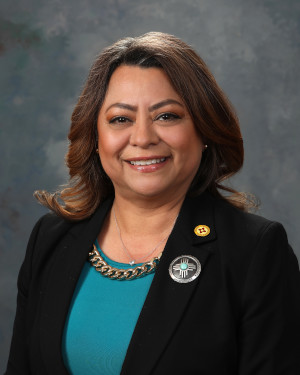
Rep. Angelita Mejia
Sponsored bills
Maddy summaryThis bill establishes the New Mexico-Ireland Trade Commission within the Economic Development Department to strengthen economic ties between New Mexico and Ireland. The commission, composed of appointed members including legislative leaders, Irish-American community representatives, and sector experts (agriculture, energy, higher education), will focus on advancing trade in technology, agriculture, and energy. It must hold annual meetings, promote business and academic exchanges, and submit yearly reports to state leaders by December 1. The commission aims to foster mutual investment and policy collaboration without imposing new regulations or taxes.
Maddy summaryThis bill authorizes police officers and New Mexico Department of Transportation employees to move vehicles, debris, or other obstacles blocking roadways when they create immediate safety risks. It allows officials to clear such hazards from the traveled portion of roads without facing liability for damage to the hazard itself. The law applies statewide to all public roads and aims to improve traffic safety by enabling faster removal of dangerous obstacles. It does not change liability rules for damage to vehicles or property owned by others.
Maddy summaryHB 223 increases funding for bilingual education programs in New Mexico public schools by raising the cost differential factor used to calculate program units. Starting July 1, 2025, the factor will begin at 0.6 and increase by 0.1 annually until it reaches 1.0 by July 1, 2029. This directly affects schools offering bilingual multicultural education programs, as it will boost state funding for these programs over five years. The bill amends existing funding law without changing program eligibility or requirements.
Maddy summaryHB 573 prohibits New Mexico's Secretary of State or county clerks from sending voter registration eligibility notifications to non-U.S. citizens. It directly affects non-citizen residents who previously received such notices about potential voting registration. The bill amends the Election Code to ban these notifications for individuals or groups containing non-citizens, effective July 1, 2025. This is a procedural change affecting notification practices, not voting eligibility or registration rights.
Maddy summaryHB 542 creates a $7,000 refundable income tax credit for New Mexico residents who give birth to a child during the taxable year. It directly affects new parents who are state residents, not claimed as dependents by another individual, and requires certification through the Children, Youth and Families Department. The credit is claimed within three years of certification, with any amount exceeding the taxpayer's liability refunded. The policy applies to tax years beginning January 1, 2025, and would be included in the state's tax expenditure budget. (Note: The bill was postponed indefinitely on June 3, 2025.)
Maddy summaryHB 314 allows law enforcement officers and New Mexico Department of Transportation employees to move vehicles, cargo, or debris that create immediate road safety hazards. It specifically permits clearing obstructions blocking traffic when such hazards endanger public safety, such as stalled vehicles in travel lanes. Officials acting under this law are protected from liability for damage to the moved items. The bill modifies existing traffic regulations (Section 66-3-852 NMSA) to clarify this authority, focusing on urgent safety risks rather than routine parking violations. It does not alter standard parking rules or affect drivers' responsibilities for non-hazardous stops.
Maddy summaryHB 376 creates a Border Security Division within New Mexico's Department of Public Safety (DPS) to prevent illegal entry of people, contraband, and firearms, enforce immigration laws, operate checkpoints, and establish satellite offices in Santa Teresa and Columbus. It also grants the governor authority to develop interstate agreements with other states for sharing border security intelligence and resources like physical barriers or surveillance systems. Additionally, the bill increases penalties for drug trafficking that causes death, requiring a minimum 12-year prison term for first offenses resulting in death, and raises fines for related violations. These provisions directly affect border communities, DPS operations, and individuals convicted of severe drug trafficking offenses.
Maddy summaryHB 555 requires that all New Mexico massage therapy licenses include a clear, visible photo of the license holder. This change applies directly to individuals holding or applying for a massage therapy license under the Massage Therapy Practice Act. The bill amends existing law to add this photo requirement, which would take effect on July 1, 2025, for all new and renewed licenses.
Maddy summaryHB 326 creates a $5,000 state income tax credit for small businesses in New Mexico that suffered significant revenue losses due to a governor-declared disaster. To qualify, businesses must have operated for two years, experienced at least a 30% drop in gross revenue from the disaster, and have under $2 million in annual revenue. Businesses must apply for certification through the Economic Development Department, which verifies eligibility before the credit can be claimed. The credit reduces tax liability directly, with any excess refunded, and applies to taxable years starting January 1, 2025.