

Maddy summaryHB 33, the Psychology Interjurisdictional Compact, would allow licensed psychologists in New Mexico to provide telepsychology services across state lines and offer up to 30 days of in-person practice annually in another participating state without needing a separate license. It establishes mutual recognition of licenses between states that adopt the compact, enabling psychologists to serve clients in other states while ensuring public safety through shared disciplinary records. The compact directly affects licensed psychologists seeking to expand practice across state lines and clients in states with limited local mental health providers. Key mechanisms include standardized telepsychology authorization, temporary in-person practice limits, and a coordinated system for sharing license and disciplinary information among participating states.
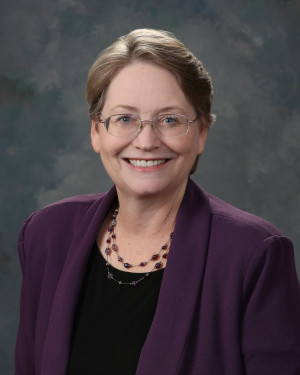
Rep. Catherine Cullen
Sponsored bills
Maddy summaryHB 45, the Physician Assistant Licensure Compact, would allow physician assistants licensed in one participating state to practice in other participating states without obtaining separate licenses. It creates a shared data system for states to track license status and disciplinary actions, and requires that physician assistants follow the laws of the state where the patient is located during care. The bill directly affects physician assistants, particularly military families who can more easily practice across state lines with one license, and state licensing boards that must adopt the compact's standards. If enacted, it would streamline licensure for medical professionals while maintaining patient safety through mutual recognition of licenses.
Maddy summaryHB 32 creates the Counseling Licensure Compact, allowing licensed professional counselors in participating states to practice across state lines without obtaining separate licenses. It directly affects licensed counselors and their clients in member states, enabling them to provide in-person or telehealth counseling services where the client is located. Key provisions include mutual recognition of licenses, sharing of disciplinary records between states, and requiring counselors to follow the practice laws of the state where the client is located. The compact also specifically supports military spouses relocating with active-duty service members. This bill does not change existing state licensure requirements but streamlines interstate practice for qualified counselors.
Maddy summaryHB 144 creates the crime of "unlawful squatting" in New Mexico, defined as entering and residing on someone else's property without permission for any period. It classifies this as a fourth-degree felony and requires property owners to prove unauthorized occupancy through a legal process involving affidavits and court hearings, rather than immediate removal. The bill also allows property owners to seek double the appraised value of damages caused by the squatter and gives alleged squatters three business days to contest a citation with proof like a lease or deed. This directly affects property owners facing unauthorized occupants and individuals accused of squatting, establishing a court-based system to resolve disputes over property rights.
Maddy summaryHB 107 limits damages in medical malpractice claims in New Mexico. It sets a $600,000 cap on recoverable damages (excluding medical costs and punitive damages) for most claims and a $750,000 cap for claims against "independent providers" (like solo practitioners), with annual adjustments based on inflation starting in 2023. The bill also restricts punitive damages, limits attorney fees, and requires payments from the Patient's Compensation Fund to be made as expenses occur. These changes directly affect patients filing malpractice claims, health care providers (especially independent practitioners), and insurers.
Maddy summaryHB 192 prohibits foreign corporations (including in-state subsidiaries) from purchasing single-family homes in New Mexico as investment rental properties before July 1, 2036. The bill directly affects foreign-owned real estate investment entities seeking to buy homes for rental purposes within the state. Key provisions ban these transactions for single-family residential properties, defining "foreign corporation" as one organized under the laws of another state or country. The law aims to limit foreign corporate ownership of residential rental housing, effective July 1, 2036.
Maddy summarySB 102 defines "search-and-rescue dog" as a dog owned or employed by fire departments, law enforcement, corrections agencies, or the state fire marshal for locating people. The bill increases penalties for injuring or harassing such dogs: minor injury becomes a third-degree felony (up to 5 years), while serious injury or death becomes a second-degree felony (up to 15 years). It directly affects agencies using search-and-rescue dogs by extending the same legal protections and penalties previously applied to police dogs, fire dogs, and police horses. The bill amends New Mexico’s criminal code to explicitly include search-and-rescue dogs in these provisions.
Maddy summarySB 71 amends New Mexico's Public Employees Retirement Act (PERA) to include public safety telecommunicators (emergency call center staff) as eligible for "police member" coverage under PERA. This change directly affects current public safety telecommunicators employed by local governments, allowing them to elect to join the police member retirement plan instead of their current plan. The bill establishes an election process for these employees to choose whether to adopt the police member coverage plan, which typically offers different retirement benefit structures. The amendment modifies PERA definitions to explicitly cover telecommunicators under the "municipal police member" category (as defined in Section 10-11-2). The bill is currently pending referral to Senate committees.
Maddy summaryThis bill amends New Mexico law to establish specific penalties for cockfighting, separate from existing dog fighting rules. It creates a tiered penalty system: a first conviction for cockfighting is a petty misdemeanor, a second conviction is a misdemeanor, and third or subsequent convictions are a fourth-degree felony. The law directly affects individuals who sponsor, arrange, or participate in cockfights for monetary gain or entertainment, including those present without attempting to stop the event. The bill does not change penalties for dog fighting, which remain as fourth-degree felonies under current law.
Maddy summaryHB 44 (Dental & Dental Hygienist Compact) proposes to create a multi-state agreement allowing licensed dentists and dental hygienists from New Mexico to practice in other participating states without obtaining separate licenses. It establishes a "compact privilege" that would let qualified professionals work temporarily in other member states, reducing duplicative licensing requirements. The bill also requires state and federal criminal background checks for license applicants, as amended in the Dental Health Care Act. This aims to improve access to dental care, address workforce shortages, and facilitate mobility for military members and their families. The bill is currently under review by the House Health & Human Services and Judiciary Committees.