Maddy summarySB 149 amends New Mexico's Property Tax Code to clarify the definition of "residential property." It explicitly includes manufactured homes used for permanent habitation as residential property, while excluding temporary structures like hotels and motels. This change directly affects manufactured home owners by classifying their properties under residential tax rates instead of potentially higher nonresidential rates. The bill makes a technical adjustment to tax classification rules without creating new taxes or exemptions.

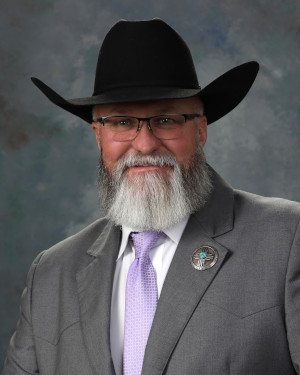
Rep. Harlan Vincent
Sponsored bills
Maddy summaryHB 198 appropriates $2 million from the general fund to the New Mexico Department of Health for fiscal year 2027 to provide behavioral health treatment and training specifically to first responders (such as police, firefighters, and EMTs). The bill directly affects first responders by funding mental health resources and specialized training, with unspent funds reverting to the general fund by year-end. This is a funding measure, not a policy change, focusing solely on allocating state resources for existing training programs.
Maddy summaryHB 55 would allow first responder retirees (including law enforcement officers, firefighters, and emergency medical personnel) and their unmarried surviving spouses to deduct 50% of their retirement pay earned from first responder service from their state income tax. To claim this deduction, taxpayers must submit proof of eligibility to the New Mexico tax department and report the deduction as required. The policy applies to tax years beginning January 1, 2026, and the deduction would be counted in the state’s tax expenditure budget. This change directly affects eligible retirees by reducing their taxable income related to first responder service.
Maddy summaryHB 209 requires group health insurance plans in New Mexico (including self-insured plans) to cover preventive cancer screenings for firefighters without any cost-sharing, such as deductibles or copays. It directly affects firefighters employed by state or local government fire departments, as defined in the bill. The law mandates coverage based on the latest screening guidelines from the International Association of Firefighters, ensuring screenings are fully paid for by the insurer. This policy change is implemented through amendments to the Health Care Purchasing Act, making screenings a mandatory benefit under existing group health coverage.
Maddy summaryHB 31 creates the Emergency Medical Services Personnel Licensure Interstate Compact, allowing EMTs and paramedics licensed in one participating state to practice in other member states without obtaining new licenses. It directly affects EMS professionals who work across state lines and the states that join the compact. Key provisions include mutual recognition of licenses, sharing of disciplinary actions (like license suspensions), and requiring home states to use national registry exams and investigate complaints. This streamlines emergency response during cross-state incidents while maintaining public safety through shared accountability. The compact aims to increase access to licensed EMS personnel and reduce licensing barriers for providers.
Maddy summarySB 79 allocates $2 million from the state general fund to New Mexico's Department of Health for mosquito surveillance, prevention, and control efforts during fiscal years 2027 and 2028. The bill specifically allows the Department to distribute up to $1.5 million in grants to local governments and state educational institutions for mosquito-related projects. Any unspent funds by the end of 2028 must return to the general fund. This is a funding measure, not a new policy, directly supporting public health agencies and local entities managing mosquito risks.
Maddy summaryHB 246 appropriates $62 million from the state general fund over fiscal years 2027-2029 to provide matching state funds for political subdivisions (like counties or municipalities) that have received federal approval to acquire and rehabilitate floodplain land. The bill directly affects local governments seeking to address flood risks by restoring floodplain areas to their natural state, reducing threats to life, safety, and public infrastructure. Key provisions require state matching funds to be used only for land already approved for federal assistance, with unspent funds reverting to the general fund by 2029. This policy change enables local flood risk mitigation projects through combined federal-state funding.
Maddy summaryHB 180 clarifies and expands how New Mexico uses state emergency funds. It renames the "Federal Reimbursement Revolving Fund" to the "Executive Order for Disasters Fund" and allows the governor to spend these funds for non-natural disasters (like civil unrest or state of martial law) or natural disasters, subject to legislative approval. The bill requires state agencies to report annually to legislative committees on how these funds were used for non-natural disaster responses. This affects state agencies managing disaster response and the legislature that controls funding approvals.
Maddy summaryThis bill (HM 50) is a symbolic resolution declaring February 4, 2026, as "Lincoln County Day" within the New Mexico House of Representatives. It formally recognizes Lincoln County's historical significance, including the Lincoln County War, Smokey Bear's origins, outdoor recreation economy, and cultural landmarks like Ruidoso Downs racetrack. The resolution honors the county's heritage, tourism, agriculture, and community resilience without creating new laws or allocating funds. It directly affects the House of Representatives by establishing this day of recognition and requires sending a copy to the Lincoln County Board of County Commissioners. The bill passed the House on February 19, 2026, but is a non-binding ceremonial gesture.
Maddy summaryThis memorial requests seven New Mexico state agencies - including the Department of Game and Fish, State Land Office, and Department of Agriculture - to attend a 2026 workshop on insect identification, ecology, and management. Sponsored by the Wild Friends program, UNM’s Museum of Southwestern Biology, and the Xerces Society, the workshop aims to improve agency knowledge of insects’ ecological roles. Agencies are encouraged to share educational materials developed by students and the sponsors, focusing on public outreach about insects’ importance to pollination, soil health, and ecosystem balance. The memorial does not create new laws but seeks to foster collaboration between agencies and educational partners to address public misconceptions about insects. It is a non-binding request, not a legislative mandate.