Maddy summaryHB 274 allows mobile home park owners in New Mexico to sell individual mobile home spaces as separately owned lots without needing to meet standard zoning requirements like minimum lot size or building setbacks. This directly affects mobile home park residents and owners who wish to purchase their specific lot. The bill amends the Mobile Home Park Act to create a new provision enabling this transfer of ownership without requiring infrastructure improvements typically needed for subdivision development. It removes barriers that previously forced park owners to conform to zoning rules when selling spaces, streamlining the process for residents seeking ownership.

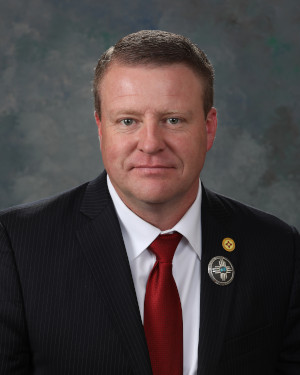
Rep. Jon Henry
Sponsored bills
Maddy summaryThis bill requires New Mexico's Oil Conservation Division to review and act on applications for produced water disposal well permits within strict timeframes. Within 30 days of receiving an application, the division must determine if it's complete and notify the applicant; if incomplete, the applicant gets up to two 30-day opportunities to fix it, restarting the review clock each time. Once an application is deemed complete, the division must grant, conditionally grant, or deny the permit within 15 days, or the permit is automatically approved. The bill directly affects oil and gas companies seeking these permits and the state agency managing the permitting process.
Maddy summaryHB 314 provides zero-interest loans to New Mexico local governments (cities, counties) in Chaves County that received federal disaster funding for repairs after the October 19, 2024 storm. The loans, funded by $150 million from the state general fund, must be repaid within 30 days using the approved federal disaster funds, with failure to repay triggering market interest rates. Political subdivisions must sign reimbursement contracts detailing repayment terms and reporting requirements. The bill appropriates funds for fiscal years 2027-2028, with unused funds reverting to the general fund by 2028. It takes effect July 1, 2026.
Maddy summaryHB 324 requires all New Mexico public school districts and charter schools to provide annual firearm safety training to students in grades 6-12 starting in the 2027-2028 school year, with optional inclusion of grades K-5. The training must cover safe firearm storage, school safety protocols related to firearms, and specific steps for students who find a firearm (like not touching it and telling an adult), all developed by the Public Education Department and Public Safety Department. It mandates the training be age-appropriate, non-shooting (no live ammunition or firearms), viewpoint-neutral on gun rights, and prohibits branded commercial content. Schools must incorporate the approved training into their curriculum without requiring live firearm demonstrations.
Maddy summaryThis bill authorizes police officers and New Mexico Department of Transportation employees to move vehicles, debris, or other obstacles blocking roadways when they create immediate safety risks. It allows officials to clear such hazards from the traveled portion of roads without facing liability for damage to the hazard itself. The law applies statewide to all public roads and aims to improve traffic safety by enabling faster removal of dangerous obstacles. It does not change liability rules for damage to vehicles or property owned by others.
Maddy summaryHB 176 creates a new "Zero Interest Down Payment Loan Fund" in New Mexico to provide first-time homebuyers with zero-interest loans covering up to 20% of a home's purchase price. The fund will be financed by redirecting specific state revenues - excess oil and gas tax receipts and federal Mineral Leasing Act funds - that would previously have gone to the Early Childhood Education and Behavioral Health funds. Starting in 2026, these redirected funds will instead support the loan program, with the first-time homebuyer loans secured by a 30-year mortgage lien (requiring repayment if the property sells before 30 years). The bill modifies existing distribution rules for these revenue streams to prioritize housing affordability for qualifying New Mexico residents.
Maddy summaryHB 221 removes the $30,000 annual cap on tax exemptions for military retirement pay in New Mexico, making all such income tax-exempt for eligible individuals. It directly affects New Mexico military retirees and their surviving spouses who qualify for lifetime retirement benefits under federal law. The bill amends state tax code to eliminate the previous limitation, meaning retirees no longer face a taxable threshold on their military pay. This change applies to taxable years beginning January 1, 2026, and does not create new benefits but modifies existing tax treatment.
Maddy summaryHB 160 creates a new "All Cities and Counties Fund" in New Mexico's state treasury to distribute a portion of gross receipts tax revenue to municipalities (cities/towns) and counties. The bill requires 8% of eligible tax revenue to be transferred into this fund, with annual distributions calculated using a formula based on each municipality's or county's population and their share of state tax revenue. Transfers are scheduled to begin on November 1, 2027, and annually thereafter, directly affecting all cities and counties across New Mexico. The fund aims to provide ongoing financial support to local governments based on population data and tax contributions.
Maddy summaryHB 207 requires New Mexico's Water Quality Control Commission to create specific rules allowing the reuse of treated water generated from oil and gas operations (called "produced water"). This bill directly affects oil and gas operators, water treatment facilities, and entities seeking to use this treated water for purposes like irrigation or industrial processes. The key mechanism is mandating the Commission to develop these rules, which must be based on scientific data and consider water quality protection, while ensuring the rules align with existing legal authority under the Water Quality Act. The bill does not specify the exact permitted uses but sets a process for the Commission to establish them.
Maddy summaryHB 264 creates new tax deductions for New Mexico taxpayers earning tips (based on federal Section 224), overtime pay (federal Section 225), and Social Security income (federal Section 151). It replaces the Working Families Tax Credit with a state Earned Income Tax Credit (EITC) modeled after federal rules, adds a new Foster Parent and Guardian Income Tax Credit, and expands the medical expense deduction to apply to taxpayers of all income levels. The bill also extends tax deductions for healthcare practitioners to include patient coinsurance payments. These provisions directly affect low-to-moderate income earners, tip-based workers, retirees, and foster care providers by modifying how their income is taxed under New Mexico law.