Maddy summaryThis House Memorial (HM 45) recognizes the importance of water for rural communities in Taos County and New Mexico, specifically requesting the Water Quality Control Commission to prioritize a petition from Taos County regarding the reuse of treated "produced water" (water from oil/gas operations). It asks the Commission to consider this petition within 90 days of receipt and hold related hearings in Questa, New Mexico. The memorial emphasizes using treated produced water for industrial needs like data centers to protect freshwater resources, rather than diverting them. As a non-binding memorial, it directly affects Taos County communities and the Commission's procedural timeline.

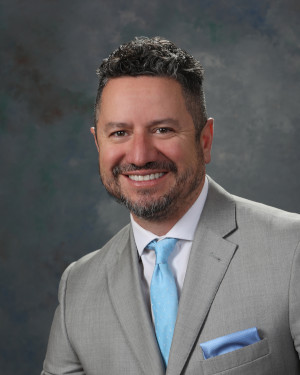
Rep. Joseph Sanchez
Sponsored bills
Maddy summaryHB 276 allocates $3.3 million from the general fund to New Mexico State University’s Board of Regents to support the state’s winemaking industry through specific initiatives. It funds projects recognizing the industry’s history and economic potential, including educational programs, statewide winery wayfinding signage, national marketing for the 400th anniversary of American winemaking, and an enologist (wine science expert) for student training. The funds are to be spent over fiscal years 2026-2028, with unspent balances reverting to the general fund by 2028. This bill directly benefits New Mexico’s wine producers, tourism departments, and university students pursuing careers in viticulture.
Maddy summaryHB 310 appropriates $1,000,000 from the general fund to New Mexico's Cultural Affairs Department for a fiscal year 2027 feasibility study, planning, and implementation of a lowrider museum in Espanola. The bill directly affects the Cultural Affairs Department, which will use the funds to assess the museum's viability and develop plans. It does not create new laws or alter existing policies but allocates specific funding for preliminary research. Any unspent funds at the end of fiscal year 2027 would revert to the general fund. This is a procedural bill focused solely on funding a study, not on museum operations or policy changes.
Maddy summaryHB 303 requires New Mexico public utilities to obtain a certificate from the Public Regulation Commission before providing new service or extending systems, with limited exceptions for existing service areas or routine business expansions. It specifically mandates that energy storage projects be approved if they reduce costs, cut fossil fuel use during peak demand, improve grid reliability with renewables, and lower emissions. The bill sets strict deadlines for commission decisions (six months for energy storage projects, nine months otherwise), with automatic approval if deadlines are missed. The law takes immediate effect as an emergency measure.
Maddy summaryHB 83 requires New Mexico's Health Care Authority to set minimum Medicaid reimbursement rates for personal care services: $23.50 per hour for consumer-delegated care and $19.78 per hour for consumer-directed care. It mandates that personal care service agencies using Medicaid funds must spend at least 70% of the reimbursement on direct care worker costs, including wages, benefits, training, and supervision. The bill defines "direct care workforce expenditures" to cover all employee-related expenses and requires agencies to maintain records for audits. A $51.4 million appropriation from the general fund supports this fee schedule update for fiscal year 2027. This directly affects agencies providing Medicaid-covered personal care services to individuals needing assistance with daily living activities.
Maddy summaryHB 85 creates a program to increase healthcare providers in New Mexico's underserved areas by offering loan repayment and loan-for-service agreements. It establishes a Medical Provider Recruitment Trust Fund (initially funded with $5 million from the general fund) that invests money and distributes 5% of its annual value to a separate Program Fund. This Program Fund, supported by an additional $1 million annual appropriation, provides financial assistance to physicians, physician assistants, and advanced practice nurses who agree to work in designated underserved communities. Priority is given to applicants who graduated from New Mexico state universities or bordering states universities and to those specializing in primary care.
Maddy summaryHB 48 allocates $2 million from the state general fund to the New Mexico Institute of Mining and Technology (NM Tech) for seismology equipment and expanding earthquake monitoring capabilities. The funding supports the Bureau of Geology and Mineral Resources at NM Tech, working with the Oil Conservation Division of the Energy, Minerals and Natural Resources Department. The bill requires all funds to be spent by the end of fiscal year 2027, with any unspent money reverting to the general fund. This directly affects NM Tech's geoscience operations and state agencies responsible for monitoring seismic activity and oil industry compliance. The measure focuses on upgrading physical equipment and network infrastructure for earthquake detection.
Maddy summaryHB 41 provides a temporary, additional 2% payment to eligible retired public employees under New Mexico's Public Employees Retirement Act (PERA) for fiscal years 2027 and 2028. It directly affects retirees who meet specific criteria, such as having retired for at least two years (or one year if over 65), disability retirees with one year of retirement, or survivor beneficiaries with two years of payments. The bill appropriates $70 million from the general fund to cover these payments, which are calculated as 2% of each recipient’s current pension amount (not compounded), with special provisions for retirees receiving under $25,000 annually or aged 75+.
Maddy summaryThe Voice and Visual Likeness Rights Act establishes a new property right for New Mexico residents (including deceased individuals domiciled in the state) to control how their voice and visual likeness are used in digital replicas, such as AI-generated videos or audio. It requires written licenses for commercial use with specific limits: up to 10 years for adults, 5 years for minors (ending at age 18), and mandatory court approval for minor-related licenses. After death, the right must be registered with the state to be enforced and expires 70 years posthumously, with a 10-year window for transfer after death. The bill defines key terms like "digital replica" to clarify prohibited uses, such as unauthorized AI representations that materially alter original performances.
Maddy summaryHB 82 extends New Mexico's Technology Readiness Gross Receipts Tax Credit through 2035, allowing national laboratories operating in the state to claim tax credits for helping local businesses mature technologies developed at those labs. The credit covers qualified costs like lab staff wages, travel, and supplies, up to $150,000 per business annually and $5 million total per laboratory per year. To qualify, businesses must be registered in New Mexico, have licensed technology from a lab or be in a research partnership, and receive assistance not otherwise available at reasonable cost. This directly affects New Mexico's national laboratories (e.g., Los Alamos, Sandia) and qualifying businesses collaborating with them on technology development.