

Passed Sep 22, 2026
1 co-sponsor
Total votes
1,041
all sessions
Attendance
100%
of floor votes
Higher than 92% of chamber peers
With party
97%
of cast votes
Near the chamber average
Bipartisan score
2%
crosses aisle rarely
Near the chamber average
Sponsored
1,703
bills & resolutions
Higher than 81% of chamber peers
Committees
15
assignments
1,703 bills and resolutions
Sponsored bills
Total
1,703
Primary
188
Co-sponsor
1,515
This page
1,703
matching current filters
In committee Sep 22, 2026
1 co-sponsor
Terrorism Risk Insurance Program Reauthorization Act of 2026
Maddy summaryThe Terrorism Risk Insurance Program Reauthorization Act of 2026 extends the federal terrorism insurance program through 2034, ensuring continued government support for insurance companies facing large losses from terrorist attacks. The bill also updates the schedule for recouping federal funds, shifting the timeline for when insurers must repay taxpayer money to later dates ranging from 2029 to 2036. These changes directly affect insurance carriers and policyholders by maintaining the program's availability for a longer period and adjusting the financial obligations tied to it.
In committee Sep 22, 2026
1 co-sponsor
A resolution recognizing September 20, 2026, as "National LGBTQ+ Servicemembers and Veterans Day".
Maddy summaryThis Senate resolution designates September 20, 2026, as National LGBTQ+ Servicemembers and Veterans Day to honor the service of lesbian, gay, bisexual, transgender, and queer individuals in the U.S. Armed Forces. The text acknowledges historical discrimination, including the "Don't Ask, Don't Tell" policy and bans on transgender service, which resulted in thousands of discharges and denied benefits. It urges the Department of Veterans Affairs and the Department of Defense to end the current ban on transgender military service and restore access to gender-affirming health care for veterans and active duty personnel. Additionally, the resolution calls for these agencies to improve outreach so that individuals discharged based on their sexual orientation or gender identity can receive the benefits they are owed.
In committee Sep 17, 2026
1 co-sponsor
A resolution expressing support for the designation of the week of September 19 through September 26, 2026, as "National Estuaries Week".
Maddy summaryThis resolution expresses the U.S. Senate's support for designating the week of September 19 through September 26, 2026, as National Estuaries Week to raise public awareness about the importance of these coastal ecosystems. The bill highlights that estuaries support a significant portion of the nation's population, jobs, and economic output while providing critical services such as flood control, water filtration, and habitat for fish and wildlife. It acknowledges ongoing threats to these areas, including pollution, sea-level changes, and harmful algal blooms, which have led to the loss of wetlands and degraded water quality. The resolution also commends the efforts of federal, state, local, and tribal governments, as well as community organizations, in protecting and restoring estuary health.
In committee Sep 17, 2026
1 co-sponsor
In committee Sep 17, 2026
1 co-sponsor
In committee Sep 17, 2026
1 co-sponsor
Native American Housing Assistance and Self-Determination Modernization Act of 2026
Maddy summaryThe Native American Housing Assistance and Self-Determination Modernization Act of 2026 reauthorizes federal housing assistance for Indian tribes and Native Hawaiians through fiscal year 2033 while expanding eligibility to include families with incomes up to 120 percent of the area median. The bill grants tribes greater autonomy by allowing them to set their own rent, procurement, and environmental review policies, and it streamlines regulatory processes by consolidating environmental reviews and exempting certain small-scale projects from specific federal requirements. Additionally, the legislation establishes new grant programs for homeless American Indians, Alaska Natives, and Native Hawaiians, creates a rental assistance program for homeless Indian veterans, and extends leasehold interests on trust lands to 99 years to improve financing options.
Budget & TaxesSupports Budget & TaxesThe bill reauthorizes federal housing assistance through 2033 and expands eligibility, directly funding and strengthening public services for Native communities.
HousingSupports HousingBill reauthorizes federal housing assistance for tribes and expands eligibility to 120% of area median income, directly advancing affordable housing access.
In committee Sep 16, 2026
1 co-sponsor
A joint resolution proposing an amendment to the Constitution of the United States to prohibit the use of slavery and involuntary servitude as a punishment for a crime.
Maddy summaryThis joint resolution proposes an amendment to the U.S. Constitution that would explicitly prohibit using slavery or involuntary servitude as a punishment for a crime. The bill seeks to remove the exception in the 13th Amendment that currently allows such practices within the criminal justice system. If ratified by three-fourths of state legislatures, this change would directly affect incarcerated individuals by banning forced labor as a sentence. The text clarifies that the amendment does not prevent voluntary work programs or community service alternatives for those in correctional institutions.
Criminal JusticeSupports Criminal JusticeProposes constitutional amendment to ban involuntary servitude as punishment, directly advancing criminal justice reform and protecting incarcerated rights.
Labor & EmploymentSupports Labor & EmploymentThe bill prohibits involuntary servitude and forced labor for prisoners, directly strengthening worker protections and banning exploitative employment practices.
In committee Sep 15, 2026
1 co-sponsor
A resolution designating September 2026 as "National Voting Rights Month".
Maddy summaryThis Senate resolution designates September 2026 as National Voting Rights Month to highlight the importance of voting access and the history of voter suppression in the United States. The bill encourages Congress to pass legislation that strengthens protections under the Voting Rights Act of 1965 while opposing measures that could restrict voter eligibility. It also recommends that schools develop curricula on voting rights history and invites the government to fund public service announcements to remind citizens of election dates and registration deadlines.
In committee Sep 15, 2026
1 co-sponsor
Ask Maddy
·
AI policy assistant
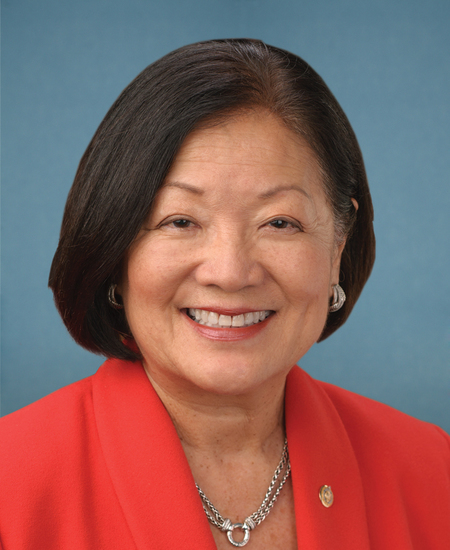
Ask Maddy about Mazie K. Hirono
Scope: new-jersey
Hi! I can help you understand Mazie K. Hirono's legislative record. What would you like to know?
Try one of these
i
Maddy answers using official bill text and legislative records. Always verify before sharing.
Sources cited inline