

Maddy summaryHR 7436 requires the Department of Homeland Security (DHS) to create standardized training for all new employees in the Office of Intelligence and Analysis (OIA). This includes mandatory civil rights and privacy training (citing the Privacy Act of 1974), specialized training for analysts on intelligence standards, and open-source intelligence collection protocols. The bill also mandates tracking training completion, quarterly public lists of available advanced training from other agencies, and annual reports to Congress on implementation progress. It further requires a Comptroller General review comparing DHS training to other intelligence agencies within two years. The law directly affects OIA staff, including new hires and those in specific roles like open-source intelligence collection.
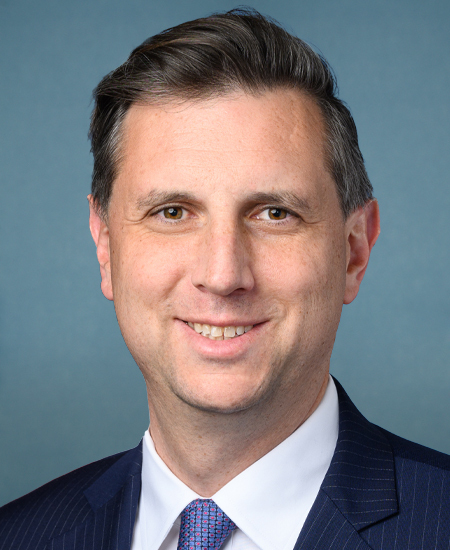
Rep. Seth Magaziner
Sponsored bills
Maddy summaryHR 7443, the I&A Mission Reorientation Act of 2026, requires the DHS Office of Intelligence and Analysis (I&A) to prioritize supporting state, local, tribal, and territorial governments and private sector entities with timely intelligence. The bill mandates two-way information sharing (receiving from and sharing with these entities), maintains engagement with fusion centers, and ensures DHS leadership support doesn’t undermine this mission. It directs the I&A office to identify emerging threats through forward-deployed capabilities and report to Congress within 180 days on implementation progress and metrics for evaluating effectiveness. This bill directly affects DHS’s intelligence operations and the entities receiving their support, focusing on operational realignment rather than new funding or penalties.
Maddy summaryThis bill would require Medicare to cover early detection screening tests for Alzheimer's disease and related dementias starting January 1, 2028. It defines eligible tests as FDA-cleared genomic blood tests, blood product analyses, or equivalent medical imaging methods (like protein expression or whole genome sequencing) that detect pre-symptomatic or early-stage conditions. Medicare beneficiaries would receive this coverage without cost-sharing for these specific screenings. The bill amends Medicare coverage rules to explicitly include these tests under Section 1861(nnn) of the Social Security Act.
Maddy summaryThe TRAPS Act establishes a federal Task Force on Payment Scams, chaired by the Treasury Secretary, to coordinate efforts across agencies like the FTC, Federal Reserve, and consumer groups. The Task Force will study current scam tactics (such as fake text messages or fraudulent payment platforms), evaluate prevention strategies, and develop recommendations to help consumers avoid and report scams. It must submit an initial report within one year and annual updates, focusing on improving federal-state coordination and education programs. This bill directly affects government agencies and stakeholders participating in the Task Force, with the goal of protecting consumers from evolving payment scams.
Maddy summaryHR 1266, the Combating Illicit Xylazine Act, adds xylazine - a veterinary sedative increasingly found in illicit drug mixtures - to Schedule III of the Controlled Substances Act, regulating its use and trafficking. It directly affects veterinarians, animal owners, and manufacturers by allowing xylazine to be legally dispensed for animal use under specific veterinary prescriptions, while prohibiting non-veterinary human use. The bill includes transition periods (60 days for practitioners, 1 year for labeling) to ease compliance for manufacturers and practitioners, and requires the DEA and FDA to expedite necessary applications. It also mandates two congressional reports on xylazine's illicit use and trafficking patterns, and directs the Sentencing Commission to review penalties for offenses involving xylazine.
Maddy summaryThis bill requires all new passenger vehicles manufactured for sale in the U.S. to include AM radio as standard equipment (not an optional add-on) by 2027-2028, depending on manufacturer size. It mandates that AM radio receivers must be easily accessible to drivers and allows compliance through digital AM broadcast technology. During a transition period, manufacturers must clearly label vehicles without AM radio but cannot charge extra for this feature. The bill also mandates a GAO study on AM radio's role in emergency alerts and includes a 10-year sunset provision for the rule. It preempts state laws regarding AM radio access in vehicles.
Maddy summaryThe Pray Safe Act of 2025 establishes a federal Clearinghouse within the Department of Homeland Security to provide houses of worship, faith-based organizations, and nonprofit groups at risk of threats with evidence-based safety resources. The Clearinghouse will publish online best practices for security planning, facility safety, and incident response, while listing existing federal and state grant programs to help these organizations implement these measures. It requires annual updates based on user feedback and includes a centralized resource section for contacts like Protective Security Advisors and Fusion Centers. The program expires four years after enactment and does not create new funding but coordinates existing federal and state safety resources.
Maddy summaryThe Local Communities & Bird Habitat Stewardship Act of 2025 establishes the Urban Bird Treaty Program, which provides grants and technical assistance to local groups - including cities, nonprofits, community organizations, and academic institutions - to protect and restore urban bird habitats. Key provisions include funding for habitat restoration (e.g., removing invasive species and planting native plants), reducing urban bird hazards, and engaging communities in monitoring and education. The program, administered by the National Fish and Wildlife Foundation, authorizes $1 million annually from 2026 to 2032 for projects focused on conserving urban bird populations through collaborative local efforts. It directly affects communities seeking to enhance green spaces and support bird conservation in populated areas.
Maddy summaryThe American Seafood Competitiveness Act of 2026 expands access to federal financial resources by redefining "farmers" and "farms" under the Consolidated Farm and Rural Development Act to include commercial fishing vessels and fish processing facilities. This change allows individuals and entities in the seafood industry to qualify for direct and guaranteed farm ownership and operating loans, as well as grants from local agriculture market programs. The bill restricts how these funds can be used, permitting loan proceeds only for specific purposes such as acquiring permits, purchasing or improving vessels, and covering operational costs. Additionally, it authorizes Farm Credit Banks and Production Credit Associations to extend credit to businesses that provide services directly related to the operating needs of aquatic product harvesters.
Maddy summaryThis House resolution marks the 25th anniversary of the September 11, 2001 terrorist attacks by formally honoring the memory of the nearly 3,000 victims and recognizing the sacrifices made by first responders, military personnel, and the passengers of United Airlines Flight 93. The bill acknowledges the ongoing health challenges faced by survivors and responders, highlighting the role of the World Trade Center Health Program in providing long-term medical support. It also credits charitable organizations and community groups that have continued to assist victims' families and veterans over the past two decades. Finally, the resolution urges the American public to observe the anniversary with ceremonies and reaffirms Congress's commitment to remembering the events and lessons of that day.