

Maddy summaryThe Badge-to-Business Act amends the Small Business Act to waive guarantee fees for express loans made to qualified career law enforcement officers starting January 1, 2027. To qualify, an officer must have completed at least ten years of service and not be facing a pending criminal investigation or administrative proceeding for misconduct related to their official duties. This fee waiver applies to both currently employed officers and those who have separated from service, provided they meet the conduct requirements at the time of application. The provision includes an exception allowing the Administrator to collect fees if the cost of guaranteeing these loans results in a net loss for the Administration in a given fiscal year.
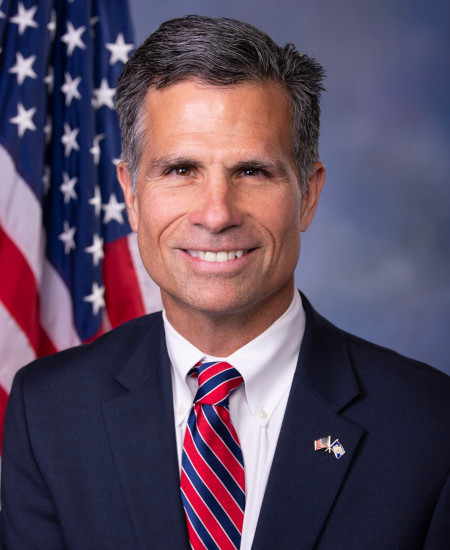
Rep. Daniel Meuser
Sponsored bills
Maddy summaryThe Cost Estimates Improvement Act requires the Congressional Budget Office and the Joint Committee on Taxation to include public debt servicing costs in their financial estimates, to the extent practicable. This change directly affects federal budgeting processes by ensuring that the interest payments on national debt are factored into official cost projections for new legislation. The bill amends the Congressional Budget and Impoundment Control Act of 1974 to mandate this specific inclusion in all future estimates prepared by these two bodies.
Maddy summaryHR 5267, the American Franchise Act, clarifies when franchisors can be considered joint employers of franchisee employees under federal labor laws. It defines "substantial direct and immediate control" over essential employment terms like wages, benefits, hours, hiring, and discipline - requiring franchisors to actively set these terms to be deemed joint employers. The bill explicitly excludes routine brand standards, training, or minimal safety requirements from constituting such control. This directly affects franchisors and franchisees by limiting joint employer liability to cases where franchisors exert significant, ongoing influence over core employment decisions. The law applies prospectively to new cases after enactment, not past disputes.
Maddy summaryThis House resolution marks the 25th anniversary of the September 11, 2001 terrorist attacks by formally honoring the memory of the nearly 3,000 victims and recognizing the sacrifices made by first responders, military personnel, and the passengers of United Airlines Flight 93. The bill acknowledges the ongoing health challenges faced by survivors and responders, highlighting the role of the World Trade Center Health Program in providing long-term medical support. It also credits charitable organizations and community groups that have continued to assist victims' families and veterans over the past two decades. Finally, the resolution urges the American public to observe the anniversary with ceremonies and reaffirms Congress's commitment to remembering the events and lessons of that day.
This bill designates the facility of the United States Postal Service located at 6 Pennsylvania Avenue in Matamoras, Pennsylvania, as the "PFC Edward Kuhn Memorial Post Office".
This resolution states that the House of Representatives condemns and denounces socialism in all its forms, including the Democratic Socialists of America, and opposes the implementation of socialist policies in the United States; reaffirms its support for free, fair, and secure elections and calls for enactment of the SAVE America Act; reiterates that American elections are for American citizens only; and recommits itself to upholding the U.S. Constitution.
Maddy summaryThis bill requires credit reporting resellers to use reasonable procedures to ensure the accuracy of consumer information they transmit to other agencies or end users. It limits reseller liability when they accurately pass on data obtained from another consumer reporting agency without making changes. The law defines resellers according to existing Fair Credit Reporting Act definitions and focuses on maintaining data integrity during the transfer process. These changes directly affect companies that sell consumer credit reports to other businesses or individuals.
Maddy summaryThis bill extends existing whistleblower protections to workers on all contracts funded by the Department of Housing and Urban Development (HUD). It applies Section 4712 of U.S. law - which prohibits retaliation against employees reporting fraud or waste - to every HUD contract, subcontract, grant, or personal services agreement, regardless of when the contract was signed. This means employees working on HUD-funded projects can now seek legal protection if they face retaliation for raising concerns about misconduct. The law directly affects HUD contractors and their employees by ensuring they have the same legal safeguards as other federal contract workers.
Maddy summaryThis bill prohibits the Securities and Exchange Commission (SEC) from requiring national securities exchanges, associations, or their members to report investors' personally identifiable information (PII) for consolidated audit trail purposes. It directly affects financial market participants whose personal details - like names, addresses, Social Security numbers, email addresses, or IP addresses - would otherwise be shared under SEC rules. The law specifically blocks the SEC from mandating this PII for order or reportable event reporting under existing regulations. This is a policy change to limit the types of data collected and shared in market transparency systems.
Maddy summaryThe Consumer Financial Protection Accountability and Reform Act of 2026 significantly restructures the Bureau of Consumer Financial Protection by subjecting it to the regular federal appropriations process and establishing an independent Inspector General appointed by the President. The bill restricts the Bureau's supervisory authority over banks and credit unions with assets under $30 billion, allowing these institutions to elect to remain under their existing prudential regulators instead. It also introduces a safe harbor for small-dollar loans of $3,500 or less that meet specific structural requirements, shielding compliant lenders from civil money penalties and private damages. Additionally, the legislation creates federal standards for earned wage access services, requiring providers to offer a no-cost option for early wage access and prohibiting them from treating these services as credit or debt under federal law.