Maddy summaryThe Title IX Clarification Act of 2026 amends federal education law to explicitly define the terms "sex," "female," and "male" based on biological characteristics. Specifically, it states that "sex" refers to an individual's biologically determined status as male or female, while "female" and "male" are defined by the presence of specific reproductive systems capable of producing ova or sperm, respectively. These definitions apply to all education programs and activities that receive federal financial assistance starting on the date the bill becomes law. The legislation aims to clarify existing statutes by removing ambiguity around biological sex definitions in the context of Title IX protections.

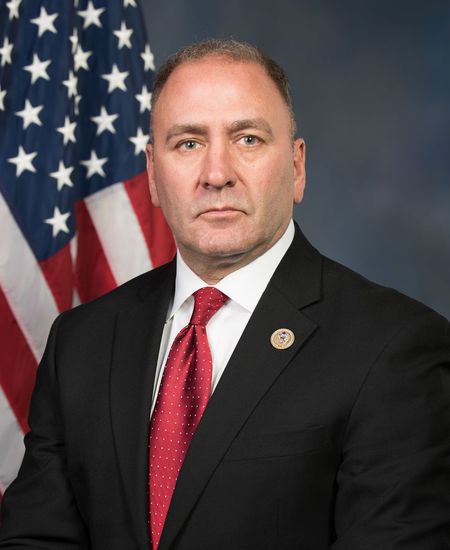
Rep. Clay Higgins
Sponsored bills
This bill designates the facility of the United States Postal Service located at 1706 South Burnside Avenue in Gonzales, Louisiana, as the "Cpl. Lawrence Brown Post Office Building".
Maddy summaryThe Protecting Elders From Government Error Act limits how the Social Security Administration can recover overpayments from individuals who received old-age benefits due to government error. If an overpayment occurred more than six months before it was discovered and resulted from a mistake by the agency, the government is prohibited from recovering the funds directly from the person. Additionally, when recovery is permitted for errors made by the agency, the bill caps any reduction in monthly benefits at 5 percent of the payable amount to prevent severe financial hardship. These protections do not apply if the recipient has ever committed fraud or similar fault regarding the program.
Maddy summaryThe Janie Wynn Protecting Elders from Financial Exploitation Act requires the Bureau of Consumer Financial Protection to issue rules within 180 days that mandate fraud alerts and enhanced training for financial institutions serving senior citizens. Card issuers must send fraud alerts to both the senior cardholder and a designated adult contact, unless the cardholder signs a waiver acknowledging the increased risk of exploitation. Banks and credit unions are required to train employees on identifying specific account activities indicative of abuse and must notify seniors within 24 hours if such activity is detected. These provisions directly affect financial institutions by imposing new monitoring and communication duties aimed at protecting older adults from financial fraud.
Maddy summaryHR 1869 creates a new DOJ task force within the Criminal Division to investigate and prosecute international trade crimes, such as customs evasion, smuggling, and trade-based money laundering. It requires the DOJ to hire specialized prosecutors, coordinate with agencies like U.S. Customs and Border Protection, and focus on specific violations covered under statutes like 18 U.S.C. §§ 541-546 and 21 U.S.C. § 331. The bill authorizes $20 million in funding for fiscal year 2026 (with 80% dedicated to criminal prosecutions), mandates annual reports to Congress on enforcement activities, and requires the DOJ to develop multi-agency partnerships to address these crimes. This directly affects federal prosecutors, border enforcement agencies, and industries impacted by trade violations.
National Law Enforcement Officers Remembrance, Support and Community Outreach Act. [ sic ] This bill temporarily directs the Department of the Interior to award a grant to the National Law Enforcement Officers Memorial Fund for the expenses associated with operating and enhancing the community outreach, public education, and officer safety and wellness programs of the National Law Enforcement Museum.
Maddy summaryThis bill, titled the Permanent CBDC Ban Act, aims to permanently prohibit the Federal Reserve from issuing a central bank digital currency. It achieves this by amending the Federal Reserve Act to remove the specific legal authority that allows the Reserve to create such a digital currency. The legislation directly affects the Federal Reserve by stripping away its power to launch a digital version of the dollar. By deleting the relevant subsection of the law, the bill ensures that the Reserve cannot issue a CBDC in the future.
Maddy summaryThe Freedom to Ship Act prohibits motor carriers from discriminating against the lawful transportation of firearms, ammunition, and related components across state lines. It specifically bans carriers from refusing to transport these items, imposing unreasonable conditions, charging higher fees than for similar goods, or forcing shippers to waive privacy protections. Violations can result in civil penalties of up to $10,000 per incident and allow harmed shippers to sue for damages. The bill also repeals an existing federal statute that previously allowed carriers to refuse such shipments based on state laws.
Maddy summaryThis bill abolishes the Council of the Inspectors General on Integrity and Efficiency, a group that previously oversaw federal audit and inspection activities, replacing it with a new structure led by the Office of Management and Budget and the Comptroller General. Under the new system, the Office of Management and Budget will set policies and standards for Inspector General workforces, while the Comptroller General will establish rules for conducting inspections. The legislation also creates a dispute resolution process for multi-agency audits and assigns the Federal Law Enforcement Training Centers to manage professional training academies for these officials. Additionally, the bill transfers the Council's remaining funds and assets to other agencies and ensures that current legal proceedings and contracts involving the Council remain valid after the change.
Maddy summaryThis bill, known as the D.C. Taxing Authority Review Act, modifies the rules for how new taxes and fees proposed by the District of Columbia government are reviewed by Congress. It requires that any D.C. law imposing or increasing a tax or fee must receive explicit approval from a joint resolution passed by both the House of Representatives and the Senate within 60 days, or else the law will not take effect. Additionally, the bill limits the time for debating these specific approval resolutions to one hour, split evenly between supporters and opponents. These changes directly affect the District of Columbia government's ability to enact new financial measures without prior congressional consent.