

0 co-sponsors
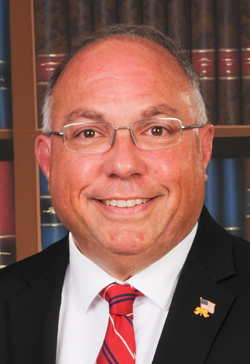
Total votes
1,249
all sessions
Attendance
100%
of floor votes
Near the chamber average
With party
95%
of cast votes
Near the chamber average
Bipartisan score
4%
crosses aisle rarely
Near the chamber average
Sponsored
386
bills & resolutions
Higher than 79% of chamber peers
Committees
3
assignments
386 bills and resolutions
Sponsored bills
Total
386
Primary
198
Co-sponsor
188
This page
386
matching current filters
Establishes four-year pilot program in Ocean County for electronic monitoring of certain domestic violence offenders; appropriates $2.5 million.*
Maddy summaryS 1385, known as "Lisa’s Law," establishes a four-year pilot program in Ocean County (or another county chosen by the Attorney General) requiring electronic monitoring for certain domestic violence offenders who violate restraining orders. The law mandates that courts obtain a victim’s informed consent before ordering monitoring, considering factors like the offender’s history of violence, weapon access, and mental health. It requires monitoring devices to meet federal tracking standards, allows courts to charge offenders a $250 fee (with waivers for hardship), and directs funds to a Domestic Violence Victim Notification Fund. The program applies only to defendants convicted of contempt for violating domestic violence orders under New Jersey’s Prevention of Domestic Violence Act.
Passed Jan 12, 2026
0 co-sponsors
Requires Department of Veterans Affairs to verify unclaimed cremains of veterans, spouses, and dependents; requires funeral director to report to Department of Veterans Affairs possession of unclaimed veteran, spouse, and dependent cremains.**
Maddy summaryThis bill requires funeral directors to notify the New Jersey Department of Military and Veterans Affairs (DMVA) when they possess unclaimed cremains of veterans one year after cremation, after making diligent efforts to locate relatives. It mandates the DMVA to create and maintain a central online registry of unclaimed veteran cremains to help veterans' organizations locate these remains. Qualified veterans' organizations can then receive these unclaimed cremains and dispose of them by scattering at sea or interring them at the Brigadier General William C. Doyle Memorial Cemetery if eligible. The bill aims to address the issue of veteran cremains being unclaimed for decades (up to 66 years in some cases), reducing the burden on funeral directors and helping organizations locate remains more efficiently.
Passed Jan 12, 2026
0 co-sponsors
Requires Commissioner of Department of Veterans Affairs to develop mobile application to provide guidance on available resources to veterans and their families.*
Maddy summaryThis bill requires New Jersey's Department of Military and Veterans Affairs (DMVA) to develop a mobile application that provides veterans and their families with guidance on available state and federal resources. The app would consolidate information about benefits, healthcare, housing, education, and other support services into a single accessible tool. It specifically mandates the DMVA to create this mobile resource as a new method for delivering the existing public information requirement currently covered by subsection (y) of N.J.S.38A:3-6. The bill directly affects all New Jersey veterans and their families who rely on state and federal veteran support programs.
TechnologySupports TechnologyBill S 1458 explicitly requires the DMVA to develop a mobile application, directly advancing and utilizing technology for public services.
VeteransSupports VeteransBill S 1458 mandates a mobile app to provide veterans and their families with accessible guidance on available state and federal resources, thereby advancing services.
Passed Jan 12, 2026
1 co-sponsor
Requires DCF to expand services provided by NJ Statewide Student Support Services program to include eating disorder services.
Maddy summaryThis bill requires New Jersey's Department of Children and Families (DCF) to expand the existing NJ Statewide Student Support Services program to include eating disorder awareness, prevention, and counseling services for students in grades K-12. Regional hubs (15 service providers contracted by DCF) must first assess community needs for eating disorder services and determine if current services meet student needs. Based on this assessment, hubs must develop policies to provide tiered services - ranging from universal workshops (Tier 1) to clinical support (Tier 3) - tailored to student needs. The DCF must adopt implementing rules, and the changes take effect three months after enactment.
EducationSupports EducationBill S 3862 expands the NJ Statewide Student Support Services program for K-12 students, enhancing student well-being and support within the education system.
HealthcareSupports HealthcareBill mandates expansion of student support services to include eating disorder awareness, prevention, and counseling, directly supporting mental health services and improving access to healthcare.
In committee Jan 12, 2026
0 co-sponsors
Eliminates fee for special plates for firefighters and members of first aid or rescue squads.
Maddy summaryThis bill eliminates a $15 fee for special license plates designated for firefighters and members of first aid or rescue squads in New Jersey. It directly affects compensated, partially compensated, and volunteer members of fire departments or first aid/rescue squads who currently pay this fee in addition to standard vehicle registration costs. The bill amends existing law (P.L.1977, c.369) to remove the $15 charge, meaning applicants will only pay standard vehicle registration fees. The special plates (featuring a Maltese Cross with "F.D." for firefighters or a similar design for first aid/rescue members) remain available under the same eligibility rules.
Passed Jan 12, 2026
1 co-sponsor
Requires DCF to expand services provided by NJ Statewide Student Support Services program to include eating disorder services.
Maddy summaryThis bill requires New Jersey's Department of Children and Families (DCF) to expand the existing NJ Statewide Student Support Services program to include eating disorder awareness, prevention, and counseling services for students in grades K-12. It directs the 15 regional service hubs contracted with DCF to first assess community needs for these services and then develop policies to provide them through a three-tiered system: universal workshops for all students (Tier 1), targeted group programs (Tier 2), and individual clinical support for those in need (Tier 3). The program would integrate these services into current school-based mental health support structures without creating new entities. The bill applies directly to K-12 students and their families across New Jersey through existing school support networks.
EducationSupports EducationBill expands the NJ Statewide Student Support Services program to include eating disorder services for K-12 students, enhancing student programs and support within education.
HealthcareSupports HealthcareBill expands student support services to include eating disorder awareness, prevention, and counseling, directly strengthening healthcare and mental health services.
Passed Jan 12, 2026
0 co-sponsors
Eliminates fee for special plates for firefighters and members of first aid or rescue squads.
Maddy summaryS 3366 eliminates a $15 fee for special license plates designated for firefighters and members of first aid or rescue squads in New Jersey. The bill amends existing law (P.L.1977, c.369) to remove the additional charge, meaning eligible members will no longer pay extra for these plates beyond standard vehicle registration fees. It directly affects compensated, partially compensated, or volunteer firefighters and first aid/rescue squad members who apply for these plates. The change applies immediately upon enactment, requiring no additional cost for the special plate design.
Passed Jan 12, 2026
1 co-sponsor
Extends accidental death benefit for survivors of certain SPRS retirees.
Maddy summaryS 3607 extends accidental death benefits to survivors of State Police Retirement System (SPRS) retirees who died from health conditions linked to World Trade Center rescue, recovery, or cleanup operations, regardless of when the retiree died. It expands eligibility beyond retirees who previously received only accidental disability retirement to include those with ordinary disability, special, or service retirement benefits. The bill removes the requirement for a written sworn statement in applications and allows survivors to submit claims within two years of the retiree's death or two years after the bill's effective date, whichever is later. It also mandates that the State notify eligible survivors by certified mail within 60 days of the bill's effective date.
Labor & EmploymentSupports Labor & EmploymentExpands survivor benefits for SPRS retirees with 9/11-related health conditions, strengthening employment-linked pension protections for workers and their families.
VeteransSupports VeteransExpands accidental death benefits to survivors of SPRS retirees with WTC-linked health conditions, removing eligibility barriers for veterans' benefits.
Passed Jan 12, 2026
1 co-sponsor
Establishes program in SADC for acquisition of development easements on privately-owned woodlands.*
Maddy summaryThis bill creates a state program to permanently restrict development on qualifying privately-owned woodlands through easement acquisitions. Landowners with woodlands meeting specific criteria (minimum 20 acres, used for agriculture/forest products, or managed under approved stewardship plans) can participate. The State Agriculture Development Committee will administer the program using existing farmland preservation funds and seek federal programs like the Forest Legacy Program, with easements recorded similarly to property deeds. The goal is to preserve forested lands for agricultural, silvicultural, and conservation purposes.
Passed Jan 12, 2026
1 co-sponsor
Ask Maddy
·
AI policy assistant
Ask Maddy about Carmen Amato
Scope: new-jersey
Hi! I can help you understand Carmen Amato's legislative record. What would you like to know?
Try one of these
i
Maddy answers using official bill text and legislative records. Always verify before sharing.
Sources cited inline