

0 co-sponsors
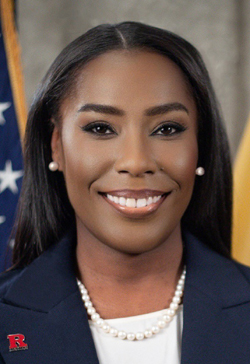
Total votes
1,309
all sessions
Attendance
86%
2 missed
Lower than 82% of chamber peers
With party
100%
of cast votes
Higher than 76% of chamber peers
Bipartisan score
0%
crosses aisle rarely
Lower than 78% of chamber peers
Sponsored
656
bills & resolutions
Higher than 84% of chamber peers
Committees
3
assignments
656 bills and resolutions
Sponsored bills
Total
656
Primary
402
Co-sponsor
254
This page
656
matching current filters
Secures protections for patients and providers accessing and providing reproductive health care services; establishes right of residents to reproductive health care activity that is restricted in other states.*
Maddy summaryNew Jersey's S 2260 strengthens legal protections for patients and providers accessing or delivering reproductive and gender-affirming health care services within the state. The bill explicitly defines "legally protected health care activities" to include seeking, providing, or assisting with these services (such as abortion, contraception, or gender-affirming care), regardless of a patient's location. It prohibits obstruction, intimidation, or physical barriers at facilities offering these services and grants licensing boards authority to impose civil penalties for violations. This directly affects patients traveling to New Jersey for care (not available in their home states) and healthcare providers operating in these fields. The law codifies existing protections to prevent harassment or violence against these services, following increased threats and protests nationwide after the overturning of Roe v. Wade.
Signed into law Aug 20, 2026
1 co-sponsor
Appropriates $15,546,575 to DEP from constitutionally dedicated CBT revenues for grants to certain nonprofit entities to acquire or develop lands for recreation and conservation purposes, and for certain administrative expenses.
Maddy summaryThis bill directs approximately $15.5 million from dedicated corporation business tax revenues to the Department of Environmental Protection for land conservation and recreation projects. The funds will provide grants to nonprofit organizations to purchase or develop land for open space, with specific allocations for land acquisition, park development, and stewardship activities. Additionally, the legislation allows the department to use leftover money from canceled projects to provide extra funding to previously approved initiatives, subject to oversight committee approval.
Budget & TaxesSupports Budget & TaxesBill appropriates dedicated tax revenues to fund land conservation and recreation grants, directly strengthening public services and fiscal management.
EnvironmentSupports EnvironmentBill appropriates funds for land conservation and recreation projects, directly strengthening environmental protection and natural resource preservation.
Signed into law Jul 30, 2026
0 co-sponsors
Concerns facilities used by applicants for new motor vehicle dealer licenses.*
Maddy summaryThis bill establishes a provisional license for new motor vehicle dealers in New Jersey, allowing them to operate temporarily while their full license application is processed. It directly affects new dealers who are setting up businesses, enabling them to begin selling vehicles before meeting all permanent licensing requirements. The bill amends state law (R.S.39:10-2 and R.S.39:10-19) to define the provisional license, including standards for dealer facilities and vehicle inventory. This change streamlines the licensing process for new dealers without reducing regulatory oversight.
Signed into law Jul 30, 2026
1 co-sponsor
Exempts poll workers wages from affecting unemployment compensation.
Maddy summaryThis bill exempts wages earned by poll workers during election cycles from being counted when calculating an individual's unemployment benefits. It directly affects poll workers who may otherwise have their unemployment compensation reduced due to income earned from temporary election work. The key provision amends New Jersey's unemployment law to exclude poll workers' wages from the "annual payroll" calculation used to determine benefit eligibility. This change ensures poll workers can receive full unemployment benefits without their election-season earnings affecting their claim. The bill focuses solely on adjusting the calculation method for this specific group of workers.
Signed into law Jul 22, 2026
0 co-sponsors
"Power NJ Act"; establishes advanced nuclear energy procurement program in BPU.
Maddy summaryThe Power NJ Act establishes a procurement program within the Board of Public Utilities to help New Jersey acquire advanced nuclear energy projects. This legislation aims to address rising electricity costs and grid reliability concerns by promoting the construction of new, carbon-free nuclear facilities. The bill defines advanced nuclear energy projects and outlines the state's interest in supporting these developments for economic growth and energy security. By creating this program, the state seeks to attract new nuclear capacity to replace retired facilities and support local job creation.
EnergySupports EnergyBill establishes a procurement program for advanced nuclear energy to address grid reliability and promote carbon-free facilities.
EnvironmentSupports EnvironmentBill promotes carbon-free nuclear energy to reduce emissions and enhance grid reliability, directly supporting environmental protection.
Signed into law Jul 13, 2026
1 co-sponsor
Establishes "John R. Lewis Voter Empowerment Act of New Jersey." **
Maddy summaryThis bill, titled the "John R. Lewis Voter Empowerment Act of New Jersey," is a commemorative resolution naming a state initiative after civil rights leader John Lewis. It appropriates $2.5 million but does not establish new voting procedures or protections. The bill primarily includes recognition language affirming New Jersey’s commitment to voting rights for protected classes and defines terms like "covered entity" for future reference, though no specific implementation mechanisms are detailed. As it is pending technical review and lacks concrete policy changes, it functions as a symbolic gesture rather than a substantive legislative action.
Signed into law Jul 2, 2026
1 co-sponsor
Appropriates $15,546,575 to DEP from constitutionally dedicated CBT revenues for grants to certain nonprofit entities to acquire or develop lands for recreation and conservation purposes, and for certain administrative expenses.
Maddy summaryThis bill appropriates $15,546,575 from constitutionally dedicated corporation business tax revenues to the Department of Environmental Protection for conservation grants. The funds will be distributed to specific tax-exempt nonprofit organizations to help them acquire or develop land for recreation and conservation purposes across New Jersey. The legislation authorizes grants for three designated projects: the D&R Greenway Land Acquisitions Trust, the Lamington Conservancy Central Project, and the New Jersey Conservation Foundation Priority Area Acquisitions. Additionally, the bill allocates money for administrative expenses related to these conservation efforts.
Budget & TaxesSupports Budget & TaxesBill appropriates dedicated tax revenues to fund conservation grants and land acquisition, directly increasing funding for public services.
EnvironmentSupports EnvironmentBill allocates funds to the DEP for conservation grants to acquire and develop lands for recreation and conservation purposes.
In committee Jun 30, 2026
0 co-sponsors
Requires health insurance and Medicaid coverage for testing and treatments to slow progression of Alzheimer's disease and related disorders.
Maddy summaryThis New Jersey bill mandates that health insurance plans and Medicaid cover medically necessary tests and FDA-approved treatments designed to slow the progression of Alzheimer's disease and related disorders. The law applies to hospital service, medical service, and health service corporation contracts, as well as individual and group health insurance policies issued or renewed in the state. A key provision ensures that these specific Alzheimer's treatments are not subject to step therapy requirements, meaning patients can access them without needing to try other medications first. Additionally, the coverage must be provided at the same level as benefits for other medical conditions.
Passed Jun 30, 2026
0 co-sponsors
Extends certain pay parity regarding telemedicine and telehealth.*
Maddy summaryThis bill permanently extends pay parity for telemedicine and telehealth services in New Jersey, requiring health insurance carriers to reimburse providers at the same rates as in-person care. It directly affects insurance companies, healthcare providers, and patients by mandating that out-of-pocket costs like deductibles and copayments for virtual visits cannot exceed those for in-person appointments. The legislation also prohibits insurers from restricting telehealth platforms, limiting service locations, or denying coverage for routine remote monitoring if the same care would be covered in person. Additionally, carriers must continue to allow patients to choose between in-person and virtual care rather than forcing telehealth as a substitute.
HealthcareSupports HealthcareBill mandates equal reimbursement rates for telehealth and in-person care, improving patient access and protecting healthcare provider compensation.
TechnologySupports TechnologyBill promotes digital equity by ensuring telehealth services receive equal reimbursement, expanding access to virtual healthcare and supporting technology adoption in medical services.
Signed into law Jun 30, 2026
1 co-sponsor
Ask Maddy
·
AI policy assistant
Ask Maddy about Tennille McCoy
Scope: new-jersey
Hi! I can help you understand Tennille McCoy's legislative record. What would you like to know?
Try one of these
i
Maddy answers using official bill text and legislative records. Always verify before sharing.
Sources cited inline