Creates separate crime for items depicting sexual exploitation or abuse of children; concerns computer generated or manipulated sexually explicit images.
What changed between versions
A detailed legislative statement was added explaining the bill's three main purposes: (1) recodifying child sexual abuse material as a separate crime from child endangerment, (2) expanding the crime to cover AI-generated and manipulated depictions of children, and (3) conforming 'child erotica' definitions with the State v. Higginbotham (2024) Supreme Court decision.
The invasion of privacy statute is amended to include manipulated depictions (AI-generated or modified) showing intimate or sexually explicit images of a person who did not consent, and to clarify that consent to being photographed does not imply consent to distribution.
The statement reveals that the network leader offense threshold for a first-degree crime is lowered from 100,000 or more items to 1,000 or more items, aligning it with the possession-with-intent-to-distribute thresholds. The third-degree tier is eliminated entirely.
The statement clarifies that the obscenity statute is amended to cover manipulated depictions created using generative AI that appear to show a purported child in sexual acts, based on legislative findings that such AI draws from datasets containing images of actual children.
Statutory citation corrected from 'N.J.S.2C:14-3b.' to 'subsection b. of N.J.S.2C:14-3' for criminal sexual contact, fixing a reference error.
The agency name 'Youth Justice Commission' was changed to 'Juvenile Justice Commission' in multiple registration-related provisions, reflecting the current official name of the agency.
A cross-reference was corrected from 'P.L.2025, c.35, s.15' to 'P.L.2024, c.92, s.2', fixing an incorrect citation to prior legislation.
Multiple Oxford commas were added throughout the text (e.g., 'convicted, adjudicated delinquent, or found not guilty') and several cross-reference citations had section numbers removed for consistency.
How they voted
Actions timeline
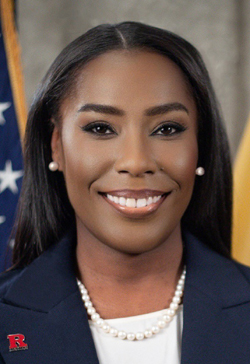
Sponsors