

Establishes "Energy Infrastructure Public-Private Partnerships Program"; amends law concerning NJ infrastructure Bank; and authorizes certain energy contracts under "Public School Contracts Law" and "Local Public Contracts Law" up to 25 years.
# Summary of the "Energy Infrastructure Public-Private Partnership Act"
This New Jersey legislative bill creates an Energy Infrastructure Public-Private Partnership Program (Energy P3 Program) and an Energy Infrastructure Financing Program within the New Jersey Infrastructure Bank (NJIB).
## Key Provisions:
1. **Expanded NJIB Mission**: The bill amends the "New Jersey Infrastructure Trust Act" to expand the NJIB's mission from primarily water, environmental infrastructure, and transportation projects to include energy-related projects.
2. **P3 Eligible Entities**: Defines "P3 eligible entities" to include:
- State, counties, municipalities, school boards
- State colleges, universities, regional utility authorities
- Private not-for-profit hospitals
- Other public entities
3. **Energy Financing Program**:
- Provides loans and financial assistance to P3 eligible entities and private entities through P3 agreements
- Requires NJIB to submit annual financial plans to the Legislature by May 15
- Legislature can reject the financial plan by June 30 through concurrent resolution
4. **Funding Structure**:
- Creates an Energy Loan Origination Fee Fund similar to existing fee funds
- Requires strict segregation of funds to prevent mixing of transportation, water/environmental infrastructure, and energy-related monies
5. **Tax Exemptions**:
- Components of energy-related projects owned by or leased to P3 eligible entities are exempt from property taxation and special assessments
- Land for energy-related projects is exempt from property taxation for the project's useful life
6. **Contracting Changes**:
- Amends Public School Contracts Law and Local Public Contracts Law to allow up to 25-year contracts for sale of electricity or thermal energy from facilities constructed under P3 agreements
- Requires annual reports on energy-related P3 projects to be submitted to Governor and Legislature
7. **Governance**:
- Adds President of the Board of Public Utilities as ex-officio member to NJIB board
- Establishes competitive contracting procedures for P3 agreements
The bill aims to encourage private investment in energy infrastructure through public-private partnerships, with the NJIB serving as the primary financing vehicle for these projects. It represents a significant expansion of the NJIB's traditional focus on water and transportation infrastructure to include energy infrastructure.
Bill status
in committee
1 of 4 stages cleared
Introduction
Jun 2024
Committee Review
Floor Vote
Governor
Introduced Jun 10, 2024
Last action Oct 7, 2024
Maddy AI version diff · 1 comparison
What changed between versions
Introduced Version
→
Reprint SBA 10/7/24 1R
·
2 edits
MINOR
The bill moved from its introduced version to a First Reprint as reported by the Senate Budget and Appropriations Committee on October 7, 2024, with amendments. The substantive change is a broadening of the definition of 'private entity' in Section 3 to explicitly include partnerships, joint ventures, cooperatives, and other shared opportunities, and to add 'redevelopment' as a covered activity. All other changes in the diff are line-wrapping and formatting adjustments with no policy impact.
DEFINITION
The definition of 'private entity' was expanded to include 'partnership, joint venture, cooperative, or other shared opportunities' alongside the existing language about providing technical, financial, or managerial expertise. This broadens which types of private-sector arrangements can qualify as a private entity under the Energy P3 Program.
The word 'redevelopment' was added to the list of activities a private entity may perform for a P3 eligible entity (design, development, redevelopment, management, operation, or maintenance), explicitly covering renovation and modernization of existing facilities in addition to new construction.
Floor votes
How they voted
No floor votes recorded yet.
Full legislative history
Actions timeline
Total actions
3
Key actions
1
Committee
2
Oct 7, 2024
Upper · Passed
Reported out of Senate Committee with Amendments, 2nd Reading
upper
Jun 13, 2024
Committee
Transferred to Senate Budget and Appropriations Committee
upper
Jun 10, 2024
Introduced
Introduced in the Senate, Referred to Senate Environment and Energy Committee
upper
2 primary · 2 co-sponsors
Sponsors
Role
Legislator
Party
State
District
P
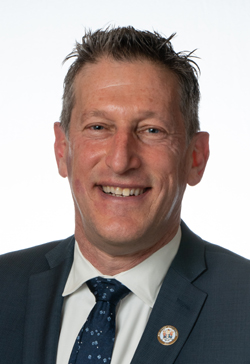
Andrew Zwicker
DDemocratic
P
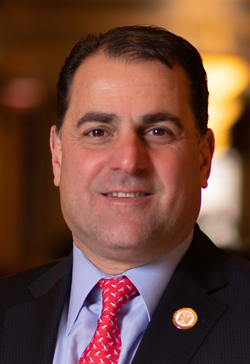
Paul Sarlo
DDemocratic
Co
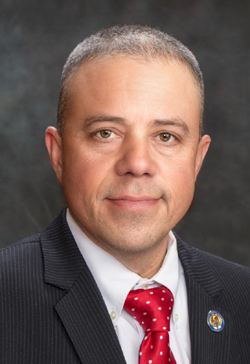
Parker Space
RRepublican
Co

Tony Bucco
RRepublican
Ask Maddy
·
AI policy assistant
Ask Maddy about S 3415
Scope: NJ
Hi! I can help you understand S 3415. What would you like to know?
Try one of these
i
Maddy answers using official bill text and legislative records. Always verify before sharing.
Sources cited inline