Maddy summaryThis bill redefines which minerals fall under federal leasing rules for acquired lands. It specifically adds "hardrock minerals" (including base metals, precious metals, and gemstones) to the Mineral Leasing Act for Acquired Lands, while excluding coal, oil, gas, and other minerals covered by separate laws. The change clarifies that mining companies seeking to extract these hardrock minerals on federal lands must now follow the established leasing process. This directly affects mineral extraction companies operating on federal lands and the Bureau of Land Management, which administers these leases. The bill makes no new financial or operational requirements but updates the legal definition governing these leases.

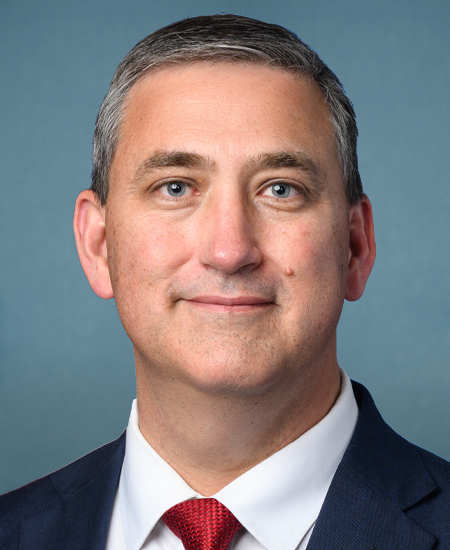
Rep. Nathaniel Moran
Sponsored bills
Maddy summaryThis bill would require Medicare to cover early detection screening tests for Alzheimer's disease and related dementias starting January 1, 2028. It defines eligible tests as FDA-cleared genomic blood tests, blood product analyses, or equivalent medical imaging methods (like protein expression or whole genome sequencing) that detect pre-symptomatic or early-stage conditions. Medicare beneficiaries would receive this coverage without cost-sharing for these specific screenings. The bill amends Medicare coverage rules to explicitly include these tests under Section 1861(nnn) of the Social Security Act.
Maddy summaryThis bill prevents public colleges receiving federal funding from denying religious student groups access to campus facilities and official recognition - same as other student organizations. It requires equal treatment for religious groups regarding meeting spaces, events, and institutional support, prohibiting discrimination based on religious beliefs or practices. The law directly affects all public universities participating in federal student aid programs (over 400 institutions). It mandates policy changes to ensure religious groups receive the same access and benefits as secular clubs.
Maddy summaryThe Apples to Apples Comparison Act of 2025 requires the Centers for Medicare & Medicaid Services (CMS) to publish detailed Medicare spending data starting in 2025. It mandates that CMS release machine-readable, county- and Metropolitan Statistical Area-level expenditure information for over 30 distinct beneficiary categories (e.g., Part A-only enrollees, Medicare Advantage members, and those with supplemental coverage) on its public website. The law also requires the Medicare Payment Advisory Commission (MedPAC) to analyze Medicare Advantage vs. traditional Medicare spending patterns beginning in 2026, with public methodology and data transparency. Additionally, the Medicare Trustees must include disaggregated expenditure data in their annual reports starting in 2026. This bill directly affects how CMS and federal agencies collect and share Medicare spending data, not beneficiaries' coverage or costs.
Maddy summaryThis bill requires all new passenger vehicles manufactured for sale in the U.S. to include AM radio as standard equipment (not an optional add-on) by 2027-2028, depending on manufacturer size. It mandates that AM radio receivers must be easily accessible to drivers and allows compliance through digital AM broadcast technology. During a transition period, manufacturers must clearly label vehicles without AM radio but cannot charge extra for this feature. The bill also mandates a GAO study on AM radio's role in emergency alerts and includes a 10-year sunset provision for the rule. It preempts state laws regarding AM radio access in vehicles.
Maddy summaryHR 1869 creates a new DOJ task force within the Criminal Division to investigate and prosecute international trade crimes, such as customs evasion, smuggling, and trade-based money laundering. It requires the DOJ to hire specialized prosecutors, coordinate with agencies like U.S. Customs and Border Protection, and focus on specific violations covered under statutes like 18 U.S.C. §§ 541-546 and 21 U.S.C. § 331. The bill authorizes $20 million in funding for fiscal year 2026 (with 80% dedicated to criminal prosecutions), mandates annual reports to Congress on enforcement activities, and requires the DOJ to develop multi-agency partnerships to address these crimes. This directly affects federal prosecutors, border enforcement agencies, and industries impacted by trade violations.
Maddy summaryHR 2323, the Big Bend National Park Boundary Adjustment Act, would expand Big Bend National Park by adding approximately 6,100 acres of land. The Secretary of the Interior may acquire this land through donation or exchange (not eminent domain), using a specific map dated November 2022. Once acquired, the land becomes part of the park and is managed under existing laws. The map must be publicly available for inspection at National Park Service offices.
Maddy summaryThe Title IX Clarification Act of 2026 amends federal education law to explicitly define the terms "sex," "female," and "male" based on biological characteristics. Specifically, it states that "sex" refers to an individual's biologically determined status as male or female, while "female" and "male" are defined by the presence of specific reproductive systems capable of producing ova or sperm, respectively. These definitions apply to all education programs and activities that receive federal financial assistance starting on the date the bill becomes law. The legislation aims to clarify existing statutes by removing ambiguity around biological sex definitions in the context of Title IX protections.
Maddy summaryHR 5267, the American Franchise Act, clarifies when franchisors can be considered joint employers of franchisee employees under federal labor laws. It defines "substantial direct and immediate control" over essential employment terms like wages, benefits, hours, hiring, and discipline - requiring franchisors to actively set these terms to be deemed joint employers. The bill explicitly excludes routine brand standards, training, or minimal safety requirements from constituting such control. This directly affects franchisors and franchisees by limiting joint employer liability to cases where franchisors exert significant, ongoing influence over core employment decisions. The law applies prospectively to new cases after enactment, not past disputes.
Maddy summaryThis bill amends the Fair Labor Standards Act to clarify that direct sellers and qualified real estate agents (as defined under IRS rules) are not considered "employees" under federal labor law. It directly affects these workers by excluding them from FLSA protections like minimum wage and overtime pay. The key provision inserts a new definition into the law, changing how these professions are classified for labor rights purposes. This is a technical definitional change, not a new policy or program.