Maddy summaryThis House resolution expresses support for designating September 22, 2026, as "National Hispanic Nurses Day" to honor the contributions of Hispanic nurses to the U.S. healthcare system. It specifically recognizes the National Association of Hispanic Nurses as the leading organization representing and advocating for this group of professionals. The bill encourages the public to observe the day with ceremonies and activities that highlight the role of these nurses in reducing health disparities and providing culturally competent care.

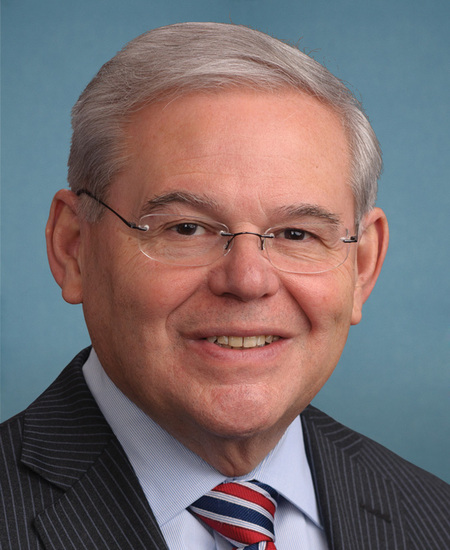
Rep. Robert Menendez
Sponsored bills
Maddy summaryThis House resolution expresses support for designating the week beginning September 14, 2026, as National Hispanic-Serving Institutions Week. It recognizes these colleges and universities, which enroll at least 25 percent Hispanic students, for their role in providing higher education access to low-income and underserved populations. The bill highlights that these institutions serve a significant portion of the nation's undergraduate students and contribute to economic mobility. It calls on the public and interested groups to observe the week with ceremonies and activities during Hispanic Heritage Month.
Maddy summaryThe BRACE Act updates federal regulations to improve how lithium-ion batteries are managed and recycled in the United States. It requires facilities that store these batteries before recycling them to follow stricter safety and record-keeping rules similar to those for large industrial waste handlers. Additionally, the bill modernizes existing laws by replacing outdated references with current environmental protection standards. These changes directly impact businesses and organizations involved in the collection, storage, and recycling of lithium-ion batteries.
Maddy summaryThe Load Forecasting Enhancement Act requires the Federal Energy Regulatory Commission to create regional joint boards made up of state commission representatives and a commission member to study how electric utilities predict energy demand. These boards will investigate methods to improve the accuracy and transparency of these forecasts to ensure reliable and affordable electricity service, then report their findings to Congress within a year. Once the report is submitted, the law mandates that state regulators incorporate these recommended forecasting standards into their oversight of electric utilities, while exempting nonregulated utilities from certain requirements. Additionally, the bill updates existing energy laws to include procedures for improving the accuracy and transparency of load forecasting in state energy conservation plans.
Maddy summaryHR 7294, the "AI for Secure Networks Act," requires the Secretary of Commerce to conduct a study on how artificial intelligence (AI) technology impacts telecommunications network security. The study must examine AI's potential to improve security through real-time threat detection, network resiliency, and energy efficiency, as well as its use with Open RAN and virtualized security technologies, while also assessing associated risks. The Secretary must consult with the Federal Communications Commission and industry stakeholders and submit a report with findings and potential recommendations to Congress within one year of the bill's enactment. This bill does not create new regulations or directly affect businesses or consumers; it is a procedural step to gather information about AI's role in securing telecom networks.
Maddy summaryThis bill would require Medicare to cover early detection screening tests for Alzheimer's disease and related dementias starting January 1, 2028. It defines eligible tests as FDA-cleared genomic blood tests, blood product analyses, or equivalent medical imaging methods (like protein expression or whole genome sequencing) that detect pre-symptomatic or early-stage conditions. Medicare beneficiaries would receive this coverage without cost-sharing for these specific screenings. The bill amends Medicare coverage rules to explicitly include these tests under Section 1861(nnn) of the Social Security Act.
Maddy summaryHR 5967 establishes a federal task force led by the FTC and DOJ to combat scams. The task force, including agencies like the FBI, SEC, and Social Security Administration, will develop a national strategy using existing tools such as the Consumer Sentinel Network and Internet Crime Complaint Center. Key actions include public education, coordination with industry (like banks and social media platforms), and enforcement using current laws against fraud and money laundering. The task force must report to Congress within one year and dissolve after 10 years.
Maddy summaryHR 2004, titled "Tyler’s Law," requires the Secretary of Health and Human Services to study how often hospital emergency departments test for fentanyl during overdose cases (beyond standard drug tests), including associated costs, patient benefits/risks, and impacts on privacy and patient-physician relationships. The study must be completed within one year of the bill's enactment. Based on the study results, the Secretary must issue guidance within six months on whether emergency departments should routinely test for fentanyl, how to inform clinicians about test contents, and how such testing may affect future overdose risks and health outcomes. This bill directly affects hospital emergency departments and patients experiencing overdoses by shaping future testing protocols.
Maddy summaryThis bill requires all new passenger vehicles manufactured for sale in the U.S. to include AM radio as standard equipment (not an optional add-on) by 2027-2028, depending on manufacturer size. It mandates that AM radio receivers must be easily accessible to drivers and allows compliance through digital AM broadcast technology. During a transition period, manufacturers must clearly label vehicles without AM radio but cannot charge extra for this feature. The bill also mandates a GAO study on AM radio's role in emergency alerts and includes a 10-year sunset provision for the rule. It preempts state laws regarding AM radio access in vehicles.
Maddy summaryThis joint resolution seeks to overturn a Department of Homeland Security rule that would establish fixed time periods for admission and specific extension procedures for nonimmigrant academic students, exchange visitors, and representatives of foreign information media. If enacted, the bill would prevent this immigration regulation from taking effect, thereby maintaining the existing framework for how these individuals manage their stay in the United States. The measure directly affects international students, cultural exchange participants, and foreign journalists by blocking changes to their visa duration limits and renewal processes.